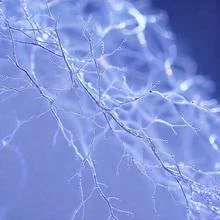
The most abundant protein in the body, found in skin, bones, and tendons, a fiber type in tissue.
2 related articles
Description
Collagen is a family of proteins, not a single molecule, and together its members make up about a third of all protein in the human body by mass — more than any other protein. It is the main structural material of skin, bone, tendon, cartilage, and the walls of blood vessels. What all collagens share is a rope-like shape: three protein chains wound around one another into a long triple helix, which then assembles with its neighbours into fibres of great tensile strength. That strength is what lets a tendon transmit the pull of a muscle to bone without stretching, and what gives skin its resistance to tearing. Bone is a composite in which stiff mineral crystals are deposited within a collagen framework, so the protein supplies the toughness that keeps the mineral from being brittle.
History
The word collagen comes from the Greek for glue, reflecting its long use as a source of animal glue. Its triple-helical structure was worked out in the 1950s, with the model proposed by G. N. Ramachandran and by Alexander Rich and Francis Crick, and confirmed by fibre diffraction studies.
How it works
Each collagen chain is a long repeating sequence in which the amino acids glycine, proline, and hydroxyproline appear in a regular pattern. Glycine is the smallest amino acid, and it sits at every third position along the interior of the triple helix, where there is only room for a hydrogen atom. The chains are held together by hydrogen bonds and are further stabilised by chemical cross-links between them. Cells called fibroblasts and their relatives secrete the chains as a precursor, procollagen, which is trimmed at both ends once outside the cell so that the molecules can spontaneously pack into fibres. Vitamin C is required for one of the modification steps, which is why a deficiency of it causes scurvy: new collagen cannot be made properly and existing tissue weakens.
In practice
Collagen and its gelatin derivative are used in wound dressings, cosmetic fillers, and tissue-engineering scaffolds, and collagen-derived peptides are studied as markers of bone turnover and fibrosis.
Fun fact
Gram for gram, type I collagen fibres in tendon have a tensile strength comparable to that of steel wire of the same cross-section.
In 2023, in Belgium, 101 people aged 50 to 69 spent several days in a lab where their brains were scanned, their sleep was recorded, and they were asked to solve memory and attention tasks. That is how the COFITAGE dataset was born, describing each participant from five angles: molecular, structural, physiological, genetic and cognitive.
Picture a muscle's control panel where buttons are removed with age. First to go are the buttons that handle hormone response, then those that kick off recovery after exercise. Researchers studied cell nuclei from vastus lateralis muscle biopsies from 287 donors aged 20 to 79 and saw exactly how these buttons disappear at the level of DNA packaging.
Collagen is the rope from which our tendons, skin, and bones are woven. Each "rope" is a bundle of molecules twisted into a triple helix, like three strands in a cable. Until now, no one had seen what happens to these strands when we pull on the cable.