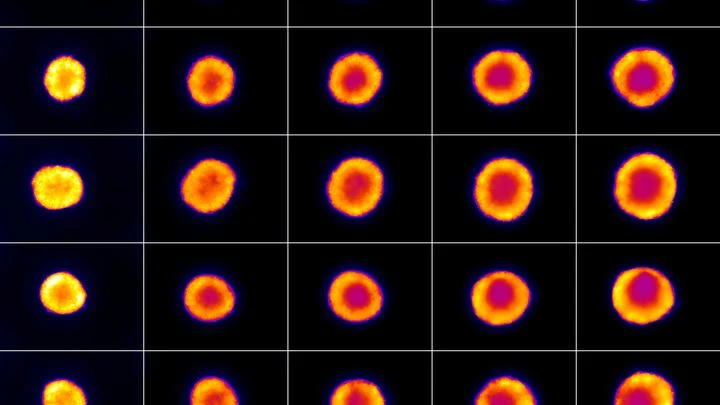
Stem cells are distinguished by two properties: self-renewal (unlimited division without loss of potential) and potency — the ability to differentiate into specialized types. Totipotent cells (zygote) can create an entire organism; pluripotent (embryonic) — all tissues except extraembryonic membranes; multipotent (adult) — a limited set of cells. Induced pluripotent stem cells (iPSCs) are obtained by activating certain genes in mature cells.
History
The idea of stem cells dates back to the work of Ernst Haeckel (1868) and August Weismann (1885). Experimental confirmation was provided by Canadian hematologists Ernest McCulloch and James Till, who discovered spleen colony-forming units — hematopoietic stem cells of the mouse in 1963. The isolation of human embryonic stem cells by Martin Evans (1981 for mouse, 1998 for human) and the creation of induced pluripotent stem cells by Shinya Yamanaka (2006, Nobel Prize 2012) opened the era of regenerative medicine.
How it works
The molecular machinery of pluripotency includes mutually reinforcing transcription factors OCT4, SOX2, NANOG, which bind their own promoters and each other's promoters, and also repress differentiation genes through recruitment of polycomb repressor complexes. Signaling molecules of the niche (SCF, Notch ligands, Wnt) activate intracellular cascades that alter the epigenetic landscape of DNA methylation and histone modifications, switching the cell from a naive to a primed state of pluripotency. Differentiation proceeds as a sequential loss of potencies with parallel activation of tissue-specific genes. Upon transplantation, stem cells are subject to the risk of teratoma formation, therefore methods of directed in vitro differentiation with subsequent purification of target populations are being developed.
In practice
Stem cells repair damaged tissues and organs — they are used to treat leukemia, burns, and test new drugs.
Fun fact
More than 80 diseases, including some types of cancer and anemia, are successfully treated with umbilical cord blood stem cells.
Stated relations:case of →neuron · part of →DNA · part of →gene
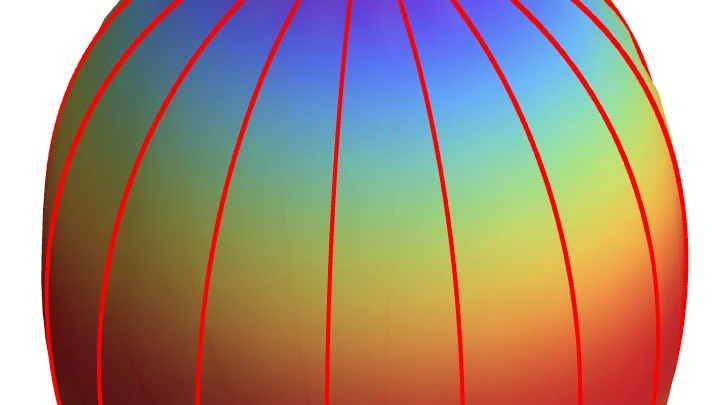
A tightly stretched membrane, squeezed into a narrow case, decides on its own where to burst. So does a cell: when it is cramped, the point of division shifts from the middle, and the two halves come out unequal. Previously, it was thought that such asymmetry is predetermined by chemical labels, but the new work shows that mechanics alone is enough.
Life begins with a bubble. In a warm puddle on ancient Earth, fat molecules could gather into tiny spheres — prototypes of cells. Inside such a sphere, a polymer happened to be present that accelerated the uptake of new fats from the surrounding water. The bubble grew, divided, and passed its composition to offspring.
Collagen is the rope from which our tendons, skin, and bones are woven. Each "rope" is a bundle of molecules twisted into a triple helix, like three strands in a cable. Until now, no one had seen what happens to these strands when we pull on the cable.
In 1970, mathematician John Conway invented the Game of Life — a cellular field where just three rules generate surprisingly complex patterns. Forty years later, SmoothLife appeared: a version where space is no longer cellular but smooth, like a blurred patch. The authors of the new study took an even simpler variant of this continuous game: now everything changes smoothly in time as well.
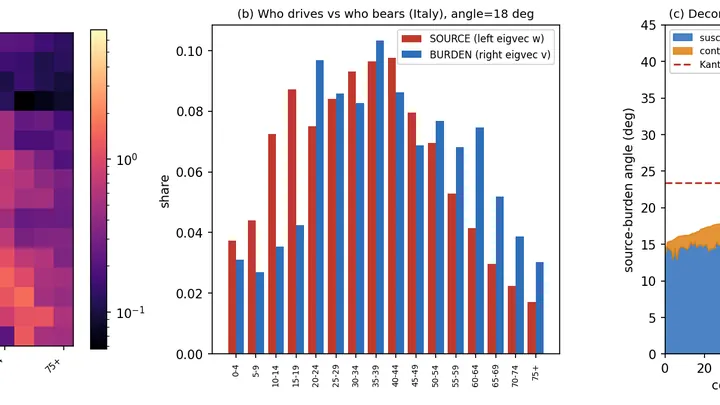
The orchestra plays without a conductor. We know the overall volume: that's the basic reproduction number R0, the spectral radius of the epidemic. But the score itself, the contact matrix between people of different ages, holds the melody: who spreads the infection and who takes the main blow.
In 1944, Erwin Schrödinger asked the question "What is life?", foreshadowing quantum explanations of biology. Almost a century later, physicists return to this puzzle, armed with the apparatus of quantum field theory.
Inside every cell, a complex network of genes determines what it will become — a nerve cell, a muscle cell, or part of the skin. This choice often resembles flipping a toggle switch: two stable positions, and the cell decides which way to tip. But cells have a feature rarely considered in such models: they divide.
A living sheet of cells resembles a crowd on an escalator. In a calm state, everyone moves smoothly, but as soon as a crush occurs, movement comes to a halt. Similarly, cell layers under load can suddenly stiffen, turning from a pliable mass into an elastic scaffold.
A lump of plasticine, when kneaded, behaves like an amorphous solid — not a crystal, but not a liquid either. Inside such a material, avalanches can occur: one tiny rearrangement triggers neighboring ones, and a wave sweeps through the entire sample.
A cell about to divide first marks its waist. Beneath its membrane, in a thin gel of protein filaments, movement begins. The filaments flow like a slow river, and a belt forms in the middle of the cell. This belt tightens more and more until the cell is pinched in half.
Scientists built a computer model of this process.
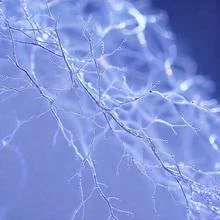
Inside every cell, there's a network of thin tubes — microtubules. They act as both scaffolding and rails: they hold the cell's shape and transport cargo. These tubes are built from the protein tubulin and naturally glow faintly under ultraviolet light. Scientists wondered: can we make this glow stronger or weaker on demand?
The key to control is the amino acid tryptophan.
A pathologist stains a tissue section with hematoxylin and eosin — cells turn blue and pink, and under the microscope you can see their shape and arrangement. But which genes are active in each cell cannot be read from such an image. That requires a separate, expensive assay that reveals the activity of thousands of genes at once, but it is rarely performed.
A colony of cells is like a city that grows from its outskirts: new houses appear where there's more space. Inside, it's crowded, and construction stalls. Similarly, cells divide more often at the edge, where neighbors squeeze them less. Scientists modeled this without any chemical commands — only mechanics.
In the model, each cell is a ball that presses on others.
When a virus enters the body or a cancer cell appears, T cells, the immune system's fighters, take the stage. Each T cell has its own receptor, a lock-like molecule that searches for the right key: a piece of protein (peptide) on the surface of the diseased cell. If the key fits, the T cell activates and destroys the enemy.
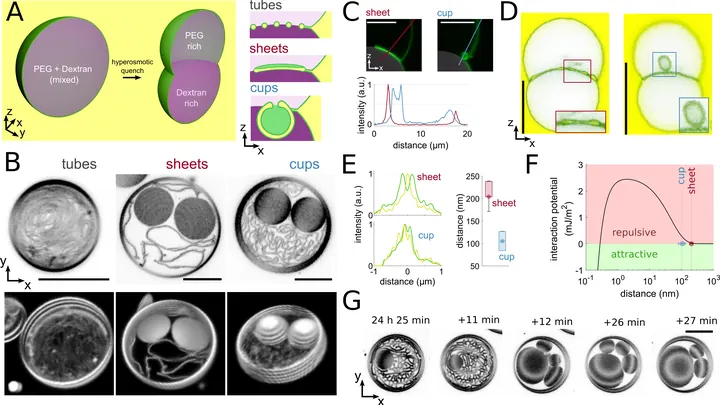
Inside a living cell, droplets float that don't mix with the surrounding fluid, like oil in water. These droplets aren't just passive clumps; they actively press on membranes and make them bend. Scientists observed this process in living plant cells, reproduced it in a test tube, and simulated it on a computer.
A piece of dough, when pulled from the sides, doesn't stretch evenly: in one spot it thins and tears. Living tissue behaves similarly, but instead of a tear, shear bands appear — narrow zones where cells begin to slide past each other, like cards in a deck when cut.
Cells on the surface of an embryo resemble grains of rice that can align in one direction. This order is called nematic. It arises when cells start acting in concert, like a school of fish swimming in the same direction.
A lightning bolt strikes an anthill. Some ants die instantly, some freeze, and a few days later the survivors start rebuilding the tunnels. That's roughly how a tumor behaves after electroporation — a method where short electric pulses are passed through tissue to poke holes in cancer cell membranes and kill them.
The layer of cells lining internal organs is like a crowd in a packed subway: everyone stands shoulder to shoulder, but sometimes the crowd starts to flow, and people slip past each other. Biologists call this behavior a transition from a jammed, solid state to a fluid one.
You can edit a cell perfectly, and it still turns out useless. The gene is fixed exactly as planned, yet the cell behaves unpredictably: it drifts, changes fate, loses safety. It's like fixing one gear in a watch, but the watch still runs wrong because the whole mechanism is out of sync.
Previously, a cell was viewed as a list of independent parts.
When you cut your finger, skin cells start working in concert: some divide, others crawl toward the wound, and still others pause. But exactly how a cell decides what to do next depends on its internal "schedule"—the cell cycle.
Inside every cell, there is a scaffold of filaments, like construction scaffolding that gives the cell its shape and allows it to move. These filaments are connected by crosslinking proteins: some simply hold them together like ropes, while others act as tiny motors that crawl along the filaments and pull them toward each other.
A tumor doesn't stay put. Individual cells or whole groups break off and set off on a journey through the body. Some crawl solo, like scouts; others stick together, like a flock. Scientists built a computer model to understand how these cells pick a direction.
In the model, cells respond to two signals.
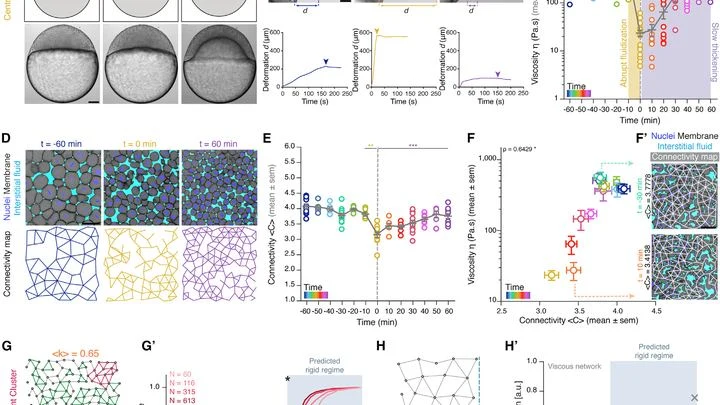
As an embryo grows, its cells don't just divide: they constantly touch their neighbors, like people in a crowded bus. The strength of these contacts determines where a cell moves and what shape the tissue takes. Scientists studied how cell 'stickiness' changes during the earliest stages of development.
Over the course of a day, the brain accumulates impressions the way a room accumulates stuff. At night, during deep sleep, it doesn't just rest: it tidies up: it sorts through the day's events and decides what to keep and what to toss. Scientists built a computer model of the brain that learns from a few examples during the day and 'replays' them at night, as if dreaming.
Dissolve a few salts and formaldehyde in a glass of water. After a while, the liquid spontaneously separates: droplets with membranes appear, like tiny bubbles. Inside each droplet, chemical transformations occur, and the droplet itself grows, absorbing material from the surrounding solution.
These droplets are not just bubbles.
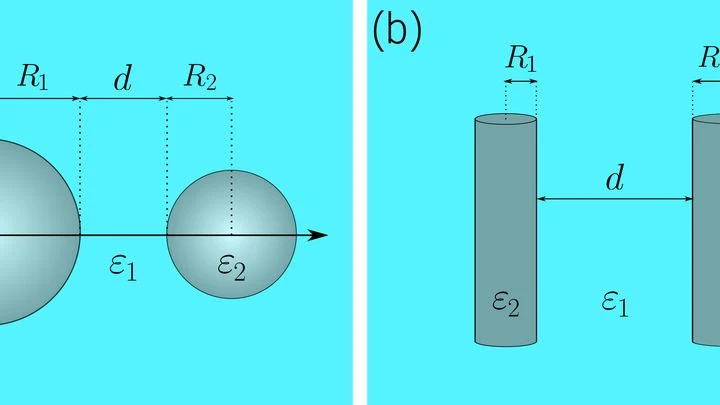
In a glass of salty water, even if it sits perfectly still, something is always happening. Tiny salt particles, ions, float and collide, sending ripples through the water. These ripples are invisible, but they create a force that attracts or repels nearby objects.
Previously, it was thought that this force only acts over very short distances, as if it quickly fades out.
A cell doesn't just lie on a surface: it probes it, pulls it, and pushes it. Until now, instruments could only detect direct forces: how hard a cell presses or stretches its support. But if you grab a cell by the "shoulders" and give it a slight twist, it responds by rotating, and until recently, no one could measure that rotation.
In the first weeks of an embryo's life, a dense crowd of cells crawls across its body. These cells will later form the facial bones, parts of the heart, and nerves. The crowd doesn't move randomly: a few leader cells take the front, and the rest follow them, like cyclists in a peloton.
For a long time, it was believed that leaders are a special breed of cells, born with a drive to lead.