Proteins are large molecules built from one or more chains of amino acids (polypeptide chains). Amino acids are connected by special bonds (peptide bonds). From 20 types of amino acids, a unique sequence is formed that determines how the chain folds into a three-dimensional shape. Proteins perform many tasks: they act as catalysts (enzymes that speed up chemical reactions), transporters, building materials, signaling molecules, and defenders (antibodies).
History
The concept of proteins as a special class of substances emerged in the 18th century. In 1838, Jöns Jacob Berzelius proposed the term 'protein'. In 1902, Franz Hofmeister discovered that amino acids are linked by peptide bonds. The primary structure of a protein (insulin) was deciphered by Frederick Sanger in 1953. The spatial structure of myoglobin was determined in 1958 by John Kendrew using X-ray crystallography, whose methods were developed by William Lawrence Bragg. In recent years, artificial intelligence (AlphaFold) has revolutionized protein structure prediction.
How it works
Proteins are synthesized on ribosomes during translation. Genetic information from mRNA is read by codons; tRNA delivers the corresponding amino acid. The growing polypeptide chain often undergoes post-translational modifications (phosphorylation, glycosylation, etc.), which affect protein activity and localization. Protein folding often occurs with the help of molecular chaperones. Misfolding leads to aggregation and diseases (e.g., Alzheimer's disease). Proteins can interact with other molecules with high specificity, forming complex networks of signaling pathways.
In practice
Proteins are part of food, enzymes in laundry detergents, and their design using AI opens the way to new drugs.
Fun fact
Spider web is almost pure fibroin protein, which surpasses steel of the same weight in tensile strength.
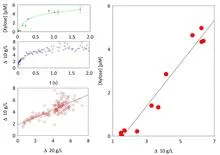
A droplet the size of a pea hangs in the air, held up by inaudible sound. Inside it, the protein ferritin, the very one that stores iron in our bodies, begins its dance. The water leaves, the dancers get crowded, and they line up in neat rows: that is how a crystal is born. But this dance has a conductor: polyethylene glycol, a long chain of repeating units.
A droplet the size of a pea hangs in the air, held up by inaudible sound. Inside it, the protein ferritin, the very one that stores iron in our bodies, begins its dance. The water leaves, the dancers get crowded, and they line up in neat rows: that is how a crystal is born. But this dance has a conductor: polyethylene glycol, a long chain of repeating units.
In a yeast cell, the nucleus takes up about six percent of the volume, like a small ball in a room. A hundred years ago, biologists noticed that bigger cells have bigger nuclei, but why this is so remained a mystery. Some talked about protein motors, others about envelope tension, still others about shape.
A courier carrying a package enters a dense forest of intertwined ropes. He needs to deliver the cargo deep inside, but along the way he loses strength, and each step becomes harder. This is what an enzyme looks like as it degrades a dense gel of biological molecules. Until recently, no one could simultaneously see how the courier moves and how the forest thins out.
The end of a chromosome is like a parking spot at the entrance to a building: it has to be occupied, or the cell will take it for damage and start repairing something that was never broken. In yeast, the role of parking attendant goes to the protein Cdc13. It recognizes the telomere, the terminal stretch of the chromosome, and latches onto it.
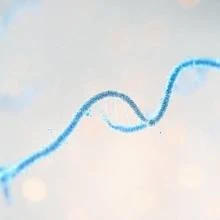
Picture a long thread trapped inside a sphere with charged walls. The thread is the virus's RNA; the sphere is its protein shell. The thread tries to settle so that its charges sit as close as possible to opposite charges on the wall.
The orchestra starts playing, but each musician has their own tempo. If everyone plays at roughly the same speed, the music flows in a continuous stream. But if one group of instruments plays noticeably slower than the rest, the sound gathers into a dense clump that slowly moves forward.
A protein in a cell doesn't hang motionless like a mannequin in a store window. Its atoms are constantly jiggling, stretching, and bending, like a plucked guitar string that keeps vibrating after you strum it. To understand how a protein works, you need to know how tightly each part holds onto its neighbors.
A protein engineer is like a chef trying to make a dish that is tasty, healthy, and cheap all at once. Change one ingredient, and you risk ruining another. In the past, computer assistants could only evaluate protein properties one at a time, missing how they are connected.
Collagen is the rope from which our tendons, skin, and bones are woven. Each "rope" is a bundle of molecules twisted into a triple helix, like three strands in a cable. Until now, no one had seen what happens to these strands when we pull on the cable.
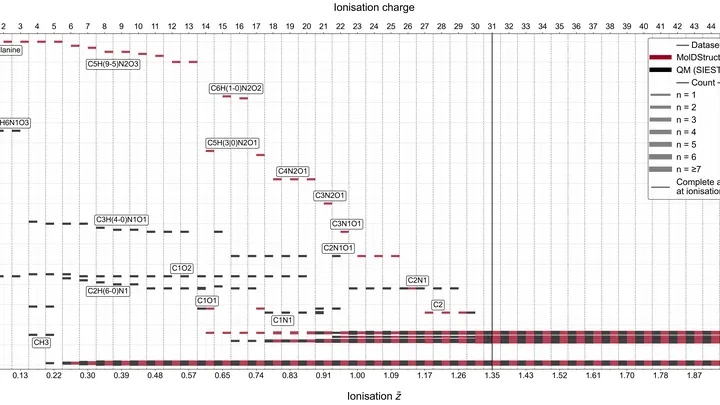
A tennis ball hits a sandcastle. The castle crumbles, but by where and how far the grains of sand fly, you can guess the castle's shape. That's roughly how the method of exploding proteins with X-rays works. The laser beam is so powerful that the protein molecule loses electrons and flies apart into charged fragments, like the castle under the ball's impact.
Under an electron microscope, a protein looks like a series of blurry shadows — hundreds of thousands of images of the same molecule, but from different angles and with heavy noise. Previously, from these shadows, one first assembled a volumetric 'haze'—a map of how electric charge is distributed inside the protein.
Epithelium lines our organs like tiles on a floor. At rest, cells cling to each other, and the tissue is elastic. But during embryonic development, wound healing, or tumor growth, this layer begins to flow like thick honey. What exactly triggers such softening?
Epithelium lines our organs like tiles on a floor. At rest, cells cling to each other, and the tissue is elastic. But during embryonic development, wound healing, or tumor growth, this layer begins to flow like thick honey. What exactly triggers such softening?
A protein is like a tiny machine that switches on and off on command. The command arrives when another molecule sticks to it, like a key in a lock. The protein then changes shape and passes the signal along. But exactly how the signal travels inside the protein has long been a mystery.
As you slowly turn the tuning knob of an old radio, the sound doesn't fade in gradually from the static: it bursts forth in a sudden jump, the moment the antenna hits resonance with the wave. Genes in a living cell behave much the same way.
As you slowly turn the tuning knob of an old radio, the sound doesn't fade in gradually from the static: it bursts forth in a sudden jump, the moment the antenna hits resonance with the wave. Genes in a living cell behave much the same way.
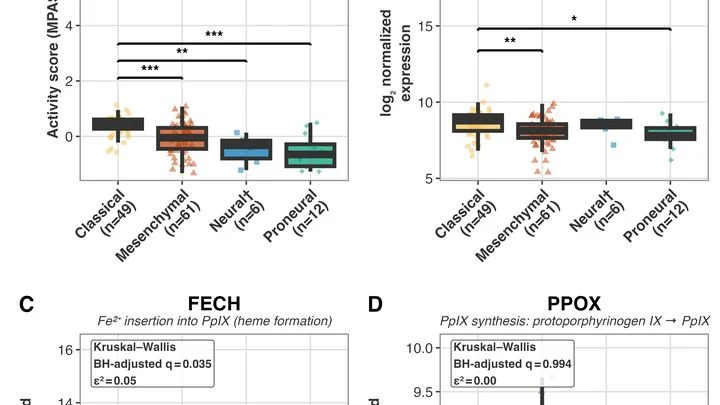
Imagine a workshop where glowing paint is assembled. A worker takes a precursor, adds the right pigment, and the paint is ready. Nearby, a supervisor redirects some of the paint to another warehouse and dumps the rest as waste. Similarly, brain tumor cells themselves produce the substance that makes them glow under the surgeon's blue lamp.
Toss a handful of sand onto a table — the grains scatter equally in all directions. But if a magnet is hidden under the table and the sand is iron, the trajectories get trickier: an invisible structure overlays the chaos. That's roughly how molecular motion works inside a living cell.
A mountain pass connects two valleys. In one, the protein is folded; in the other, it is unfolded. To get from one to the other, you must cross the saddle — the highest point on the path. In protein science, this point is called the transition state, and the coordinate that shows the distance to it is the committor.
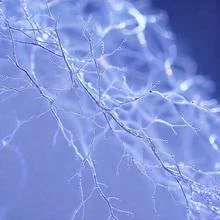
In the long extensions of a neuron, the dendrites, tiny couriers are constantly bustling about. These are messenger RNA molecules carrying instructions for protein assembly. Their journey starts at the cell body and ends at synapses — contacts with other neurons.
A protein chain folds into a working tool in a fraction of a second, and almost never makes a mistake. For a long time, it was thought that evolution specifically polishes amino acid sequences so that a protein not only works but also easily finds its unique shape. New work turns this idea on its head.
In the black depths of space, on the surfaces of tiny icy dust grains, a quiet construction is underway. There, where temperatures drop to near absolute zero and harsh radiation abounds, the ordinary amino acid glycine, the simplest protein building block, links up with itself.
A bacterial biofilm is like a city made of slime. The houses are the microbes themselves. The streets and bridges are long polymer molecules that bacteria secrete outside. This whole construction is not static: the bridges are constantly breaking and re-forming.
The authors built a "toy" computer model of such a city.
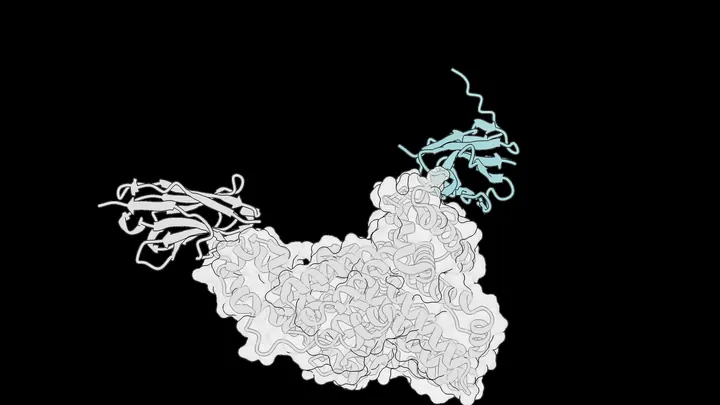
A protein in a cell is not a rigid part but rather a soft glove that can grasp different objects. Until now, protein designers worked like sculptors, crafting a key for a single lock: one target, one shape. But life is more complex: sometimes a protein needs to recognize two different viruses at once or change its contours depending on its neighbors.
Inside every cell, logistics is in full swing: tiny protein motors, like couriers, haul cargo along a network of microtubules. One of the main workhorses is kinesin, which steps using the energy of ATP (the cell's main energy currency). For a long time, researchers tried to evaluate it like a car: how much fuel it burns, how fast it gets there.
A protein slides along the DNA strand like a key along a keyring, searching for its lock. One wrong turn and a gene stays switched off. To know where a protein will grip firmly, you need to measure the strength of that grip — the binding energy.
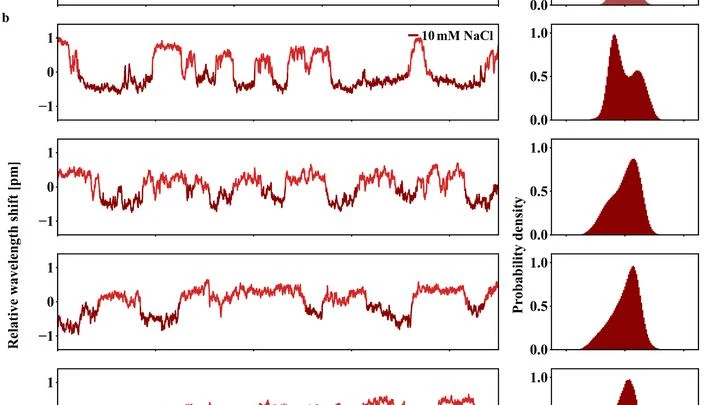
A protein in a cell is not a frozen sculpture but a restless mechanism. Its parts are constantly vibrating, and these movements determine how it grabs molecules, transmits signals, or builds the cellular scaffold. But filming the life of a single protein was hampered by two nuisances at once. First, the movements last millionths of a second — ordinary cameras simply cannot catch them.
Imagine a vast library where every book is a precise instruction manual for assembling one protein molecule. AlphaFold2 read millions of such books and learned to instantly produce a ready-made 3D model. But inside this network, in its very 'brain,' something more remained — not just assembly rules, but an entire atlas of possible protein motions, its hidden life.
The cells of an organism are like twin chefs sharing a kitchen. They have the same cookbook (DNA), but when copying the recipe to a cheat sheet and assembling the dish, random errors occur. This unpredictability, entropy, means that in identical cells, protein levels are sometimes high, sometimes low.
In boiling soup, molecules collide chaotically and react. But if you measure how their concentrations change, patterns emerge. This is how carbon chemical networks work — mixtures of molecules that spontaneously 'cook' information, turning each reaction into an elementary computation. Previously they were used only for modeling nature.
You get a report: one 'letter' in your gene has been swapped. But what does that change? A protein isn't a flat string: it's a dense tangle, where each loop sits in its own pocket. A change deep inside that tangle is like a crack in the foundation, while one on the surface is like a scratch on the facade.
A protein in a cell is not a frozen sculpture. It is constantly in motion: bending, breathing, jittering. This motion, its dynamics, determines how the protein works. But peering directly into the dance is hard, and computer simulations often demand enormous computing power.
A new approach, named DynaMode, views protein motion as a musical piece.
Think of a massive cookbook: each recipe is a protein, and the finished dish is its job in the cell. To whip up a complex treat, you often need to mix several ingredients and let them 'set' into the right shape. Until now, scientist-chefs could only guess how someone else's recipes would fold.
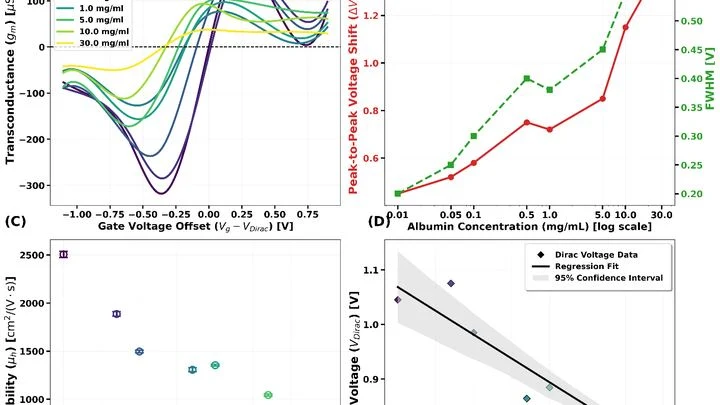
In a drop of blood float millions of albumin molecules — the main transport protein. Its level drops in kidney and liver diseases, so doctors need a fast and accurate way to measure it. Engineers have proposed a detector the size of a dust particle: a graphene transistor that works directly in liquid.
Graphene is a sheet of carbon one atom thick.
In 1944, Erwin Schrödinger asked the question "What is life?", foreshadowing quantum explanations of biology. Almost a century later, physicists return to this puzzle, armed with the apparatus of quantum field theory.
Biological complexity has long eluded us: you can count genes, cells too, but how do you grasp the organization of the proteome itself — a multi-thousand ensemble of proteins woven from carbon, oxygen, and hydrogen?
Life is a constant dance between order and chaos. Back in the mid-20th century, Erwin Schrödinger noted that living things feed not so much on matter as on "negative entropy"—the ability to maintain their own order by increasing disorder around them.
An engineer tunes an antenna: pull one segment, the frequency drifts; change the angle, the gain drops. Developing therapeutic peptides (short protein chains) works much the same way.
For a long time, we only saw proteins in their final form — like photographs of dancers frozen in a beautiful pose. Programs like AlphaFold learned to predict that pose from a chain of carbon links. But the real magic is how a protein finds this shape faster than you can blink, performing a swift dance.