Un impact sur son satellite a ralenti l'astéroïde principal express
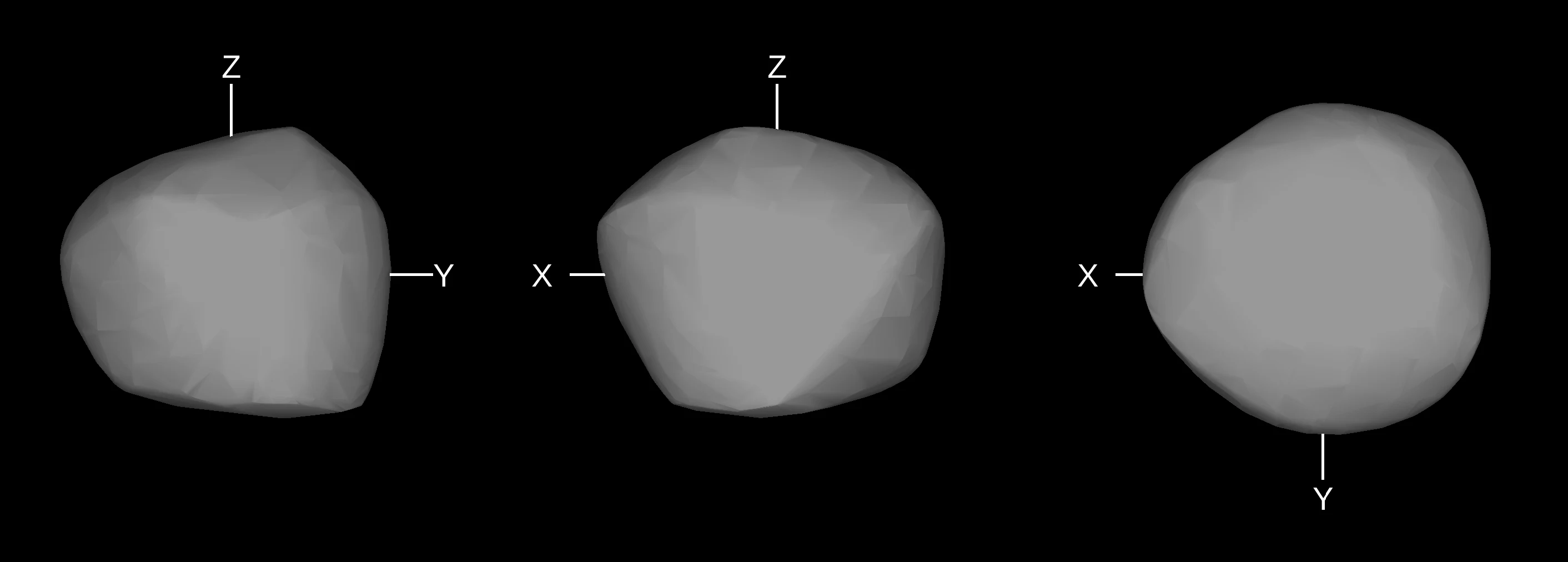
L'astéroïde Didyme a ralenti sa rotation après que la sonde DART s'est écrasée sur son satellite Dimorphos. La raison : l'impact a aplati Didyme, qui s'est élargi à la taille, comme un patineur qui écarte les bras. Cet « écartement » a ajouté 0,18 seconde à chaque rotation – moins qu'un instant, mais les astronomes l'ont remarqué grâce à 20 ans d'observations. Ils ont suivi les variations de luminosité du système lorsque l'un des astéroïdes éclipse l'autre – méthode du transit – et ont détecté ce léger allongement des jours grâce à la photométrie. C'est la première preuve qu'un bélier cinétique peut non seulement dévier un astéroïde, mais aussi modifier durablement sa forme et sa rotation. Et le plus surprenant : Dimorphos, après l'impact, orbite désormais autour de Didyme 37 minutes plus vite. Où que l'on regarde, il y a des surprises.
Résumé original
tel que rédigé par les auteurs, en anglais arXiv:2601.04793v1
On 26 September 2022, the NASA Double Asteroid Redirection Test (DART) spacecraft impacted Dimorphos, the secondary component of the binary asteroid (65803)~Didymos. This experiment tested the Kinetic Impactor technology for diverting dangerous asteroids. Due to the impact, the binary system's angular momentum has changed, resulting in a significant change in the orbital period of Dimorphos. Precise values of the pre- and post-impact orbital periods were derived from a large set of photometric light curves measured for the Didymos-Dimorphos system during six apparitions from 2003 to 2023. We used these data to detect a possible change in the rotation period of the primary as a consequence of the impact. We analyzed the binary system's light curves using the binary asteroid light curve decomposition method. We selected parts of the light curves covering orbital phases outside mutual events, which represent the primary rotational light curves. We applied the light curve inversion method to construct a convex shape model of Didymos and determine its rotation period before and after the impact. These two periods were treated as independent free parameters of the modeling. We found a value of 2.2603891 +/- 0.0000002 h for the pre-impact period and 2.260440 +/- 0.000008 h for the post-impact period. Their difference 0.18 +/- 0.03 s is small yet significant, indicating that the rotation of Didymos became slower after the DART impact. The most plausible physical explanation is Didymos's post-impact reshaping, making its shape more oblate.
L'orbite de Dimorphos autour de Didyme s'est raccourcie de 37 minutes : de 11,9 à 11,23 heures.
Si dans « Armageddon » on fait exploser l'astéroïde avec une bombe atomique, DART a simplement percuté sa cible – et cela a suffi pour modifier non seulement l'orbite, mais aussi la rotation.