Радио раскрывает рождение звёзд в ранней Вселенной экспресс
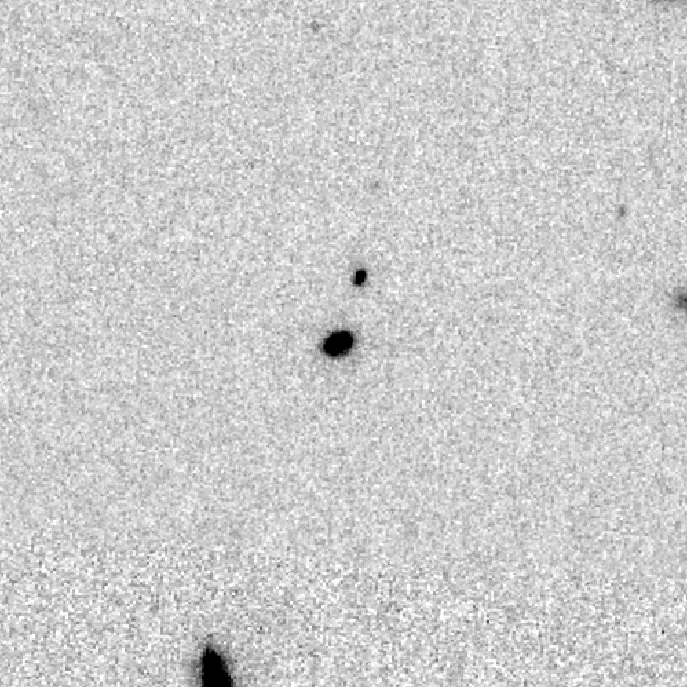
Радиотелескоп поймал сигнал от трёх галактик, которые существовали, когда Вселенной было меньше миллиарда лет. Их радиосвечение такое мощное, будто в каждой за короткий срок родилось по тысяче солнц в год. Для сравнения: наш Млечный Путь рождает всего пару звёзд за год.
Сначала эти галактики заметили на снимках космических телескопов «Хаббл» и «Джеймс Уэбб» — они выглядели необычно красными из-за огромного расстояния. Потом спектрограф подтвердил: свет шёл к нам 12,8–13,1 миллиарда лет. Дальше в дело вступили радиотелескопы, и они показали, что всё излучение создано звёздами, а не чёрной дырой в центре.
Две из трёх галактик имеют рваную, многокомпонентную форму. Похоже, они только что пережили столкновение с соседкой, и это столкновение сжало газ, запустив лавину звездообразования. Так в ранней Вселенной зажигались первые большие скопления звёзд.
Оригинальная аннотация
как её написали авторы, на английском arXiv:2602.05808
Radio observations offer a dust-independent probe of star formation and active galactic nucleus (AGN) activity, but sufficiently deep data are required to access the crossover luminosity between these processes at high redshift ($$z>4.5$$). We present three spectroscopically confirmed high-redshift radio sources (HzRSs) detected at 1.3 GHz at $$z=4.9$$-$$5.6$$, with radio luminosities spanning $$L_{\rm 1.3 \, GHz}\approx2$$-$$5\times10^{24} \, \rm W \, Hz^{-1}$$. These sources were first identified as high-redshift candidates through spectral energy distribution (SED) fitting of archival Hubble, JWST NIRCam+MIRI, and ground-based photometry, and then spectroscopically confirmed via the $$\rm H\,\alpha$$ emission line using wide-field slitless spectroscopy from JWST COSMOS-3D. The star formation rates (SFRs) measured from SED fitting, the $$\rm H\,\alpha$$ flux, and the 1.3 GHz luminosity, span $$\sim100$$-$$1800\, M_{\odot} \, \rm yr^{-1}$$, demonstrating broad agreement between these SFR tracers. We find that these three sources lie either on or $$0.5$$-1.0 dex above the star-forming main sequence at $$z=4$$-6 and have undergone a recent burst of star formation. The sources have extended rest-UV/optical morphologies with no evidence for a dominant point source component, indicating that an AGN is unlikely to dominate their rest-UV and optical emission. Two of the sources have complex, multi-component rest-frame UV/optical morphologies, suggesting that their starbursts may be triggered by merging activity. These HzRSs open up a new window towards probing radio emission powered by star formation alone at $$z> 4.5$$, representing a remarkable opportunity to begin tracing star formation, independent of dust, in the early Universe.
Свет от этих галактик шёл к нам почти 13 миллиардов лет — это в три раза больше возраста Земли.