Сверхновая выдохнула угарный газ экспресс
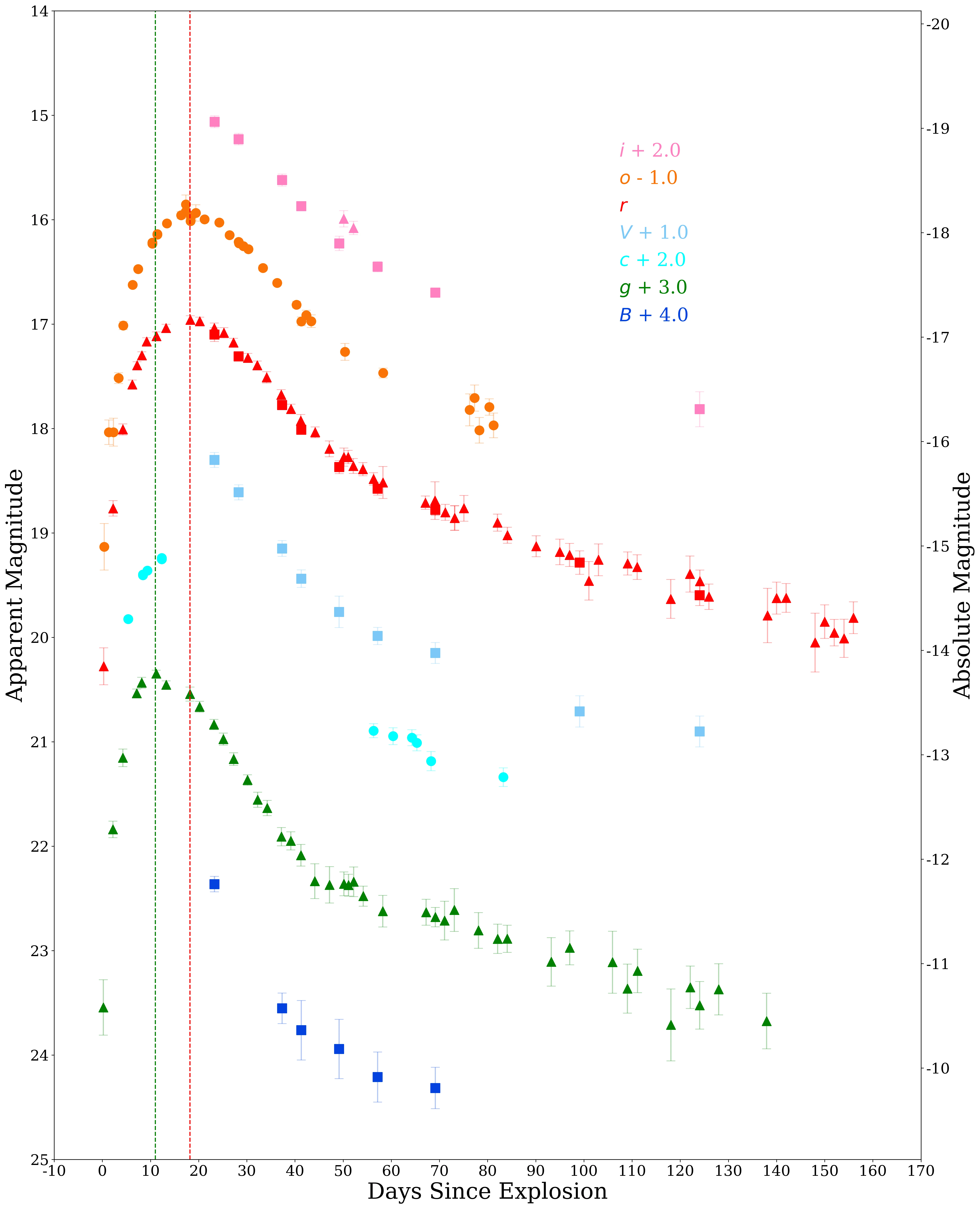
Когда массивная звезда исчерпывает топливо, она сбрасывает водородную оболочку и взрывается — как последний, отчаянный выдох. Такую сверхновую (тип Ib) и наблюдали астрономы. Через 62 дня после взрыва в остывающих обломках они уловили слабое инфракрасное свечение: это оказался след угарного газа (CO). Вещество неслось с чудовищной скоростью 6 тысяч километров в секунду — за одно мгновение оно покрыло бы расстояние от Земли до Луны двадцать раз. От такой прыти его спектроскопический отпечаток размылся в широкий горб. Вокруг светилась раскалённая до 637 °C космическая пыль, а линии гелия подтвердили класс взрыва.
Дыхание умирающих звёзд — вот из чего сделан мир.
Оригинальная аннотация
как её написали авторы, на английском arXiv:2603.23877
We present optical and near-infrared (NIR) observations of the Type Ib supernova (SN) 2024rbc. Emission from the first CO overtone, resting on a dust continuum at $$2.3-2.4$$ $$\mu$$m, was observed at 62 days post-explosion. The CO band heads are not resolved, and the emission appears broad, lacking sharp spectral features. This is the first observation of CO in the ejecta of a Type Ib SN reported in literature. The spectra of SN 2024rbc exhibit strong He I lines and numerous neutral and ionized metal lines. Comparing the spectral evolution of SN 2024rbc to other Type Ib, Ic, and IIb SNe indicates it is a Type Ib SN. We compare the velocities of key optical lines to examine the evolution of the ejecta. Additionally, fitting SN light curve models of helium star progenitors computed with the STELLA code to photometric observations indicates a $$^{56}$$Ni mass of $$0.07$$ $$M_\odot$$ and an ejecta mass of $$1.7$$ $$M_\odot$$. Fitting a LTE model to the CO overtone implies a CO mass of 5.2 $$\times$$ 10$$^{-4}$$ $$M_{\odot}$$, a CO temperature of $$4040$$ K, and a CO velocity width of $$5905$$ km s$$^{-1}$$. We also fitted a modified blackbody model to the dust continuum, deriving a dust temperature of $$910$$ K and a dust mass of $$1.3$$ $$\times$$ $$10^{-3}$$ $$M_{\odot}$$. The CO provides direct evidence for the onset of dust formation, and the observed dust continuum likely originates from newly formed dust in the ejecta. However, robust dust mass estimates require MIR observations.
Угарного газа в SN 2024rbc столько, что его масса в миллиарды раз превышает вес всей земной атмосферы. Но по сравнению с массой звезды это ничтожная примесь.
Фраза «все мы сделаны из звёздной пыли» — не просто метафора. В фильме «Интерстеллар» эта мысль звучит особенно пронзительно.