ثقب أسود يمدد سحابة كأنها حلوى سريع
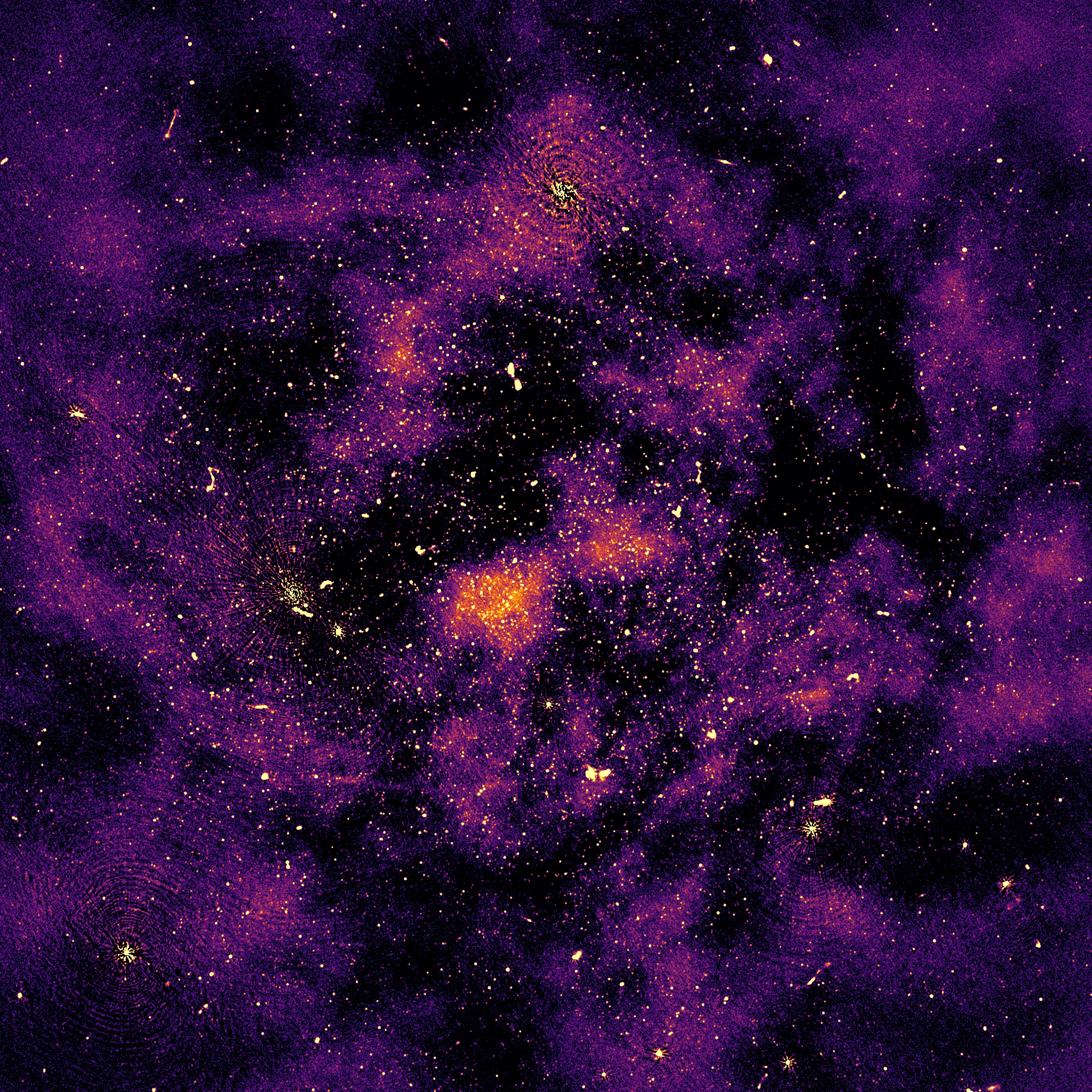
الثقب الأسود في النظام الثنائي V4641 الرامي يتصرف مثل خلاط عملاق. إنه يبتلع مادة النجم المجاور ويقذفها مرة أخرى إلى الفضاء عبر نفاثتين ضيقتين. تضرب هذه النفاثات الغاز المحيط مثل تيار ماء يضرب الرمال، وتدريجيًا تحفر تجويفًا هائلًا حول الثقب.
التلسكوب الراديوي ميركات في جنوب أفريقيا راقب هذا النظام لعدة ساعات. في الصور ظهرت سحابة على شكل قوس — حلقتان ممدودتان تبتعدان عن الثقب في اتجاهين متعاكسين. حجم السحابة 35 سنة ضوئية. هذا كما لو أنك مددت خيطًا مضيئًا من الشمس إلى أقرب نجم، ثم مددته عشرة أضعاف.
ما الذي يسرّع الجسيمات إلى هذه الطاقات؟ على الأرجح، موجات الصدمة داخل النفاثات. عندما يصطدم تيار سريع بغاز بطيء، فإنه يجرفه أمامه مثل جرافة. في هذه الجبهة، تقفز الجسيمات ذهابًا وإيابًا عبر الحدود وتكتسب سرعة. هكذا تتسارع الإلكترونات في السحابة إلى طاقات تتجاوز بآلاف المرات قدرات مصادم الهادرونات الكبير.
السحابة حول V4641 الرامي اكتشاف نادر. إنها تُظهر أنه حتى الثقوب السوداء الصغيرة يمكنها أن "تنفخ" في الفضاء لعقود وتخلق هياكل بحجم عناقيد نجمية كاملة. ربما ساعدت مثل هذه السحب يومًا ما الأشعة الكونية على ملء مجرتنا.
الملخص الأصلي
كما كتبه المؤلفون، بالإنجليزية arXiv:2601.03140
Black holes (BHs) in microquasars can launch powerful relativistic jets that have the capacity to travel up to several parsecs from the compact object and interact with the interstellar medium. Recently, the detection of large-scale very-high-energy (VHE) gamma-ray emission around the black hole transient V4641 Sgr and other BH-jet systems suggested that jets from microquasars may play an important role in the production of galactic cosmic rays. V4641 Sgr is known for its superluminal radio jet discovered in 1999, but no radio counterpart of a large-scale jet has been observed. The goal of this work is to search for a radio counterpart of the extended VHE source. We observed V4641 Sgr with the MeerKAT radio telescope at the L and UHF bands and produced deep maps of the field using high dynamic range techniques. We report the discovery of a large-scale (35 pc), bow-tie-shaped, diffuse, radio structure around V4641 Sgr, with similar angular size to the extended X-ray emission discovered by XRISM. However, it is not spatially coincident with the extended VHE emission. After discussing the association of the structure with V4641 Sgr, we investigate the nature of the emission mechanism. We suggest that the bow-tie structure arose from the long-term action of large-scale jets or disk winds from V4641 Sgr. If the emission mechanism is of synchrotron origin, the radio/X-ray extended structure implies acceleration of electrons up to more than 100 TeV as far as tens of parsecs from the black hole.
التلسكوب الراديوي ميركات يتكون من 64 هوائيًا، كل واحد بحجم مبنى من ثلاثة طوابق. معًا يلتقطون موجات الراديو بوضوح مثل عين عملاقة واحدة بقطر 8 كيلومترات.