كيف يبعثر الموجات فوق الصوتية الجسيمات سريع
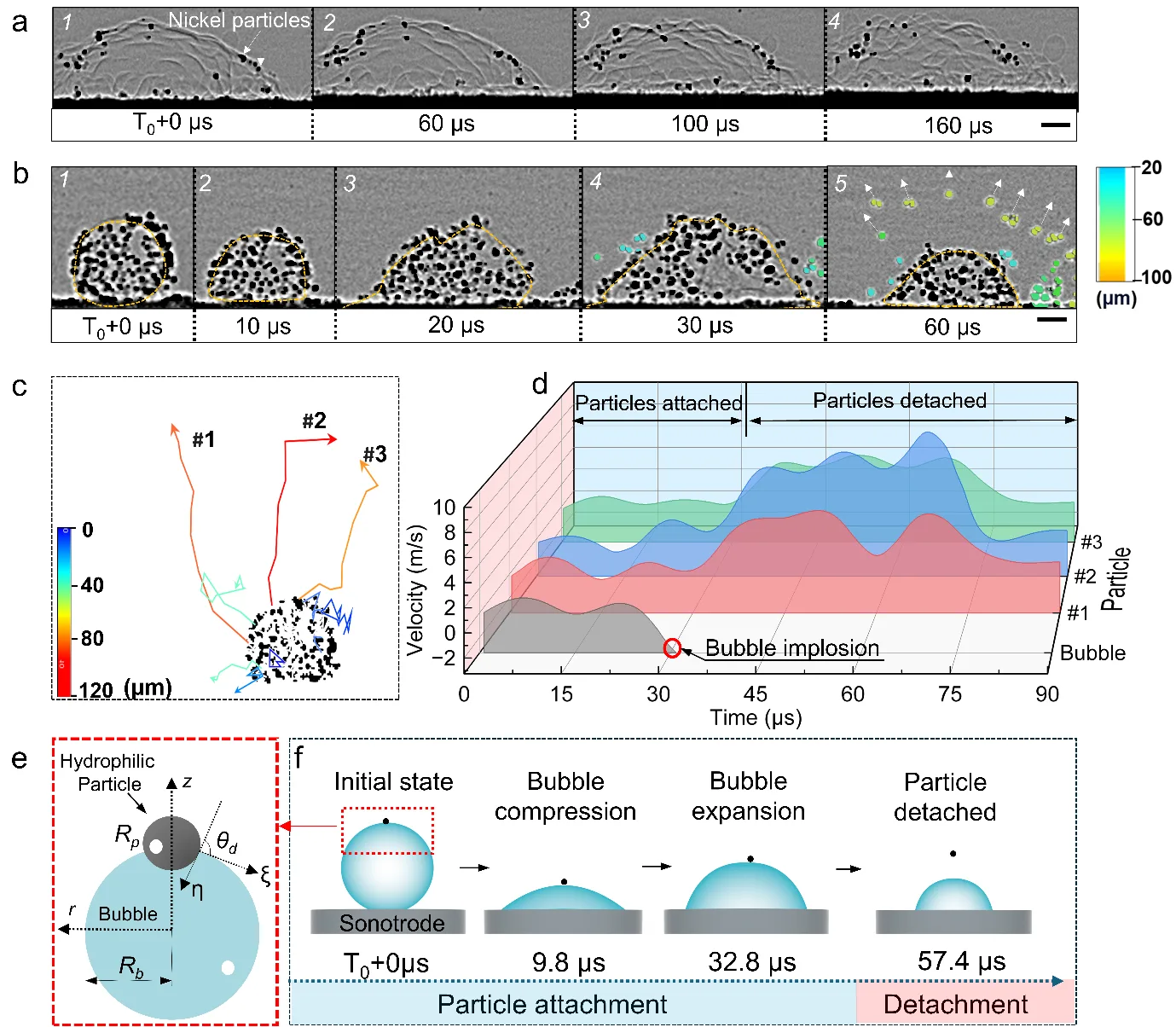
في كأس ماء، تولّد الموجات فوق الصوتية فقاعات صغيرة جدًا. تكبر تارةً وتنكمش تارةً أخرى، وأحيانًا تنهار فجأة مثل فقاعة صابون تنفجر، لكن أسرع بآلاف المرات. بجانب هذه الفقاعات تسبح جسيمات دقيقة — مثل كريات نيكل بحجم ذرة غبار. تدفعها الفقاعة عند كل حركة، مثل سبّاح يضرب الماء ويرسل أمواجًا حوله.
لرؤية هذه الدفعات، استخدم العلماء أشعة سينية من معجل جسيمات. التقطوا صورًا كل بضع ميكروثوانٍ — أسرع من طرفة عين. تُظهر الصور كيف يبتعد الجسيم عن الفقاعة. بقياس السرعة والمسافة، حسب الباحثون الطاقة. اتضح أنه عندما تهتز الفقاعة فقط، تعطي الجسيم نحو 16% من طاقتها — وكأن السبّاح ينقل جزءًا من قوته إلى موجة تدفع كرة. أما عندما تنهار الفقاعة، يحصل الجسيم على 26% من الطاقة. الانهيار هو أقوى دفعة.
هذه الدفعات ليست عبثًا. بفضلها تتناثر الجسيمات في السائل كله ولا تلتصق ببعضها في كتل. يساعد ذلك في صنع الدهانات والكريمات والمواد المركبة وحتى الطبقات الرقيقة للإلكترونيات. إذا تمكّنّا من التحكم في طاقة الفقاعات، يمكننا مزج المواد بدقة أكبر وصنع مواد جديدة.
هكذا تتحول الموجات فوق الصوتية إلى يد خفية ترتب الجسيمات في أماكنها بدقة وسرعة. والآن أصبح واضحًا كم من القوة يُبذل في هذا العمل.
الملخص الأصلي
كما كتبه المؤلفون، بالإنجليزية arXiv:2601.13582
Multiphase fluid flows comprising of mesoscale solid particles, liquid droplets, or gas bubbles are common in both natural and man-made systems, but quantifying the energy transfer is challenging due to complex bubble-particle interactions. In this study, we used ultrafast synchrotron X-ray imaging to study the mesoscale dynamic interactions among ultrasonic cavitation bubbles and hydrophobic particles or clusters. Critical dynamic information and data were extracted from the vast amount of X-ray images and then fed into the hybrid analytical-numerical model for calculating the energy transfer from the oscillating bubble and the imploding bubble to the nearby hydrophobic particles. Using the Ni spherical microparticles as an example, at bubble oscillation approximately 16% (80-320 nJ) of the local energy was transferred to the particle. At bubble implosion, the transferred energy increased approximately 26% (0.135-1.09 uJ). Local energy transfer occurred on timescales of 1 us to 1 ms and length scales of 1 um to 1 mm. Within each ultrasound cycle, kinetic and potential energy underwent complex exchanges, with local energy exhibiting a stepwise decay at the end of each cycle. The transferred energy was mainly consumed for enabling highly efficient particle dispersion. This research provides quantitative insights into optimizing hydrophobic nanomaterial dispersion and has broader implications for interfacial energy transfer processes such as making suspensions, composite materials and exfoliated 2D materials.
انهيار الفقاعة في السائل يمكن أن ينتج حرارة تصل إلى آلاف الدرجات — مثل حرارة سطح الشمس، لكن للحظة قصيرة جدًا.