رقاقة كمومية صمدت أمام عام من إعادة التشغيل سريع
الحاسوب الكمومي مثل أوركسترا، حيث يجب على كل عازف أن يعزف بدقة تصل إلى جزء من مليار من الثانية. إذا خرجت آلة واحدة عن اللحن، انهارت السيمفونية بأكملها. لذلك، راقب العلماء على مدى عام كامل 27 كيوبتًا، وهي أبسط خلايا الذاكرة الكمومية. تم إيقاف تشغيل النظام أربع مرات، وتسخينه إلى درجة حرارة الغرفة، ثم تجميده مجددًا إلى ما يقارب الصفر المطلق.
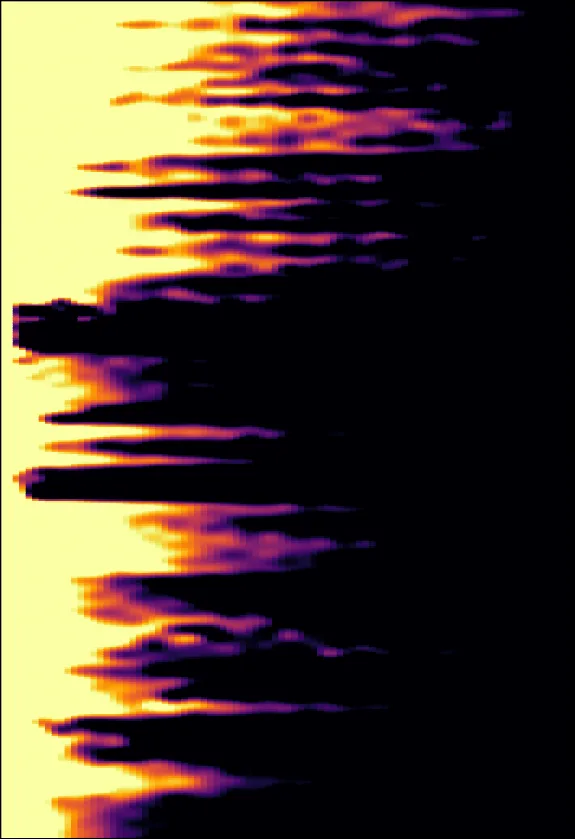
الكيوبتات نفسها صمدت أمام هذه الهزة بثبات مدهش. ترددها الأساسي، الذي "تغني" به، انزاح بأقل من نصف في المئة. كما أن الوقت الذي يحتفظ فيه الكيوبت بالمعلومات لم يتدهور. لكن محيط الكيوبتات تغير في كل مرة بشكل لا يمكن التعرف عليه. العيوب الصغيرة جدًا في المادة، والتي تسمى الأنظمة ثنائية المستوى، والتي تسبب التشويش، كانت تُخلط من جديد بعد كل دورة، مثل خلط أوراق اللعب.
هذا مثل منزل يظل قائمًا بثبات، لكن بعد كل شتاء تظهر فيه صريرات جديدة في ألواح الأرضية. الجدران سليمة، لكن على السكان أن يتعودوا من جديد على الأصوات. بالنسبة للحواسيب الكمومية، هذا يعني أنه بعد كل تشغيل، يجب إعادة ضبط كل كيوبت تلقائيًا. بدون هذا الضبط الدقيق، لا يمكن لحاسوب كمومي كبير أن يعمل باستقرار.
الملخص الأصلي
كما كتبه المؤلفون، بالإنجليزية arXiv:2602.07522
The temporal stability and reproducibility of qubit parameters are critical for the long-term operation and maintenance of superconducting quantum processors. In this work, we present a comprehensive longitudinal characterization of 27 frequency-tunable transmon qubits spanning over one year across four thermal cycles. Our results establish a distinct hierarchy of stability for superconducting hardware. We find that the intrinsic device parameters determining the qubit frequency and the baseline energy relaxation times ($$T_1$$) exhibit high robustness against thermal stress, characterized by frequency deviations typically confined within 0.5\% and non-degraded coherence baselines. In stark contrast, the environmental variables, specifically the background magnetic flux offsets and the microscopic landscape of two-level system (TLS) defects, undergo a significant stochastic reconfiguration after each cycle. By employing frequency-dependent relaxation spectroscopy and a quantitative metric, the $$T_1$$ Spectral Topography Fidelity, we demonstrate that thermal cycling acts as a ``hard reset'' for the local defect environment. This process introduces a level of spectral randomization equivalent to thousands of hours of continuous low-temperature evolution. These findings confirm that while the fabrication quality is preserved, the specific noise realization is statistically distinct for each thermal cycle, necessitating automated recalibration strategies for large-scale quantum systems.
العيوب ثنائية المستوى هي مناطق صغيرة جدًا في المادة تتصرف مثل مغناطيسات مصغرة تغير اتجاهها عشوائيًا. وهي المصدر الرئيسي للضوضاء في الرقاقات الكمومية الحديثة.