جسيمات الشمس لا تصل وفق جدول زمني سريع
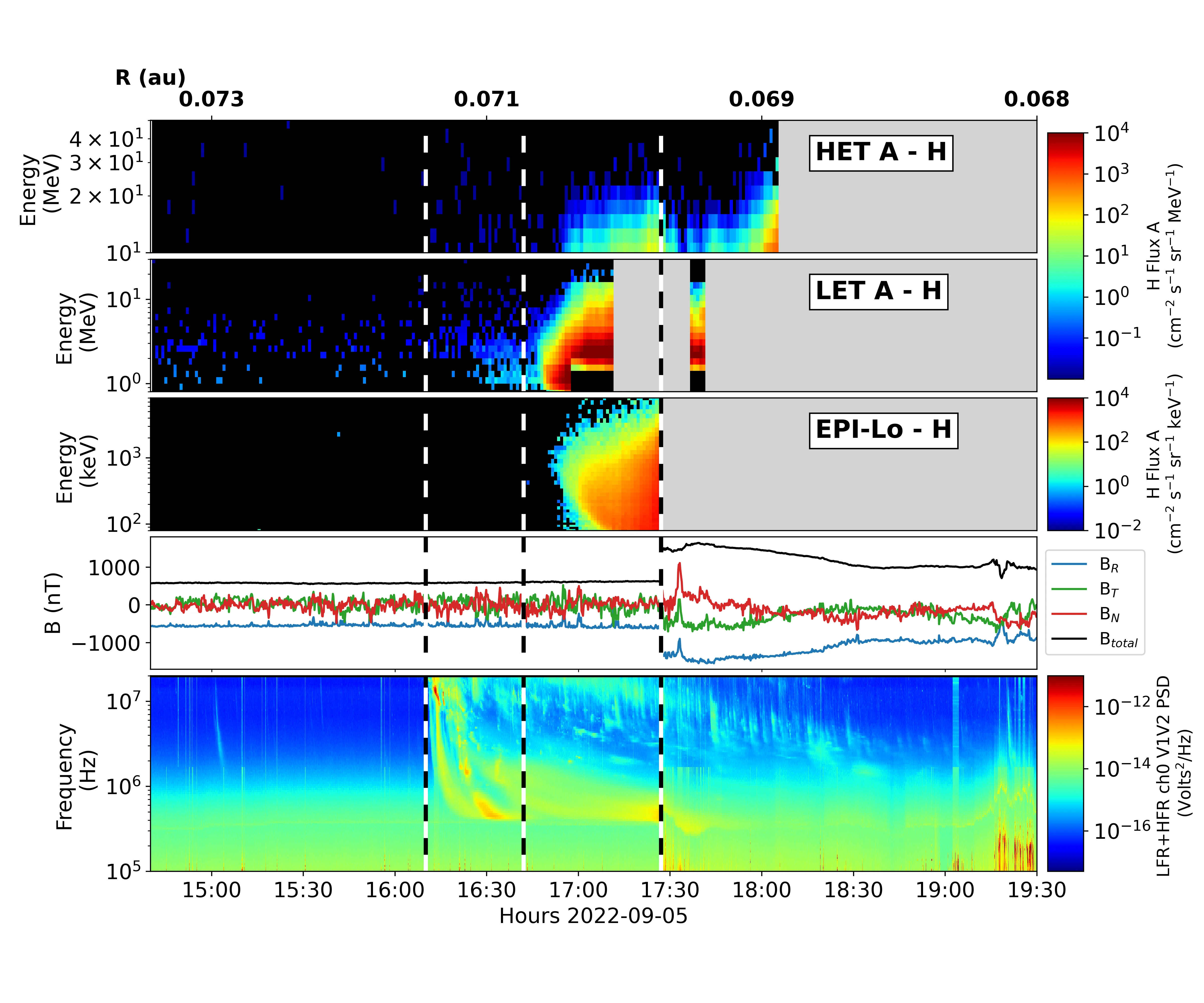
تقذف الشمس أحيانًا سحبًا كاملة من الجسيمات المشحونة في الفضاء. عادةً، تصل أسرعها — تلك ذات الطاقة الأعلى — إلى المسبار أولاً، مثل العدّائين في سباق طويل. لكن في 5 سبتمبر 2022، رصد مسبار باركر، الذي يحلّق أقرب إلى الشمس من أي مسبار آخر، أمرًا غريبًا: جسيمات متوسطة الطاقة وصلت قبل السريعة والبطيئة على حد سواء.
على الرسم البياني، يبدو هذا وكأنه «أنف» — نتوء في المنتصف حيث وصلت الجسيمات مبكرًا جدًا. أُطلق على هذا السلوك اسم «ترتيب الوصول المعكوس». فحص العلماء جميع بيانات المسبار حتى نهاية 2024 ووجدوا 14 حالة من هذا القبيل. معظمها — 11 حالة — كانت عند الطاقات المتوسطة، من نصف مليون إلى خمسة ملايين إلكترون فولت. للمقارنة: طاقة الجسيم في البرق العادي تبلغ حوالي مليون إلكترون فولت.
لماذا تتأخر الجسيمات السريعة فجأة؟ ربما تؤخرها موجة الصدمة الناتجة عن القذف، فهي تعمل مثل البوابة الدوّارة: تسمح للبطيئة بالمرور، وتُبطئ الأسرع. أو ربما يعود السبب إلى كيفية التفاف الجسيمات على طول الخطوط المغناطيسية. الإجابة الدقيقة ما زالت في المستقبل، لكن من الواضح بالفعل أن الشمس لا تطلق دائمًا وفق نمط ثابت.
قائمة هذه الأحداث تشبه مجموعة بصمات أصابع من موقع تسارع الجسيمات. كل «أنف» يروي أين وكيف اكتسبت الجسيمات سرعتها. وكلما زادت هذه الحالات، اتضحت رؤية كيفية عمل المُسرِّع الطبيعي عند الشمس — ذلك الذي يقذف أحيانًا طاقته نحو الأرض أيضًا.
الملخص الأصلي
كما كتبه المؤلفون، بالإنجليزية arXiv:2602.12475
In SEP events, velocity dispersion (VD) is characterized by the earlier arrival of faster, higher-energy particles relative to slower ones, assuming negligible acceleration time and transport effects. The "Labor Day event" at Parker Solar Probe (PSP) on 2022 September 5 provided a unique arrival profile, in which the medium energy (~ few MeV) particles arrive earlier than both lower and higher energy particles. This created a so-called "nose" structure in the intensity spectrogram formed by measurements from the two energetic particle instruments, EPI-Lo and EPI-Hi, of the Integrated Science Investigation of the Sun (ISOIS) suite. Unlike typical VD, the delayed arrival of higher energy particles compared to medium energy particles, i.e., the "inverse velocity arrival" (IVA), could be caused by various acceleration, transport, and instrumental effects, including shock acceleration. By applying a new method based on the contour-line of the intensity, we found 14 IVA events in the ISOIS observations up to the end of 2024. Several parameters that may modify velocity dispersion characteristics are further explored including the spacecraft radial distance, the speed of corresponding CMEs and shocks, the angle between the shock normal and the upstream magnetic field, and the spacecraft magnetic footpoint longitudinal separation from the flare location. The energy of the early arriving particles, i.e., the nose energy, can be grouped into low (L, <0.5 MeV), medium(M, 0.5 - 5 MeV), and high(H, >5 MeV) categories. Most (11/14) of the IVA events have medium nose energies. This SEP list provides ingredients for examination of shock acceleration in the inner heliosphere, and the existence of IVA events sheds new light on the acceleration and propagation of SEPs.
طاقة الجسيمات في «الأنف» قد تكون أقل من طاقة الأشعة السينية في صورة طبية، لكن عدد هذه الجسيمات يصل إلى تريليونات، ومجتمعة تحمل دفعة ملحوظة.
في فيلم «ستار تريك»، تلتقط السفن الرياح الشمسية للدفع — مثل هذه «الأنوف» من الجسيمات قد تعطل ملاحتها.