البلازما الكونية في صندوق سريع
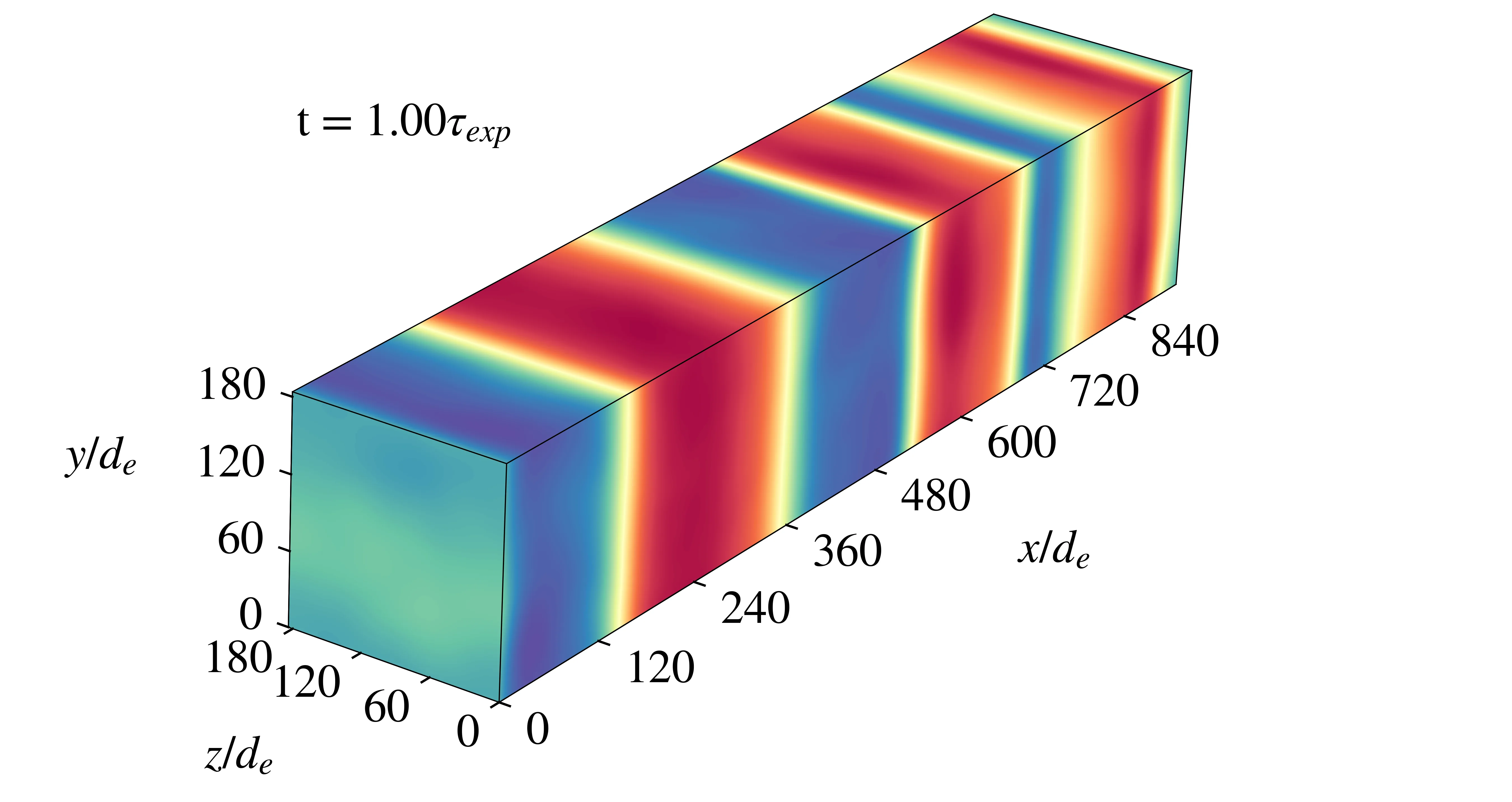
البلازما هي غاز انفصلت فيه الإلكترونات عن الذرات، وهو موصل للكهرباء. في الفضاء، غالبًا ما يكون هذا الغاز منخفض الكثافة لدرجة أن الجسيمات نادرًا ما تتصادم، ويُوصف سلوكه بمعادلات حركة كل جسيم على حدة. الطريقة الحاسوبية المعروفة باسم Particle-in-Cell (PIC) تفعل ذلك تمامًا: فهي تتابع ملايين الجسيمات والمجالات الكهربائية التي تولدها.
لكن الفضاء ليس ثابتًا. فسحب البلازما تتمدد وتدور، ومن بعض المناطق تهرب الجسيمات. في العمل الجديد، جُمعت وحُسّنت ثلاث تقنيات تُضيف هذه التأثيرات إلى نماذج PIC: «الصندوق المتمدد» للغاز المتوسع، و«الصندوق المنزلق» للأقراص الدوارة، و«الصندوق المثقوب» عندما يمكن للجسيمات مغادرة المنطقة. لكل حالة، كُتبت المعادلات واقتُرحت طرق جديدة لتحريك الجسيمات، تشبه خوارزمية بوريس المعروفة.
في النهاية، نحصل على صورة أكثر دقة لما يحدث للبلازما في الظروف الفضائية الحقيقية — ليس في صندوق ثابت، بل في كون متحرك ومتغير.
الملخص الأصلي
كما كتبه المؤلفون، بالإنجليزية arXiv:2602.15939
Particle-in-Cell (PIC) methods have achieved widespread recognition as simple and flexible approaches to model collisionless plasma physics in fully kinetic simulations of astrophysical environments. However, in many situations the standard PIC algorithm must be extended to include macroscopic effects in microscale simulations. For plasmas subjected to shearing or expansion, shearing-box and expanding-box methods can be incorporated into PIC to account for these global effects. For plasmas subjected to local acceleration in confined regions of space, a leaky-box method can allow closed-box PIC simulations to account for particle escape from the accelerator region. In this work, we review and improve methods to include shearing, expansion, and escape in PIC simulations. We provide the numerical details of how Maxwell's equations and the particle equations of motion are solved in each case, and introduce generalized Boris-like particle pushers to solve the momentum equation in the presence of extra forces. This work is intended to serve as a comprehensive reference for the implementation of shearing-box, expanding-box, and leaky-box algorithms in PIC.
طريقة Particle-in-Cell لا تُستخدم فقط في الفيزياء الفلكية: فهي تساعد في تصميم محركات البلازما للأقمار الصناعية وحتى في محاكاة البلازما في مفاعلات الاندماج النووي.