الموصلية الفائقة في درجة حرارة الغرفة أصبحت خطوة أقرب سريع
الموصلية الفائقة هي قدرة المادة على توصيل الكهرباء دون فقدان. الأسلاك العادية تسخن، ويذهب جزء من الطاقة في صورة حرارة، بينما الموصل الفائق يمرر التيار دون مقاومة. لكن حتى الآن، كان يُحصل على هذه الحالة فقط في درجات حرارة منخفضة جدًا أو تحت ضغط هائل، مما يعيق تطبيقها في الحياة اليومية.
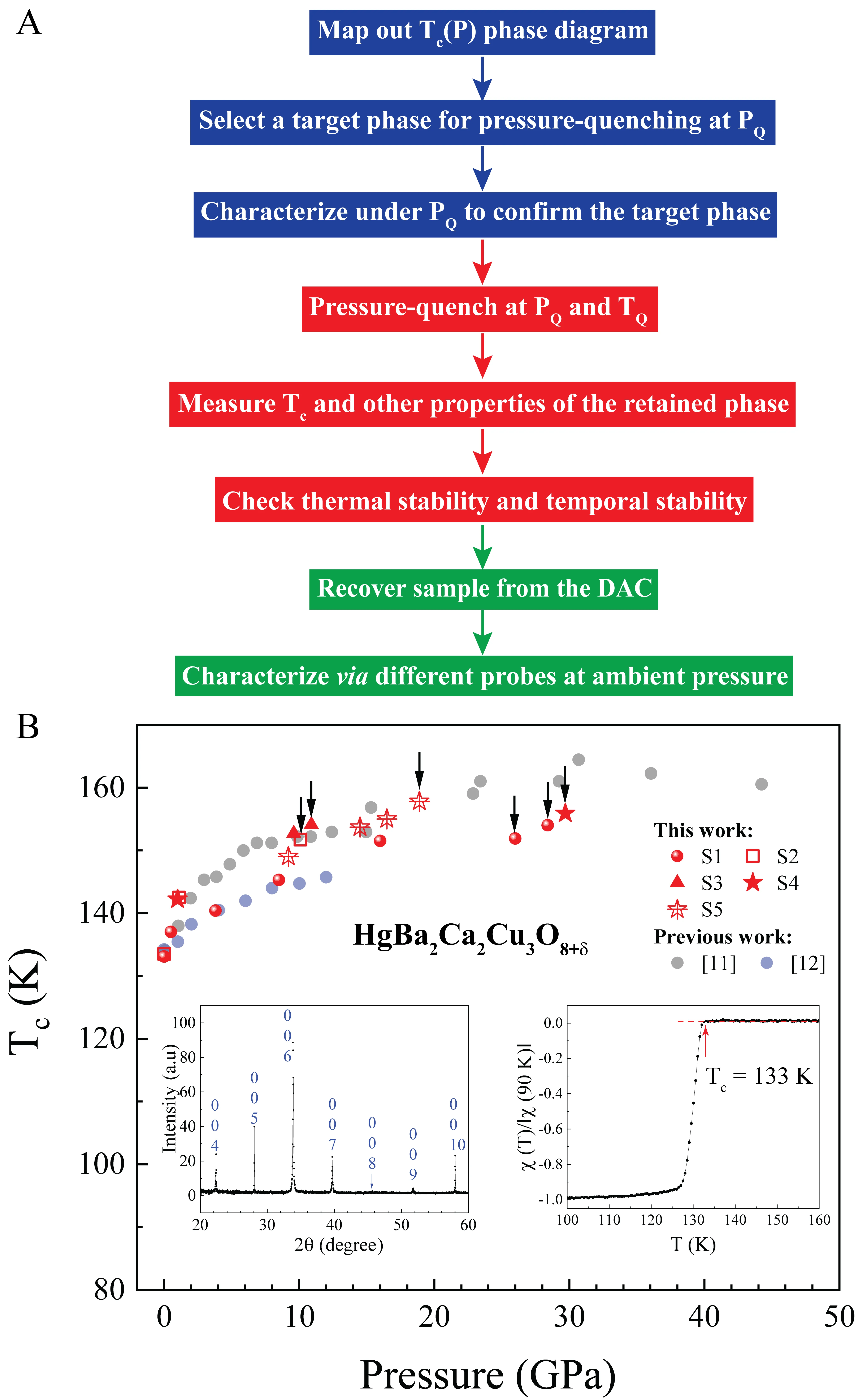
ابتكر فيزيائيون من جامعة هيوستن بقيادة بول تشو طريقةً لـ«تثبيت» حالة الموصلية الفائقة الناتجة عن الضغط، بحيث تبقى في الظروف العادية. استخدموا سيراميكًا من الزئبق والباريوم والكالسيوم والنحاس والأكسجين (HgBa₂Ca₂Cu₃O₈₊δ) — وهي مادة كانت بالفعل صاحبة الرقم القياسي في درجة حرارة الانتقال. أولًا، ضغطوا العينة لتعزيز الموصلية الفائقة، ثم خفضوا الضغط ببطء وفق بروتوكول خاص. واتضح أنه بعد هذه المعالجة، تظل المادة موصلة فائقة عند درجة حرارة 151 كلفن (−122 درجة مئوية) — وهذا رقم قياسي جديد تحت الضغط العادي.
للتأكد من أن التأثير ليس مصادفة، فحص العلماء بنية المادة باستخدام أشعة سينية سنكروترونية (synchrotron X-ray) وحسبوا كيفية اهتزاز الذرات في الشبكة البلورية. أكدت الحسابات أن الشبكة البلورية تحتفظ، بعد إزالة الضغط، بترتيب ذري مفيد يعمل على استقرار حالة الموصلية الفائقة. هذا الأسلوب — «بروتوكول التبريد بالضغط» (pressure-quench protocol) — قد ينجح أيضًا مع مواد أخرى تظهر فيها الموصلية الفائقة فقط تحت الضغط.
إذا أمكن رفع درجة الحرارة أكثر، فسيحصل البشر على أسلاك بلا فقدان، ومغناطيسات قوية لقطارات الرفع المغناطيسي، ومسرعات جسيمات مدمجة. والأهم من ذلك، أن الموصلات الفائقة ستساعد في حصر البلازما داخل مفاعلات الاندماج النووي، مما يقربنا من مصدر طاقة لا ينضب.
الملخص الأصلي
كما كتبه المؤلفون، بالإنجليزية arXiv:2603.12437
Superconductivity has been a vigorously researched topic since its discovery in 1911. Raising the superconducting transition temperature (Tc) has been the main driving force behind such long-sustained efforts due to its potential for impacting humanity and the fundamental knowledge gained from understanding this macroscopic coherent quantum state at high temperatures. The successful development of high-Tc superconductivity will make possible extraordinarily efficient generation, delivery, and utilization of energy, and could also enable the development of controlled fusion while impacting other burgeoning fields like quantum computation and quantum electronics. However, progress has been hindered by a longstanding plateau in the record ambient-pressure Tc, unchanged since 1993. Subsequent significant advancements in Tc have been achieved only under high pressures, preventing the realization of superconductivity's full potential. To directly address this challenge, we developed a pressure-quench protocol (PQP) to stabilize pressure-induced/-enhanced superconducting states at ambient pressure. Here we achieve a record ambient-pressure Tc of 151 K in the cuprate HgBa2Ca2Cu3O8+{\delta} via PQP. The experimental results are further supported by synchrotron X-ray diffraction measurements and phonon and electronic structure calculations. This breakthrough opens new avenues for stabilizing and exploring ambient-pressure high-Tc superconducting states and other quantum states that have been previously only accessible under pressure, paving the way for deeper understanding and practical applications of high-Tc superconductivity and beyond.
درجة الحرارة القياسية 151 كلفن تعادل −122 درجة مئوية، وهي قريبة من درجة الحرارة على سطح قمر المشتري «أوروبا» في المناطق المظللة.
في رواية آرثر كلارك «نهاية الطفولة»، يستخدم الفضائيون الموصلات الفائقة للرفع المغناطيسي ونقل الطاقة الفوري — واقعنا يلحق بالخيال العلمي ببطء.