كيف نُخفف الشبكة دون تمزيقها سريع
شبكة معارف كثيفة: كل شخص مرتبط تقريبًا بالجميع، وفي هذه الشبكة العنكبوتية يصعب فهم من هو المهم حقًا. خيوط كثيرة جدًا — الحاسوب يختنق، والمحاكاة تتعثر. ابتكر العلماء طريقة لتخفيف هذه الشبكات دون فقدان الأساسي.
الفكرة هي إزالة الروابط التي لا تشارك في أقصر المسارات. كما لو أننا في مدينة ما أبقينا فقط على الطرق التي تُستخدم فعلًا، وهدمنا الطرق المسدودة والأزقة الزائدة. هذا "الهيكل العظمي" للشبكة يحافظ على جميع المسارات المهمة، وكذلك على بنية المجتمعات وديناميكية انتشار المعلومات أو المرض.
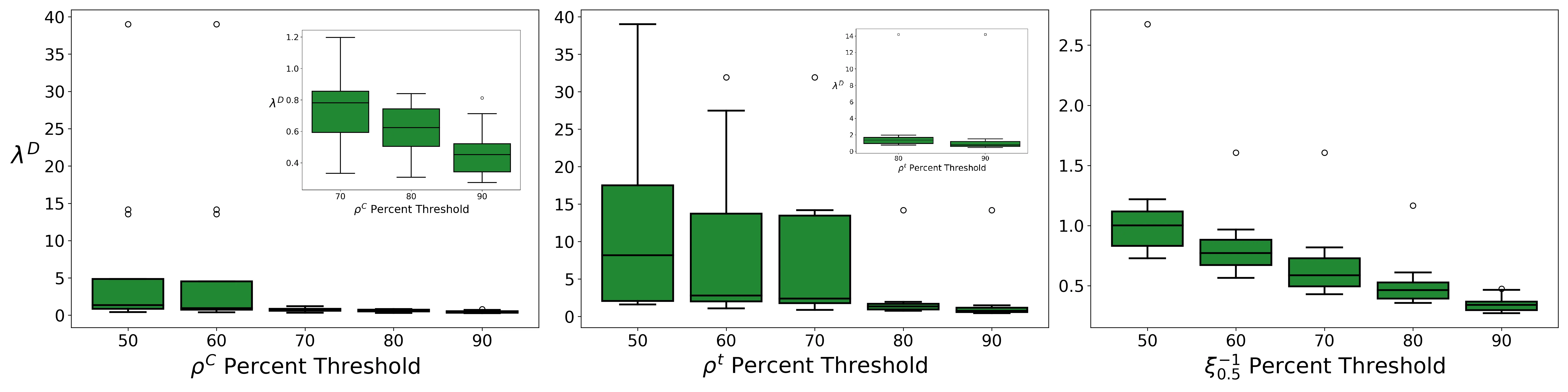
اختُبرت الطريقة على شبكات تواصل اجتماعي حقيقية — من المدارس والمستشفيات وأماكن العمل. اتضح أن الخيار الذي يحافظ بشكل أفضل على ترتيب أهمية الأشخاص وديناميكية الانتشار هو الذي يُقاس فيه المسار بالمعادلة g(x,y) = (\sqrt[3]{x}+\sqrt[3]{y})^3. هذا الهيكل العظمي يزيل أكثر من نصف الروابط، ومع ذلك تستمر الشبكة في العمل كما يجب.
في النهاية نحصل ليس مجرد نسخة مبتورة، بل خريطة دقيقة لأكثر المسارات ازدحامًا. هذا يساعد في حساب نماذج الأوبئة بشكل أسرع، وإيجاد اللاعبين الرئيسيين في الرسوم البيانية الاجتماعية، وفهم أين يكون الخيط رفيعًا — فهناك يتمزق.
الملخص الأصلي
كما كتبه المؤلفون، بالإنجليزية arXiv:2603.14564
Detailed network models of social, biological and other complex systems are often dense, which increases their computational complexity in simulations and analysis. To address this challenge, graph sparsification is used to remove edges while preserving desired network properties. Distance backbones of weighted graphs, which remove edges that break a generalized triangle inequality for any given path-length measure, preserve all shortest paths of weighted graphs. They have been shown to typically sparsify graphs more, as well as preserve community structure and spreading dynamics better than alternative state-of-the-art methods. Here, We show that they significantly best preserve node centrality ranks, as well as local and global dynamics in spreading phenomena. This is done by introducing the distance backbone synthesis (DBS) to progressively sparsify weighted graphs according to a general family of nested distance backbones, whereby each edge is associated with the smallest distance backbone in which it appears. DBS provides a principled and natural method to sweep all degrees of sparsification possible while preserving connectivity, allowing us to precisely study (directed and undirected) weighted graph sparsification under multi-objective criteria. It provides an algebraically-principled explanation of edge importance by revealing the precise topological space associated with each edge. The theory is demonstrated with a battery of social contact networks obtained from real-world social activity in different scenarios. Our study also shows that the optimal preservation of node centrality and spreading dynamics happens for the distance backbone obeying the generalized triangle inequality for the path-length measure $$g(x, y) = (\sqrt[3]{x}+\sqrt[3]{y})^3$$, which removes more than half of the edges from the empirical networks studied.
في بعض الشبكات الحقيقية، بعد التخفيف بقي أقل من نصف الروابط، لكن أقصر المسارات بين جميع أزواج العقد حُفظت بالكامل.