انهيار ثلجي تحت المجهر سريع
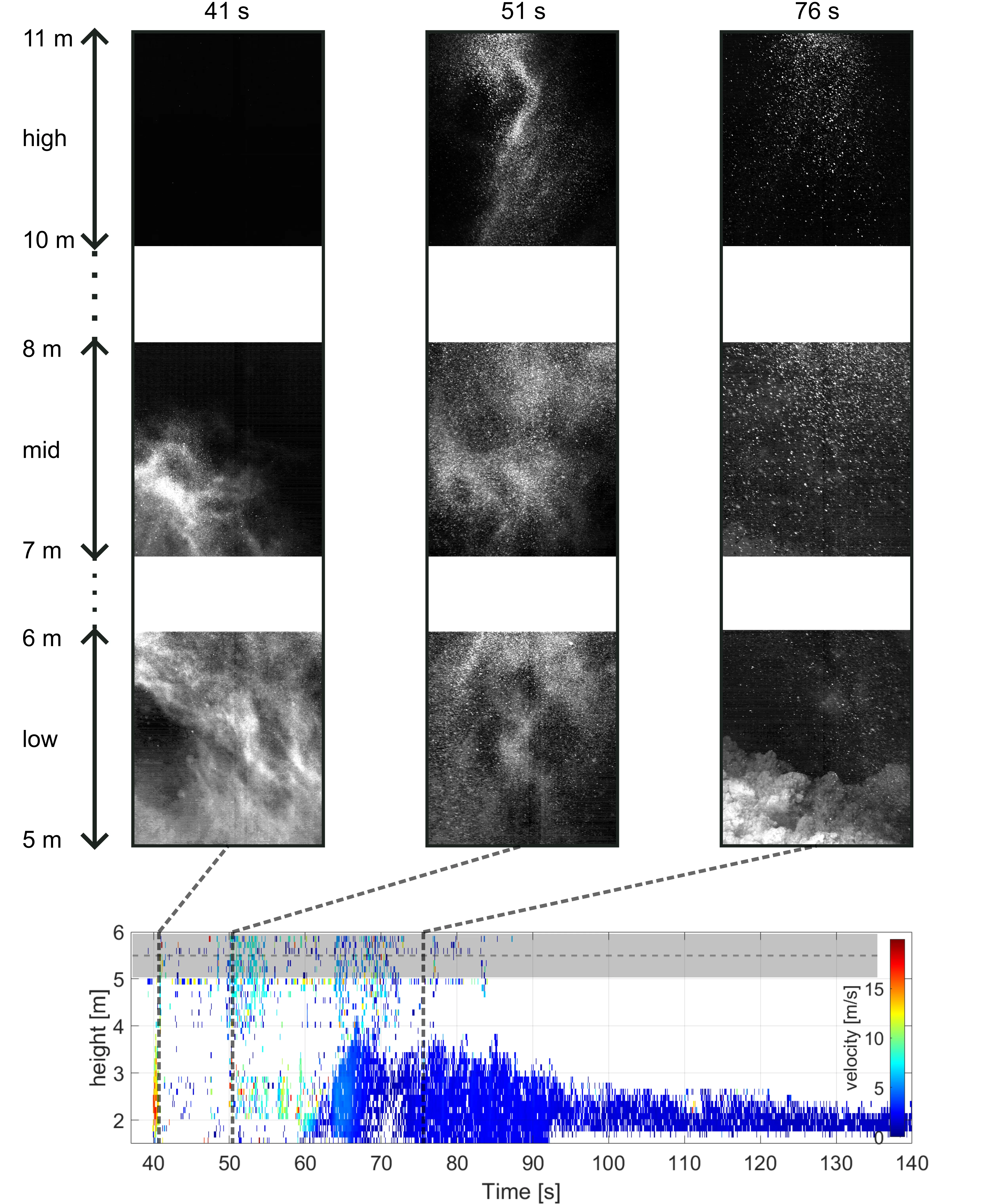
الانهيار الجليدي الغباري ليس مجرد كتلة ثلجية تنزلق من الجبل. إنه سحابة تندفع أسفل المنحدر بسرعة سيارة. داخله، لا يستقر الثلج بل يطير: آلاف الجزيئات الصغيرة تلتقطها دوامات الهواء. حتى الآن، لم يرَ أحد ما يحدث بالضبط لكل ندفة ثلج في هذه الفوضى. الآن، حصل العلماء على أول لقطات.
وضع الباحثون كاميرا عالية السرعة في مسار انهيار جليدي حقيقي في جبال الألب. صورت الكاميرا 1000 إطار في الثانية — أسرع من رمشة العين. يُظهر التسجيل كيف ينقسم التدفق إلى ثلاثة أجزاء. أولاً، اندفاعة قصيرة — مثل أول زفير. ثم مرحلة طويلة يختلط فيها الثلج والهواء في معلق متلاطم. وأخيراً، ذيل تستقر فيه الجزيئات ببساطة، مثل الغبار في غرفة بعد تيار هواء.
الاكتشاف الرئيسي هو كيف ينشأ الاضطراب بالضبط. على الحدود بين الهواء السريع والثلج البطيء، تنشأ أمواج تشبه تلك التي تظهر على الماء بفعل الرياح. تنمو هذه الأمواج وتنقلب، مختلطة الطبقات. قاس العلماء لأول مرة حجمها وسرعتها في انهيار جليدي حقيقي. سابقاً، كان يمكن الحصول على هذه البيانات فقط في المختبر بتدفق اصطناعي.
هذه القياسات ليست مجرد فضول. إنها ضرورية للنماذج الحاسوبية التي تتنبأ أين سيضرب الانهيار وبأي قوة. حالياً، تعتمد هذه النماذج على التخمينات وليس على الملاحظات المباشرة. الآن أصبح لديها أساس من البيانات الحقيقية. ربما يُتنبأ بالانهيار التالي بدقة أكبر — وهذا سينقذ بعض المنازل أو الأرواح.
الملخص الأصلي
كما كتبه المؤلفون، بالإنجليزية arXiv:2603.28144
Powder snow avalanches are highly dynamic, multiphase gravity-driven flows typically composed of a dense basal layer overlain by airborne layers in which snow particles are suspended within a turbulent air phase. Despite extensive work on related systems such as pyroclastic density currents and turbidity currents, all gravity current communities face a fundamental limitation: the lack of direct, high-resolution particle-scale field data. Here, we present the first direct optical observations of individual particle motion inside the airborne layers of a natural powder snow avalanche using high-speed imaging. The flow is segmented into three regions: an initial short living surge, a highly dynamic suspension phase, and a final wake. Across these phases, we quantify flow velocity and turbulence characteristics, including integral length scales, and use image intensity as a proxy for particle concentration. We identify fluctuations exceeding the turbulent integral scale and use linear stability analysis to link them to Kelvin-Helmholtz-type shear instabilities. Observed changes in clustering behavior, stratification, and the decoupling of particles from the flow mark the transition from an unstable suspension layer characterized by a high level of turbulent activity to a stable one dominated by passive snow settling. Together, these findings provide the first empirical constraints on turbulence and instability dynamics in airborne avalanche layers, with direct implications for the refinement of numerical avalanche models and closure schemes in multiphase gravity current simulations.
يمكن للانهيار الجليدي الغباري أن يتفوق على المتزلج الذي أثار حدوثه: تصل سرعة السحابة الهوائية إلى 100 كم/ساعة.