جليد أوروبا تحت قصف الإلكترونات سريع
سطح أوروبا درع جليدي تتعرض باستمرار لقصف الجزيئات المشحونة القادمة من الغلاف المغناطيسي للمشتري. تصطدم الإلكترونات بالشبكة البلورية للجليد، وتفقد طاقتها، وتطلق تفاعلات كيميائية. في السابق، لم تكن هناك أداة تُظهر مدى عمق هذا القصف في الجليد. الآن ظهرت.
أخذ المؤلفون برنامج Geant4-DNA، الذي يمكنه محاكاة مرور الجزيئات عبر المادة، وعلّموه العمل مع شكلين من الجليد: غير المتبلور (غير المنتظم، مثل الزجاج) والسداسي (العادي، مثل رقاقات الثلج على الأرض). لكل منهما، حسبوا كيفية تشتت الإلكترونات وفقدانها للطاقة. والنتيجة نموذج نقل جاهز للاستخدام في محاكاة مونت كارلو.
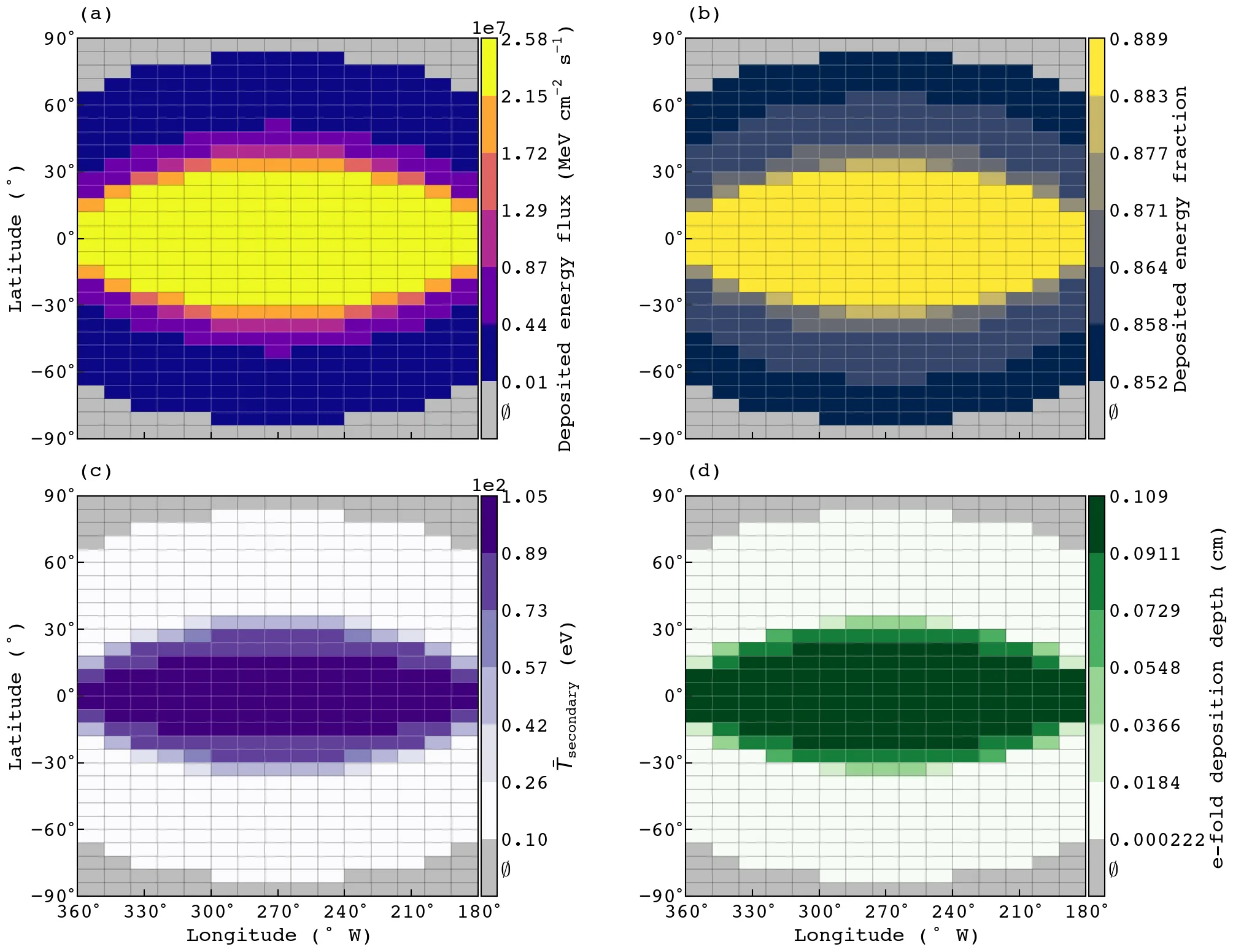
طُبّق النموذج على أوروبا. في نصف الكرة الخلفي (المواجه للخلف في المدار)، تصل الإلكترونات ببطء. تطلق طاقتها في الطبقة العليا التي يقل سمكها عن مليمتر. في نصف الكرة الأمامي، تكون الإلكترونات سريعة وتخترق عشرات السنتيمترات. الفرق هائل: مثل الفرق بين قطرة مطر على الأسفلت ورصاصة تخترق الأرض.
هذه الصورة تفسر الملاحظات: عند خط استواء نصف الكرة الخلفي، تتجمع منتجات التحلل الإشعاعي (مواد ناتجة عن الإشعاع) في عدسات. الإلكترونات البطيئة لا تسمح لها بالتعمق، ويتركز التفاعل الكيميائي بالقرب من السطح. الآن يمكن محاكاة ليس فقط الإلكترونات، بل أيضًا الأيونات، والتحولات الكيميائية في الجليد المحتوي على شوائب — مثل الأملاح التي تجعل جليد أوروبا محمرًا.
الملخص الأصلي
كما كتبه المؤلفون، بالإنجليزية arXiv:2604.01927
Energetic particles continuously process water ice across astrophysical and planetary environments, from interstellar clouds and comets to icy planetary surfaces. Interpreting the resulting observables requires a physically grounded description of the underlying interactions, both to identify radiation-driven signatures and to distinguish them from superimposed chemical, thermal, and microphysical effects. We present Geant4-IcyMoons, an extension of Geant4-DNA developed for irradiated water ice and, ultimately, for materials embedded within it. In this study, we model the elastic and inelastic interactions of electrons with amorphous and hexagonal ice. For the first time, this enables a transport-ready Monte Carlo simulation of electron irradiation in water ice, linking incident-particle environments to the evolution of icy surfaces. We apply this framework to Jupiter's moon Europa as a representative case of electron bombardment of an icy surface. We show that, on the trailing hemisphere, the stronger low-energy electron bombardment confines much of the deposited energy to the upper $$\lesssim 0.1$$ cm, whereas on the leading hemisphere, the more energetic incident population drives deposition patterns to depths of tens of centimeters. This may contribute to the observed lens-like enrichment of radiolysis products centered on the equator of the trailing hemisphere. This work lays the foundation for treatments of ion irradiation and radiation chemistry in water ice and embedded materials.
في نصف الكرة الخلفي لأوروبا، تبقى طاقة الإلكترونات في طبقة أرق من مليمتر — كما لو أن القشرة الجليدية تُحك بورق الصنفرة بدلاً من أن تُثقب.