الضوء المنعكس من الثقب الأسود يكشف أسراره سريع
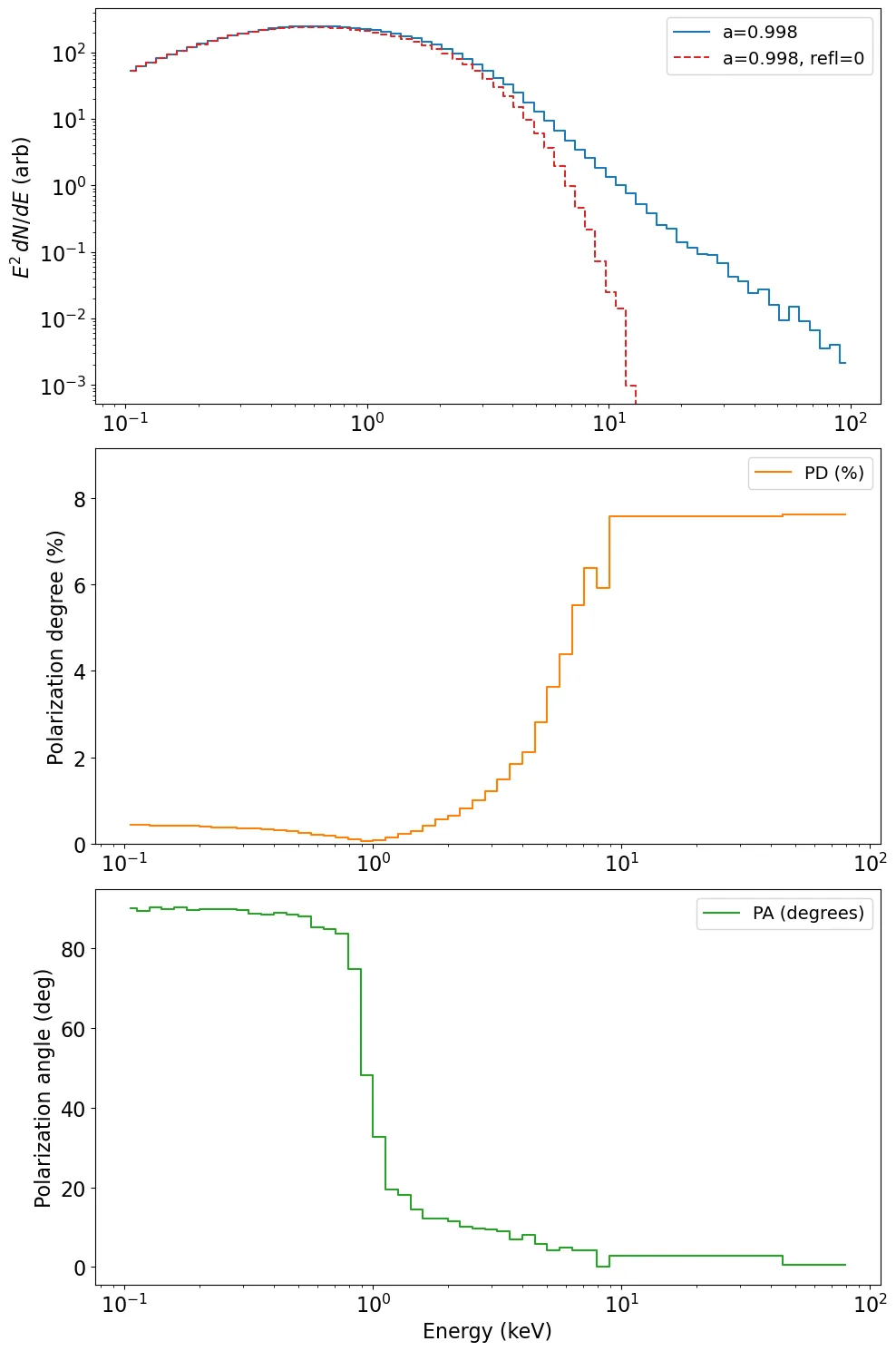
الضوء المنعكس من القرص الملتهب حول الثقب الأسود قد يخبرنا عنه أكثر مما كنا نعتقد. عندما يُصدر القرص حرارة، ينعكس جزء من هذا الضوء مرة أخرى على القرص ويتشتت، مكتسبًا توزيعًا غير عاديًا للطاقة — وكأن مكوّنًا جديدًا يُضاف إلى التوهج المعتاد، يشبه قانون القوة. سابقًا، كان هذا الإشعاع يُفسَّر فقط بوجود هالة ساخنة فوق القرص، لكن العمل الجديد يُظهر أنه يمكن أن ينشأ بدون هالة — فقط بفعل الانعكاس بالقرب من ثقب أسود سريع الدوران.
يتميز هذا المكوّن الجديد بخصائص طيفية واستقطابية خاصة تسمح بتمييزه عن مصادر الإشعاع الأخرى. إذا أمكن رصده باستخدام التلسكوبات السينية الحالية أو المستقبلية، فسيتمكن العلماء من قياس دوران الثقوب السوداء بدقة أكبر واختبار نظرية الجاذبية لأينشتاين في ظروف قصوى. الأمر أشبه بالعثور على بصمة إصبع جديدة تكشف تفاصيل خفية عن سلوك الثقب الأسود.
يفتح هذا النهج نافذة جديدة لدراسة أكثر الأجرام غموضًا في الكون. فبدلاً من الاعتماد فقط على العمليات النادرة والتي يصعب رصدها، يحصل الفلكيون على أداة إضافية تعمل حتى مع أقراص التراكم العادية. إنها خطوة نحو الاقتراب من حافة الثقب الأسود، حيث تصبح الجاذبية شديدة حقًا.
الملخص الأصلي
كما كتبه المؤلفون، بالإنجليزية arXiv:2604.05085
The Penrose process and the collisional Penrose process involve particles decaying or interacting very close to a spinning black hole, respectively, during which some particles are pushed into negative energy trajectories and fall into the black hole while others gain that energy and escape the system. These two processes are difficult to observe as they occur very rarely by chance. Here we report a new observational signature of similar, but less extreme processes occurring in and near the ergospheres of rapidly spinning black holes. We find that the reflection of the thermal emission from a geometrically thin, optically thick accretion disk can lead to the formation of a power-law component, even in the absence of a corona. Unlike the well-known Penrose processes, the scattering particles lose a good fraction of their energy, but are not pushed into negative energy trajectories. We emphasize that this new component has distinct spectral and polarimetric properties that can be used for its identification as long as it out-competes other power-law emission components. We emphasize that the new component needs to be taken into account when interpreting spectral and spectropolarimetric observations of black holes. The detection and unambiguous identification of the new component with current or future broadband X-ray spectral and spectropolarimetric missions can open a new window into testing Einstein's theory of gravity close to the edges of black holes, and opens up new opportunities to constrain black hole spins and inclinations.
الضوء المنعكس من القرص حول الثقب الأسود قد يفقد حتى 90% من طاقته بسبب مجال الجاذبية القوي — وكأنه يُبتلع في قمع.
في فيلم «Interstellar»، استند تصور الثقب الأسود Gargantua إلى حسابات حقيقية لكيفية انحناء الضوء وانعكاسه بالقرب من أفق الحدث.