الليثيوم والملح الزجاجي: اتحاد هادئ سريع
بطارية الليثيوم تشبه الساندويتش: قطعتا خبز هما القطبان، وبينهما الحشوة وهي الإلكتروليت، الذي تتنقل عبره أيونات الليثيوم ذهابًا وإيابًا. في البطاريات العادية تكون الحشوة سائلة، مثل الصلصة، وقد تتسرب أو تشتعل. أما في بطاريات الحالة الصلبة فالحشوة مثل شريحة جبن: لا تنساب، لكن المهم ألا تتفتت ولا تتفاعل مع الخبز.
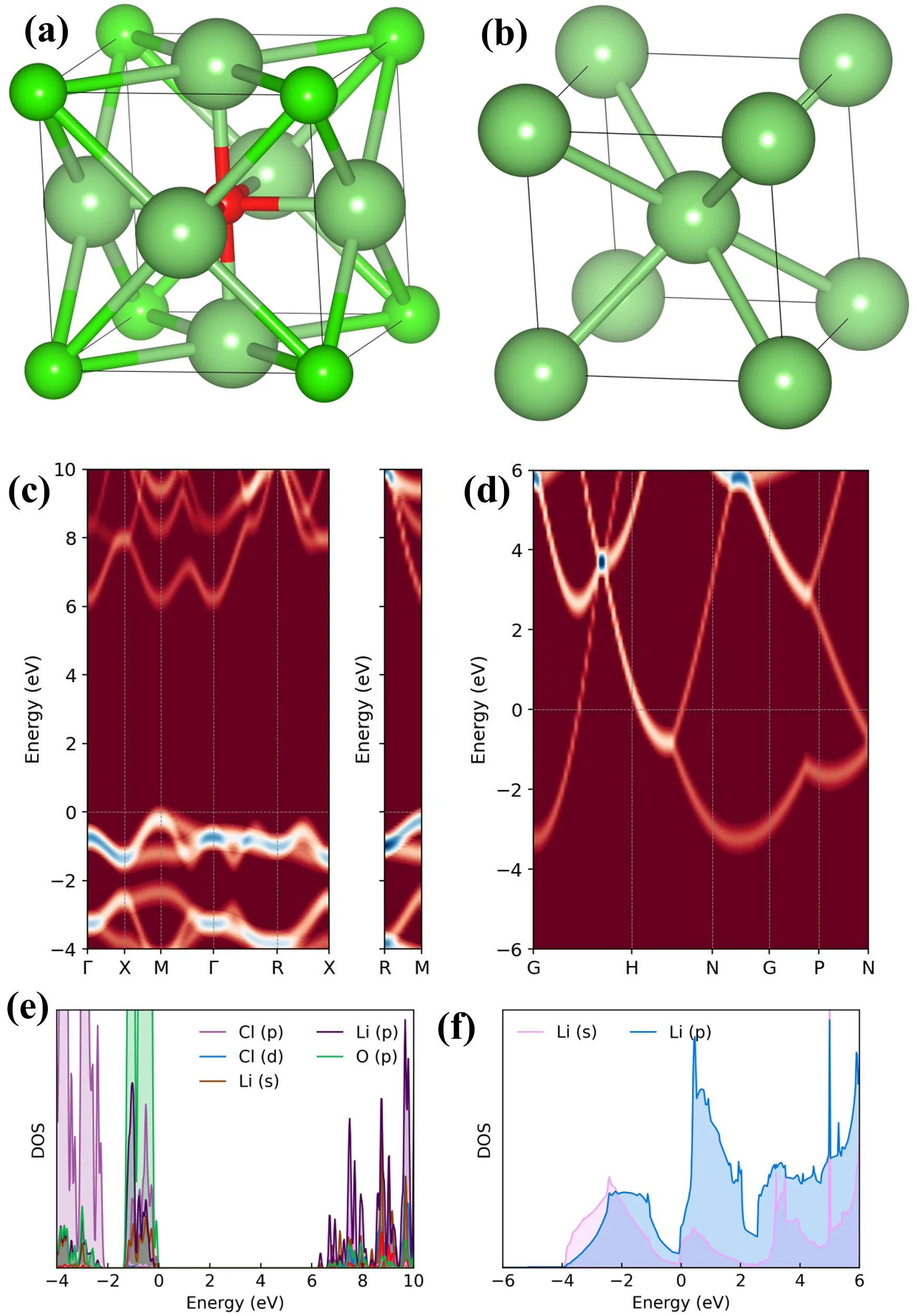
درس الباحثون الواجهة بين أنود الليثيوم (الخبز) والإلكتروليت الصلب Li3OCl (الجبن) باستخدام محاكاة حاسوبية على مستوى الذرات. اختبروا عدة أوضاع للالتحام ووجدوا الأكثر ملاءمة من ناحية الطاقة. اتضح أن كل شيء هادئ عند الواجهة: البنية لا تنهار، والشحنة الكهربائية تتوزع من جديد بشكل طفيف فقط في طبقة رقيقة قرب السطح.
هذا يعني أن البطارية لن تتلف بسرعة من عمليات الشحن المتكررة: الليثيوم الإضافي لا يتراكم داخل الإلكتروليت، بل يبقى في الأنود. هذا الاستقرار هو مفتاح العمر الطويل لبطاريات الحالة الصلبة.
تكتمل الدائرة: ساندويتش الجبن لا يتفكك حتى لو قُضم مرات عديدة. كذلك البطارية مع Li3OCl تعد بأن تدوم طويلًا وبأمان.
الملخص الأصلي
كما كتبه المؤلفون، بالإنجليزية arXiv:2604.10630
Solid-state lithium batteries have attracted considerable attention due to their potential to provide improved safety and higher energy density compared with conventional liquid electrolyte batteries. However, the stability of the interface between Li metal anodes and solid electrolytes remains a critical issue that strongly influences battery performance. In this work, first-principles density functional theory calculations are performed to investigate the interfacial properties of a solid-state battery system composed of Li metal anode and Li3OCl solid electrolyte. The structural stability, electronic structure, and electrochemical behavior of the Li|Li3OCl interface are systematically analyzed. Several interface orientations are constructed and compared in order to identify the most energetically favorable configuration. The electronic properties and interfacial charge redistribution are further examined to understand the nature of the interaction between Li metal and the Li3OCl electrolyte. Our results indicate that the Li|Li3OCl interface exhibits stable structural and electronic characteristics, with localized charge redistribution occurring near the interface region. The electrochemical stability against the insertion of an additional Li atom is also evaluated, showing that Li incorporation is energetically unfavorable in most layers of the electrolyte. These results suggest that the Li3OCl electrolyte maintains good electrochemical stability in contact with Li metal. The present study provides atomic-scale insight into the interfacial behavior of Li|Li3OCl and highlights the potential of Li3OCl as a promising solid electrolyte for solid-state lithium batteries.
Li3OCl مادة صلبة توصل أيونات الليثيوم تقريبًا مثل السائل، لكنها لا تنساب ولا تشتعل.