ذاكرة لا تسخن سريع
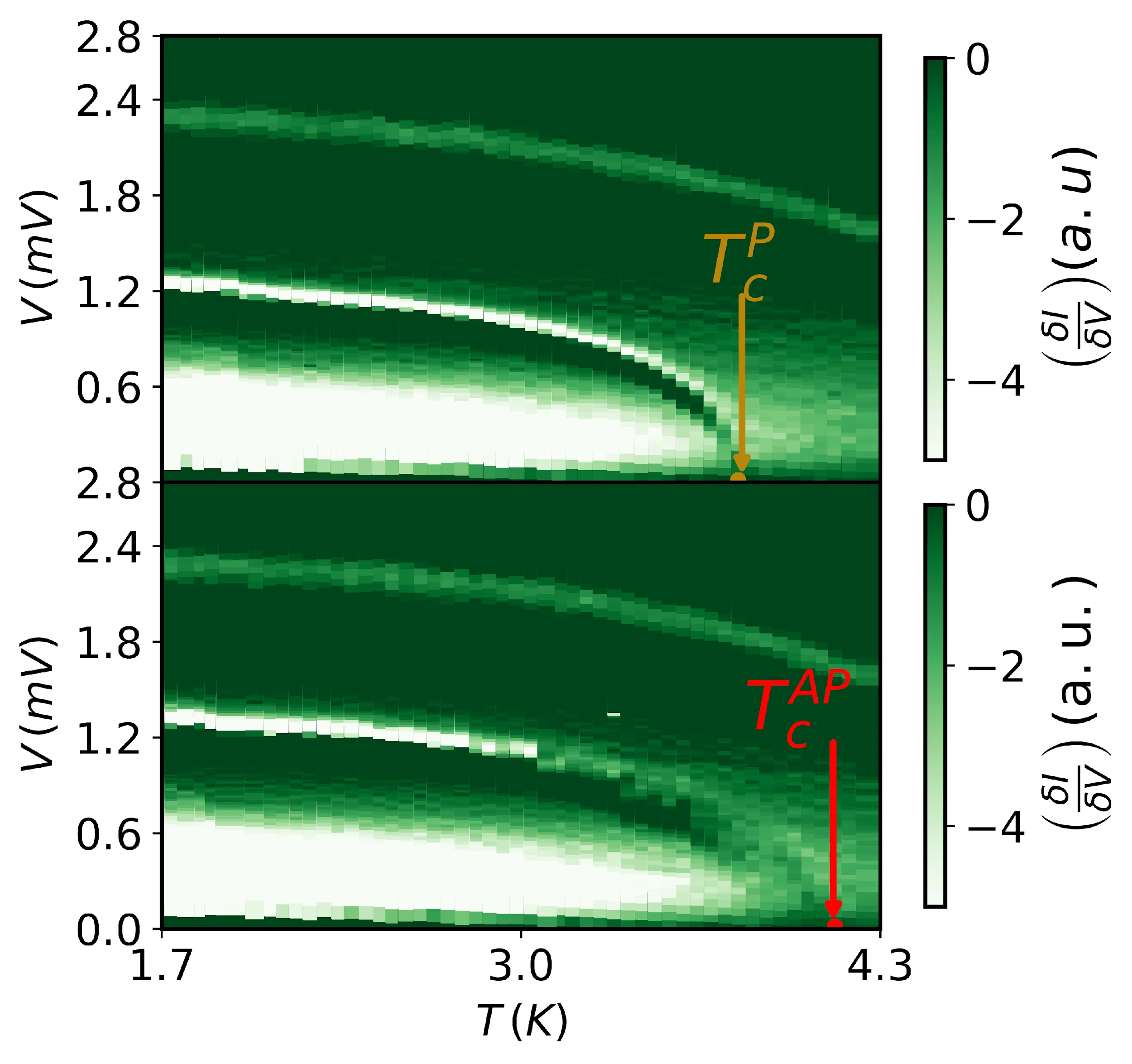
الذاكرة العادية في جيبك تسخن حتى عندما تكون خاملة. تخيل الآن ذاكرة لا تستهلك شيئًا تقريبًا في البرد - مثل ترمس لا يبرد. الموصل الفائق عند درجة حرارة الهيليوم السائل يوصل التيار دون فقدان، لكنه لم يكن قادرًا على تخزين البيانات. الخلية الجديدة تغير هذا.
في الداخل، هيكل متعدد الطبقات من النيوبيوم وأغشية مغناطيسية. المجال المغناطيسي يزيح فجوة الطاقة في الموصل الفائق، ويتغير التيار النفقي عبر الحاجز. النتيجة مستويان واضحان للجهد - صفر وواحد.
هذه الذاكرة مطلوبة بجانب المعالجات الكمومية: الإلكترونيات العادية تدخل الحرارة والضوضاء. وهنا، بنية عمودية، مثل كومة من الفطائر، يمكن طباعتها بالملايين على رقاقة واحدة. سيحصل الكمبيوتر الكمومي على "دفتر ملاحظات" سريع وبارد.
الملخص الأصلي
كما كتبه المؤلفون، بالإنجليزية arXiv:2604.22214
Scalable, low-dissipation memory operating below 4 K is a critical requirement for superconducting and quantum computing systems. Existing cryogenic memory technologies rely on CMOS derivatives or hybrid architectures that incur leakage, refresh overhead or limited compatibility with superconducting logic. Here we demonstrate a superconducting tunnelling magnetoresistance device that functions as a non-volatile cryogenic memory element across the full superconducting temperature range. By integrating a de Gennes spin valve with a superconducting tunnel junction in a current perpendicular-to-plane geometry, we realise exchange-field control of the superconducting energy gap. This produces two magnetically switchable gap voltages and robust quasiparticle tunnelling magnetoresistance down to 0.25 K.The device operates at millivolt bias with nanowatt-level read power and zero standby dissipation. Its vertical junction architecture and Nb-based materials platform enable compatibility with superconducting logic and scalable cryogenic memory arrays.
عند 0.25 كلفن (أي 272.9 درجة تحت الصفر المئوي)، يظل الهيليوم سائلًا، ويستمر الجهاز في التمييز بوضوح بين الصفر والواحد.