فقاعات تكشف تلوث الماء سريع
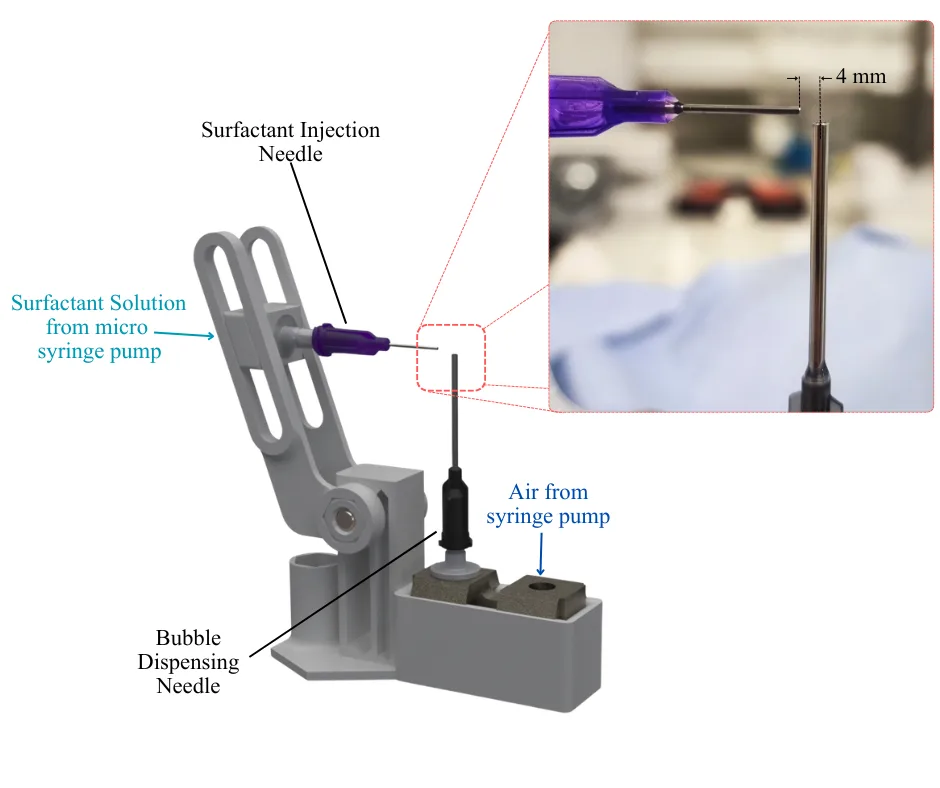
فقاعة هواء تنطلق من إبرة رفيعة في قاع كأس وتصعد إلى الأعلى. في الماء النقي تتصرف كنابض: تنضغط تارة وتمتد تارة أخرى، مبادلةً الطاقة بين الحركة والشكل. بمجرد إضافة قطرة صابون إلى الماء، تهدأ الفقاعة فورًا وتصبح شبه كروية تمامًا، وتصعد باستقامة دون ارتعاش.
صوّر العلماء هذه الفقاعات بكاميرا عالية السرعة خلال أول 144 ميلي ثانية بعد انفصالها عن الإبرة — وفي هذه المدة تقطع الفقاعة 4 سنتيمترات فقط. ومن الإطارات حسبوا مدى استطالة الفقاعة في كل لحظة، ورسمًا بيانيًا لـ«تنفسها». في الماء النقي يكون سعة التذبذب كبيرًا، أما في الماء الصابوني فتختفي التذبذبات تقريبًا. وكلما زاد الصابون، زاد تثبيط التذبذبات — لكن حتى حد معين. فعندما يتجاوز الصابون حوالي 2.9 جزء في المليون، لا يمكن تمييز الفقاعة عن الكرة المثالية، وإضافة المزيد من الصابون لا تغير شيئًا.
وبحسب قوة تثبيط التذبذبات، تعلم الباحثون تقدير كمية الصابون المذابة في الماء. اختبروا الطريقة على فقاعات في سوائل بتركيز مجهول — فحدد النموذج بدقة أين الماء أنقى وأين هو أقذر. ويمكن لهذا الأسلوب أن يفيد، مثلًا، في مراقبة جودة المياه في المصانع أو المختبرات حيث تكون نقاوة المحاليل أمرًا مهمًا.
الملخص الأصلي
كما كتبه المؤلفون، بالإنجليزية arXiv:2604.22607
Bubbles released from a needle show shape deformations that depend on the surfactant concentration of the surrounding liquid. We develop a model that predicts the surfactant concentration based on experimental early-stage observations of these deformations. Using high-speed imaging, we examine bubbles within the first 144 ms of ascent, corresponding to a vertical rise distance of approximately 40 mm and extract the instantaneous aspect ratio (AR) and analyse its temporal evolution. In clean conditions, bubbles exhibit pronounced shape oscillations resulting from the periodic exchange between surface and kinetic energy. The presence of surfactants leads to an immediate damping of these oscillations, characterised by reduced AR amplitudes and earlier peak deformations. This damping effect intensifies with increasing surfactant concentration until a near-saturation regime is reached, beyond which bubbles remain largely spherical and further increases in concentration produce indistinguishable AR profiles within the early-stage observation window. To develop the prediction model, an aspect-ratio-based analysis methodology is proposed, which yields an empirical relationship capable of estimating surfactant concentrations between 0 ppm and 2.9 ppm. We finally test the reliability of the model on unknown surfactant-laden bubbles. The model successfully detected the presence and relative extent of surfactant contamination as higher concentrations were introduced.
فقاعة في الماء النقي قد تتذبذب لعدة ثوانٍ، أما في الماء الصابوني فتهدأ في أجزاء من الثانية — هكذا يثبط الصابون ارتعاش السطح بشدة.