البصمة الكيميائية للحياة: كيف نعثر عليها من خلال العناصر سريع
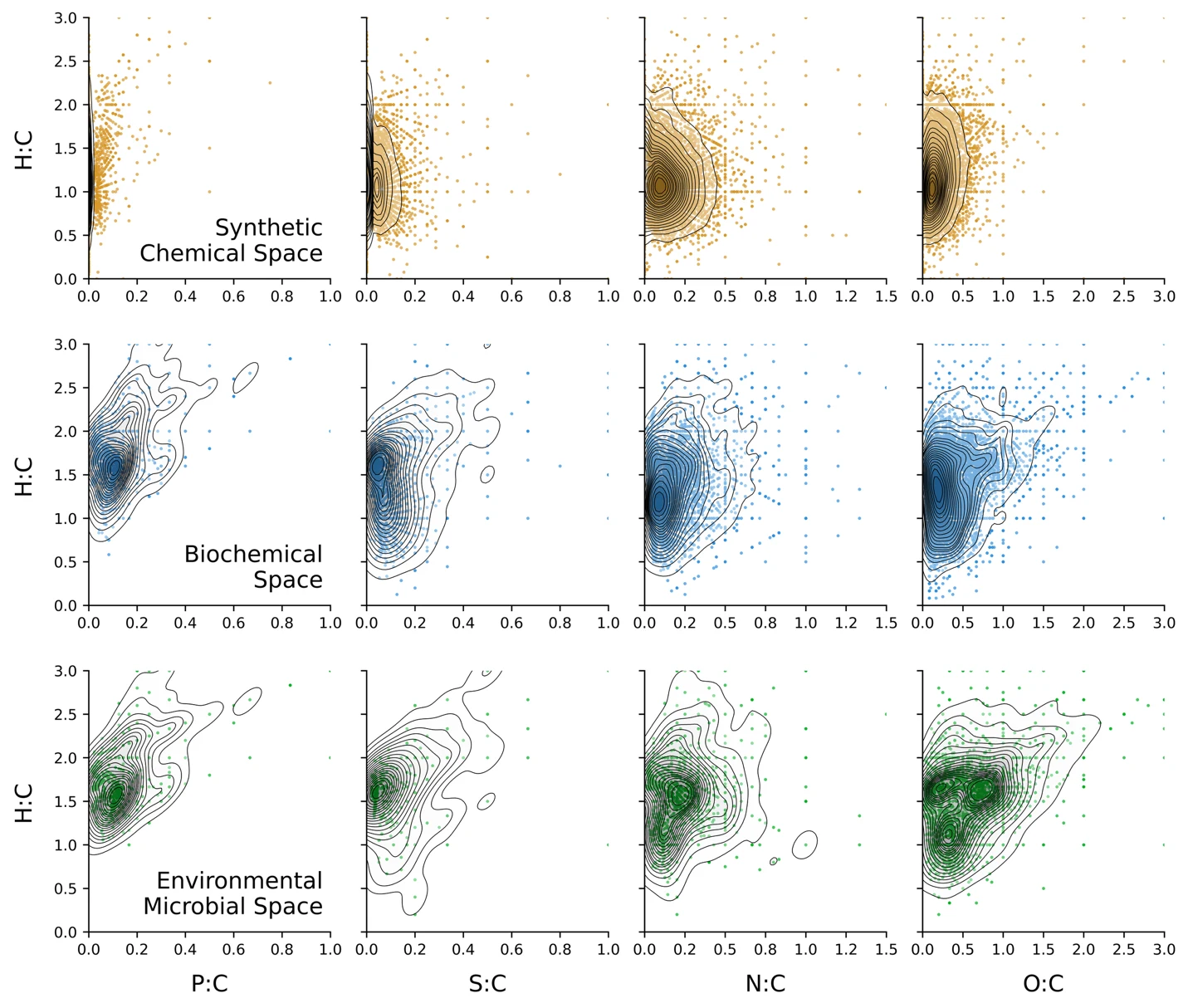
من الكربون والنيتروجين والأكسجين والكبريت، يمكن تكوين 10⁶⁰ جزيء صغير مختلف — هذا الرقم واحد متبوع بـ60 صفراً، أكثر من عدد النجوم في الكون المرئي. لا تستخدم الحياة سوى جزء ضئيل من هذه القائمة، ولكن ليس بشكل عشوائي. في أي مجتمع حي، من البكتيريا إلى الغابة، تكون نسبة العناصر منحازة بالطريقة نفسها: المزيد من الأكسجين والهيدروجين، والأقل من الكربون، ودائماً يوجد أثر من الكبريت والنيتروجين. الأمر أشبه بأن كل كائن حي يترك بصمة غير مرئية بحبر كيميائي.
اختبر العلماء هذه البصمة على آلاف العينات — من مجتمعات ميكروبية، ومخاليط اصطناعية، وحتى بيانات من بعثات المريخ. الصورة واضحة: تتميز المادة الحية عن غير الحية بمجرد تركيبها العنصري. يكفي رسم الجزيئات كنقاط على رسم بياني بإحداثيات 'الأكسجين إلى الكربون' و'الهيدروجين إلى الكربون'، فتجد أن سحابة النقاط الحية تنزاح دائماً نحو اليمين والأعلى. يمكن لـمطياف الكتلة الموجود على متن المركبة الكوكبية قراءة هذه البصمة في دقائق.
المفاجأة الكبرى: هذه البصمة الكيميائية عالمية. فهي لا تعتمد على بروتينات معينة أو حمض نووي، مما يعني أنها تصلح للبحث عن أي حياة قائمة على الكربون — حتى الأكثر غرابة. ربما نحن قادرون بالفعل على التعرف على الحياة في عينات من خارج الأرض، لكننا لم نكن نعرف أين ننظر.
الملخص الأصلي
كما كتبه المؤلفون، بالإنجليزية arXiv:2605.19252
The vast chemical space of possible small molecules, estimated at 10^60 compounds for molecules composed of just C, N, O, and S, is only sparsely occupied by biology. We propose that where life selects molecules within this space constitutes a detectable ecological signature: a fingerprint not of specific compounds, but of the statistical structure of elemental composition across molecules sam-pled from ecological systems. Here we introduce a framework combining Van Krevelen diagrams and element scaling laws to characterize the elemental composition of regions of chemical space occupied by biological systems and contrast them with other chemical systems. Applying this framework to 11,834 microbial metagenomic samples, we show that microbial metabolisms occupy a region of chemical space, which is enriched in heteroatoms such as P, S, N, and O relative to C, shifted toward higher O:C and H:C ratios. We observe sublinear element scaling with system size, yielding insights into how elemental constraints dictate how biological systems occupy chemical space. These patterns are distinct from a sample of 18,000 compounds from the comprehensive Reaxys synthetic chemical database. Critically, datasets from molecules detected in planetary science mission data occupy statistically distinct regions from both terrestrial biological and Reaxys distributions, demonstrating that with standardized methods for data collection, the approach could be developed to discriminate biotic from abiotic chemical signatures in small molecule data from planetary science missions. Our work shows how a combination of Van Krevelen fingerprinting and elemental scaling laws can provide a new class of ecological biosignatures for life detection leveraging mass spectrometric data from planetary missions, which could generalize beyond Earth's specific biochemistry.
عند تحليل عينات المريخ والنيازك، لم تُكتشف بعد البصمة 'الحية' — لكننا الآن نعرف كيف تبدو.
في مسلسل 'ستار تريك'، كانت أجهزة الترايكوردر تتعرف على الحياة فوراً. طريقتنا تمثل خطوة حقيقية نحو هذه التقنية: يكفي للماسح قياس نسبة العناصر لتمييز الحياة عن المادة غير الحية.