كيف تشتعل المستعرات العظمى من الداخل سريع
نار دائمًا ما تتوهج بنفس الدرجة من الحرارة — سواء ألقيت عود ثقاب في وسط الجذع أو أشعلت عدة شظايا من الأطراف. هذا تقريبًا سلوك المستعرات العظمى من النوع Ia — الانفجارات الكونية التي يستخدمها علماء الفلك كمسطرة لقياس المسافات في الكون.
لوقت طويل، كان يُعتقد أن مثل هذا الانفجار يحدث عندما يلتقط قزم أبيض (بقايا نجم فائقة الكثافة) مادة من نجم مجاور ويصل إلى كتلة حرجة. لكن كيف يبدأ التفجير بالضبط — الانتقال الانفجاري الفوري من احتراق بطيء نسبيًا — ظل لغزًا. في الدراسة الجديدة، طبق العلماء لأول مرة آلية لا تعمل نظريًا فحسب، بل تم التحقق منها أيضًا في مختبرات أرضية: انتقال الاحتراق إلى تفجير بسبب الاضطراب (tDDT). الأمر يشبه لهبًا في مدفأة يتسارع فجأة إلى موجة صدمة أسرع من الصوت بسبب دوامات هواء فوضوية.
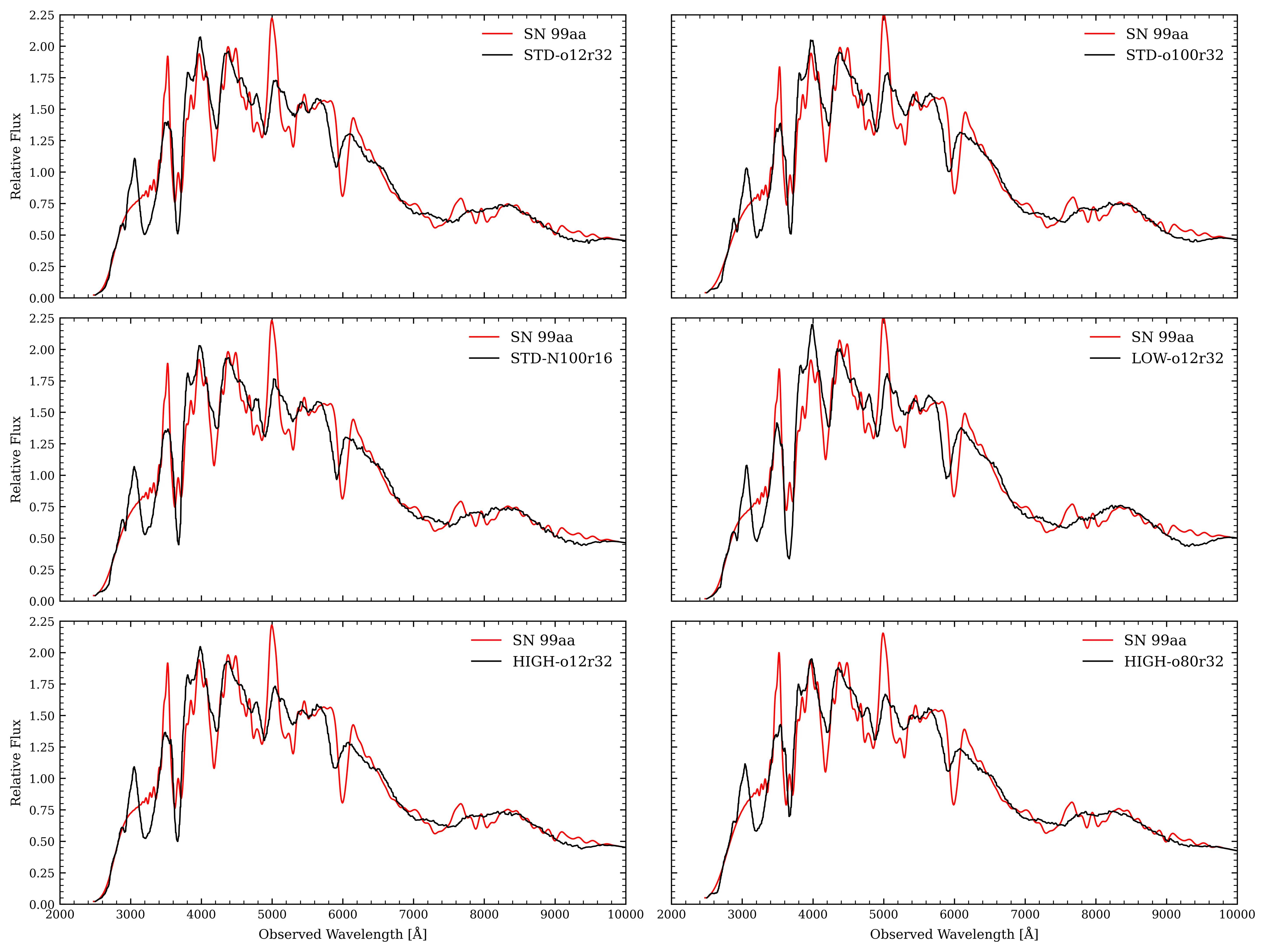
حسب المؤلفون عدة سيناريوهات، مع تغيير الكثافة في مركز القزم الأبيض وشكل بؤرة الاحتراق الأولية. كانت النتيجة مفاجئة: على الرغم من أن الظروف اختلفت ست مرات، إلا أن جميع النماذج أعطت طيفًا متطابقًا تقريبًا عند ذروة السطوع — "بصمة" الانفجار. علاوة على ذلك، تطابق هذا الطيف تمامًا مع المستعر الأعظم المرصود فعليًا SN 1999aa. هذه النتيجة تقدم لأول مرة تفسيرًا فيزيائيًا لسبب كون المستعرات العظمى من النوع Ia متوقعة إلى هذا الحد: الاضطراب نفسه "يختار" نفس التكوين للانفجار، مثلما يجد النهر دائمًا أقصر طريق إلى البحر.
الملخص الأصلي
كما كتبه المؤلفون، بالإنجليزية arXiv:2605.21575
Type Ia supernovae (SNe Ia) play an important role throughout astrophysics, most notably as standardizable cosmological candles. Yet, their stellar progenitors and explosion mechanism remain areas of active investigation. For decades, the canonical model for normal brightness SNe Ia used in cosmology was a carbon-oxygen white dwarf (WD) accreting from a non-degenerate stellar companion, approaching the Chandrasekhar mass (M_Ch). Previously, all models of near-M_Ch SNe Ia invoked an ad hoc assumption on the critical process of detonation initiation, and could therefore be tuned to a variety of outcomes. Here, we present global 3D hydrodynamical simulations of near-M_Ch progenitors, which incorporate, for the first time, a laboratory-validated ab initio mechanism for the turbulence-driven deflagration-to-detonation transition (tDDT). The tDDT detonation mechanism is highly efficient, leading to detonation initiation which is prompt in comparison to most prior work. Despite spanning a factor of six in central ignition density and qualitatively distinct ignition topologies, all models converge on nearly identical synthetic spectra at peak luminosity, spectroscopically matched to the overluminous SN 1999aa. The turbulence-driven Chapman-Jouguet criterion drives each progenitor to a common detonation configuration from diverse initial conditions, providing a physical foundation for the ignition-insensitive detonation outcomes implicit in the empirical standardizability of SNe Ia. This provides the first physically motivated, self-consistent pathway for delayed detonation in SNe Ia simulations. Further work is necessary to understand how this mechanism might produce more delayed detonation initiation and potentially fail, thereby yielding SNe Iax.
المستعر الأعظم SN 1999aa، الذي قورنت به النماذج، كان أكثر سطوعًا بنسبة 20% من المستعرات العظمى العادية من النوع Ia — لكن طيفه ما زال مطابقًا للنموذج، مما يؤكد عالمية الآلية.
في رواية آرثر كلارك "موعد مع راما"، يلاحظ علماء الفلك مستعرًا أعظم ساطعًا بشكل غير طبيعي، والذي يتبين لاحقًا أنه سفينة فضائية غريبة — لكن في الواقع، حتى المستعرات العظمى فائقة السطوع من النوع Ia تجد الآن تفسيرًا في الاضطراب.