المادة المظلمة تنحت الثقوب السوداء سريع
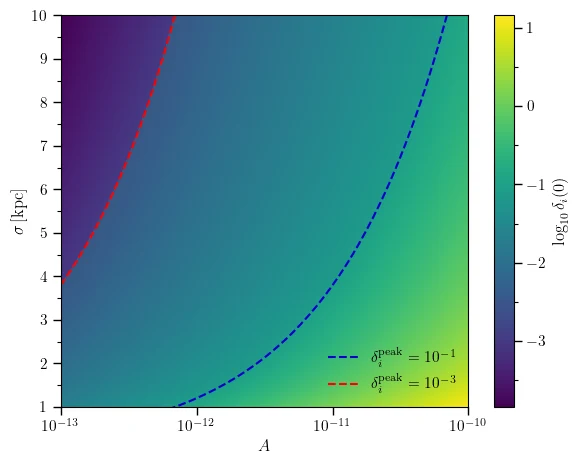
بعد بضع مئات الملايين من السنين فقط من الانفجار العظيم، بدأت عمالقة الثقوب السوداء تتشكل في محيط من المادة المظلمة غير المرئية. لقد وُلدت من المادة ذاتها — دون مساعدة من النجوم. هذه الآلية، المستندة إلى معادلات لومتر، تفسر ظهورها المبكر. السر الرئيسي يكمن في الشكل. فقط التكثفات السلسة والعريضة، التي تشبه تلة منحدرة، هي القادرة على الانهيار إلى ثقب. أما القمم الحادة أو النتوءات غير المنتظمة فتتلاشى. في المكان المناسب، يصبح انحناء الزمكان قوياً لدرجة أن المادة تسقط بلا هوادة إلى الداخل. تظهر الحسابات أن هذه الانهيارات حدثت عندما كان عمر الكون بين مليار وثلاثة مليارات سنة، وأنجبت ثقوباً بكتل تصل إلى آلاف وملايين المرات من كتلة الشمس. هذا يفسر من أين جاءت الثقوب السوداء فائقة الكتلة بعد مليار سنة فقط من مولد الكون. منعطف غير متوقع: مصير الانهيار — سواء انضغط إلى نقطة، أو امتد خيطاً، أو تسطح فطيرة — كان يعتمد على أدق تحركات المادة. 'رقصة' المادة المظلمة هذه هي التي حددت هيئة المجرات المستقبلية، إذ أصبحت الثقوب الناشئة بذوراً نمت حولها الأنظمة النجمية التي نألفها.
الملخص الأصلي
كما كتبه المؤلفون، بالإنجليزية arXiv:2605.30145
We study black hole (BH) formation from the nonlinear growth and collapse of primordial perturbations during the matter-dominated era. Modelling cold dark matter (CDM) as pressureless dust, we describe the collapse in a fully nonlinear relativistic framework using the Lema\^{i}tre-Tolman-Bondi (LTB) and quasi-spherical Szekeres solutions as exact perturbations of a spatially-flat Friedmann-Lema\^{i}tre-Robertson-Walker (FLRW) $$\Lambda$$CDM background. At first order in relativistic scalar perturbation theory, the growing mode of any relevant quantity can be expressed in terms of the conserved gauge-invariant curvature perturbation $$\mathcal{R}_c$$, which acts as a potential for the 3-curvature of hypersurfaces orthogonal to the matter 4-velocity. We use this result to express the active gravitational mass and curvature functions of the LTB and Szekeres models in terms of the initial values of $$\mathcal{R}_c$$ and its spatial derivatives. From these initial curvature data we derive: (i) the turn-around, collapse, and apparent-horizon formation times, and (ii) the regularity conditions required for BH formation. We show that sinusoidal and Gaussian profiles do not provide viable BH-forming channels, whereas broad compensated curvature peaks, naturally predicted by peak theory, do. We then estimate the formation times of $$10^{3}-10^{6}~\mathrm{M}_\odot$$ massive BH seeds produced by the direct collapse of primordial CDM curvature peaks, finding full BH formation at redshifts $$z>5$$, with core collapse beginning at $$10 \lesssim z \lesssim 16$$. Finally, we characterize the local dynamics and singularity type of the collapse (point-like, cigar-like, or pancake-like) directly from the initial comoving curvature data, clarifying the role of the initial shear in selecting the collapse end-state.
أول الثقوب السوداء لم تولد من نجوم محتضرة، بل مباشرة من المادة المظلمة غير المرئية. وكانت الجاذبية هي التي تشعل انهيارها — وكان يكفي لذلك الشكل 'التلي' المناسب.