شحن من الفراغ سريع
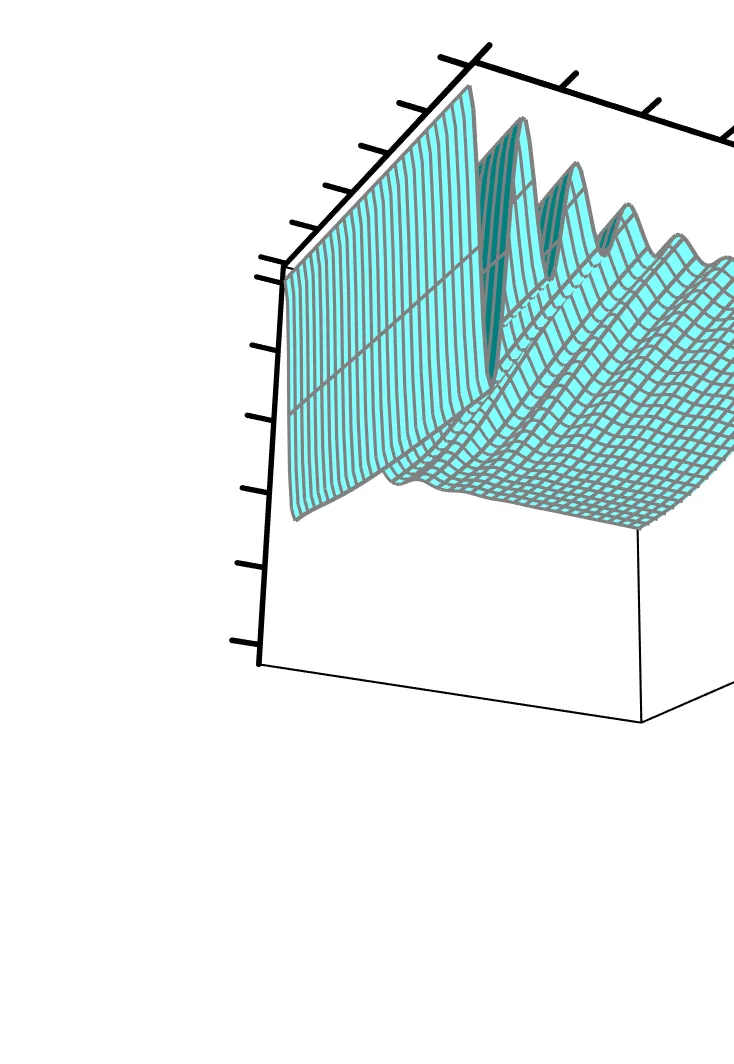
الفراغ ليس فارغًا تمامًا أبدًا. في الفضاء المنحني — مثل الكون المتوسع أو بالقرب من ثقب أسود — يسخن الفراغ. هذا يشبه الموقف الذي يجعل فيه التسارع الجسيمات تظهر وكأنها من لا شيء: وهي ظاهرة تُعرف بالإشعاع الحراري للفراغ.
بنى الفيزيائيون نموذجًا لبطارية كمومية تلتقط هذه الحرارة. البطارية عبارة عن كاشف صغير يتحرك بتسارع عبر حقل كمومي. في العمل، تم النظر في نوعين من الفضاءات المنحنية. أحدهما يتوسع، مثل كوننا. والآخر له شكل سرج مع حدود. في كلتا الحالتين، تُشحن البطارية تدريجيًا، مستخرجةً الطاقة من الفراغ. يعتمد مخزون الطاقة النهائي فقط على التسارع والانحناء، وليس على تفاصيل البيئة المحيطة.
يحول هذا النهج البطارية إلى أداة لدراسة الخصائص الحرارية للفراغ. إنها بمثابة مسبار يستشعر درجة الحرارة العالمية للزمكان، والتي لا تعتمد على الخصائص المحلية. هذه خطوة نحو فهم كيفية عمل ميكانيكا الكم والجاذبية معًا.
الملخص الأصلي
كما كتبه المؤلفون، بالإنجليزية arXiv:2606.25326
We propose a relativistic quantum battery model consisting of an accelerated Unruh-DeWitt detector coupled to a massless scalar field in a de Sitter and anti-de Sitter spacetimes. The maximal amount of quantum extractable work, defined as the ergotropy, is used to probe Unruh-Hawking thermality induced by acceleration and spacetime curvature. Using the open quantum system approach, we study the dynamics of the ergotropy with respect to the Kubo-Martin-Schwinger temperature, spacetime boundary conditions, and dimensionality. It has been found that the asymptotic value of quantum work extraction is determined solely by the acceleration and curvature. The steady behavior in the two spacetimes can be unified to witness the global thermality which is independent of boundary conditions and dimensionality. From a local perspective, we investigate how the ergotropy evolves through different pathways as the battery gradually reaches the same thermal equilibrium state characterized by a certain KMS temperature. In dS spacetime, the evolution at large acceleration exhibits pronounced oscillations and differs from the fast thermal relaxation observed at low acceleration. Varying the boundary condition in AdS spacetime can improve the energy storage of the moving battery. When the dimension of AdS spacetime is increased, vacuum fluctuations can modestly amplify the ergotropy in the initial stage and facilitate the rapid thermalization. From the perspective of energy transfer, the relativistic quantum battery helps explore the thermal vacuum in curved spacetimes.
حتى في الفضاء الفارغ تمامًا، وفقًا لنظرية الكم، تُولد أزواج من الجسيمات وتختفي باستمرار. يمكن للتسارع أو الجاذبية أن يحولا هذه الجسيمات الافتراضية إلى جسيمات حقيقية، مما ينتج إشعاعًا حراريًا.
في رواية «سولاريس» لستانيسلاف ليم، ربما يستمد المحيط الطاقة من التقلبات الكمومية للفراغ — وهي فكرة تتردد مع البطاريات الكمومية التي تتغذى من نسيج الفضاء نفسه.