الاصطدامات الكونية: كيف نرى ولادة الكواكب سريع
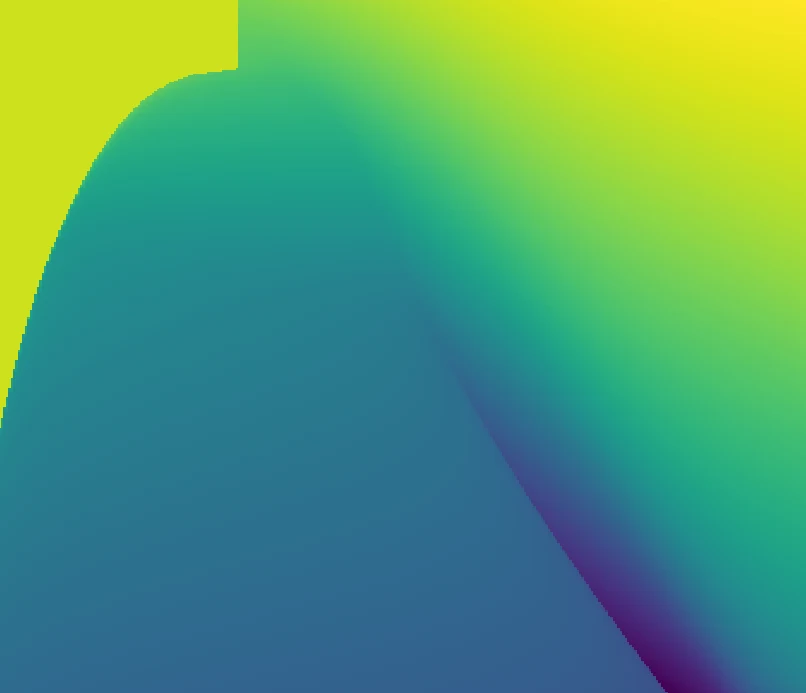
تشبه ولادة الكواكب عمل ورشة كونية. تتصطدم الكتل الصخرية وتنصهر معًا. ينتج عن الاصطدام القوي شرارة — تسخن المادة حتى تصبح بيضاء وتتوهج مثل المعدن الذي يبرد. أظهرت الحسابات الحاسوبية أن الوميض يمكن رؤيته من بضعة أيام إلى عدة سنوات، ويصل في ذروته إلى عُشر ضوء الشمس. تستطيع التلسكوبات الحديثة التي تراقب ملايين النجوم التقاطه. ستجمع المسوحات السماوية الجديدة، مثل Gaia وLSST، بيانات دقيقة عن سطوع النجوم. يتوقع العلماء رصد ما يصل إلى 14 حدثًا من هذا القبيل — ستُظهر لنا مدى تكرار تصادم العوالم في درب التبانة.
الملخص الأصلي
كما كتبه المؤلفون، بالإنجليزية arXiv:2606.26026
Giant impacts, collisions between planet-sized bodies, play an important role in planet and moon formation. As we enter a new era of large-scale surveys, such as \textit{Gaia} and LSST at the Vera C. Rubin observatory, there is potential to directly observe the remnants produced in such events and gain insights into the process of planet formation. Here, by modelling the emission and cooling of a series of giant impact remnants, we show that giant impacts are detectable as a sudden brightening followed by gradual dimming in the optical and near-infrared. Giant impacts between Earth-composition planets were simulated using the smoothed particle hydrodynamics code {\small SWIFT}, with total colliding masses ranging from 0.2 to 4 $$M_{\oplus}$$. By constraining the location of the photic surface of the post-impact bodies produced by the simulations, the initial luminosities of post-impact bodies were found to be between $$5\times10^{-5}$$ and $$10^{-1}$$ solar luminosities, with luminosity falling roughly exponentially on a timescale between 1 and 2000 days. Based on our results, along with estimates for planet and giant impact occurrence rates, we anticipate that between 0 and 14 terrestrial giant impacts will be observed in the full release of \textit{Gaia} epoch photometry in DR4, with at least a comparable number found by LSST. Identifying the remnants of multiple giant impacts will offer a powerful constraint on the frequency of giant impacts in the galaxy and hence the role of such collisions in planet formation.
ترتفع درجة الحرارة في نقطة الاصطدام إلى آلاف الدرجات في دقائق — تتوهج الشظايا مثل قطعة معدنية في ورشة حدادة.
في فيلم "ميلانخوليا" للمخرج لارس فون تراير، تصطدم الأرض بكوكب تائه، مسببةً وميضًا مبهرًا يشبه هذا التأثير.