لماذا تهتز حتى الأجهزة الثقيلة سريع
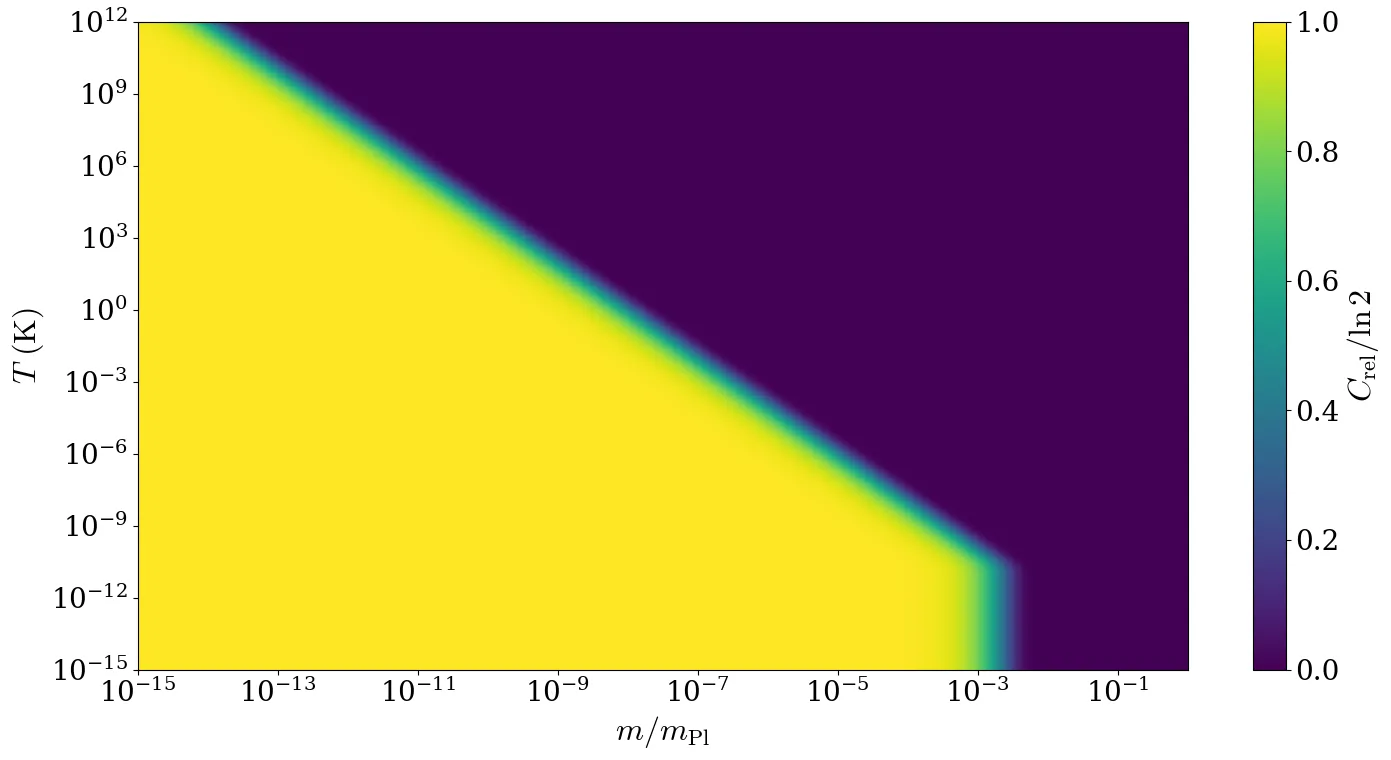
العالم الكمي يعشق التوازن. عندما يُجبر جسيم ضخم على الانقسام – أي السير في مسارين في وقت واحد – فلا بد أن يتأرجح شيء ما استجابةً لذلك. وهذا «الشيء» هو الجهاز نفسه الذي قام بتقسيم الجسيم.
منصة ثقيلة موضوعة على نوابض لينة. تدفع فجأة عربة بعيدًا عنها في اتجاه واحد – تتحرك المنصة قليلًا في الاتجاه الآخر. هكذا الحال هنا: الجهاز الذي يُنشئ التراكب يتلقى ارتدادًا مجهريًا. ينتقل مركز كتلته. إذا كانت هذه الإزاحة أكبر من عدم تحديد موضع الجهاز نفسه بالمعنى الكمي، يتشابك الجسيم والجهاز. يُفقد التماسك الكمي للجسيم – ليس بسبب الضوضاء أو الحرارة، بل بسبب هندسة التجربة نفسها.
استنتج المؤلفون قاعدة بسيطة: للحفاظ على تراكب جسيم بمدى $d$، يجب أن يكون الجهاز ذو الكتلة $M$ إما باردًا جدًا أو مثبتًا بإحكام شديد على الطاولة. وإلا فإن اهتزازه سيطمس الصورة. ومن المثير للاهتمام أن هذا القيد يعمل حتى بالنسبة لجسيمات أخف بكثير من كتلة بلانك ولأجهزة ضخمة جدًا. على سبيل المثال، في تجارب التشابك الجاذبي لجسيمين، قد يصبح ارتداد المرايا أو المصائد عائقًا حاسمًا.
هذا ليس حكمًا بالإعدام، بل بوصلة. بمعرفة الحد، يمكن للمرء مسبقًا حساب الطاولة والتبريد والصلابة اللازمة لنجاح الرقصة الكمية.
الملخص الأصلي
كما كتبه المؤلفون، بالإنجليزية arXiv:2607.08819
Preparing massive particles in coherent spatial superpositions is a central objective of modern quantum science, motivated by applications ranging from fundamental tests of quantum mechanics and gravity to quantum-enhanced sensing. The experimental difficulty of realizing such superpositions is usually attributed to environmental decoherence mechanisms whose impact depends on the details of the experimental implementation. Here we identify a universal constraint arising from momentum conservation and the quantum nature of the preparation apparatus. Any protocol that places a particle of mass $$m$$ in a spatial superposition with separation $$d$$ necessarily entangles the particle with the center-of-mass degree of freedom of the apparatus responsible for the splitting. The resulting recoil displacement, fixed by conservation of the mass dipole moment, reduces the coherence of the particle when the apparatus is not included as part of the quantum system. For an apparatus of mass $$M$$, preserving coherence requires the recoil displacement to remain smaller than the coherence length of the apparatus center-of-mass state, leading to a quantitative bound expressible as a constraint on its temperature and on how rigidly the apparatus is anchored to the laboratory frame. We analyze the implications of this bound for current matter-wave interferometry experiments, proposals for gravitationally mediated entanglement, and tests of quantum mechanics near the Planck scale. Our main result, which may seem counterintuitive, is that the recoil of even heavy macroscopic apparatuses can pose a surprisingly strong constraint on the coherence of spatial superpositions of particles with masses well below the Planck mass. Finally, we discuss why the resulting limitation should be regarded as a conservative estimate and under which conditions it can be interpreted as an instance of false decoherence.
كتلة بلانك تساوي تقريبًا 22 ميكروغرامًا، أي كتلة حبة ملح. كل ميكانيكا الكم «الثقيلة» تعمل حتى الآن مع كتل أصغر بمليارات المرات.