قلب المستعر الأعظم المتكتل سريع
عندما ينفجر نجم، تتطاير مادته في الفضاء. في بقايا المستعر الأعظم SNR 0509-67.5، لم تنتشر هذه المادة كسحابة منتظمة، بل تجمعت في كتل منفصلة — مثل تكتلات العجين عند خلطه بسرعة. تلسكوب MUSE في تشيلي رصد هذه الكتل في توهج خافت للخطوط المحظورة للحديد والكالسيوم. هذه الخطوط لا تظهر إلا في غاز شديد التخلخل، لذا فهي تُظهر بدقة أين توجد المادة المقذوفة.
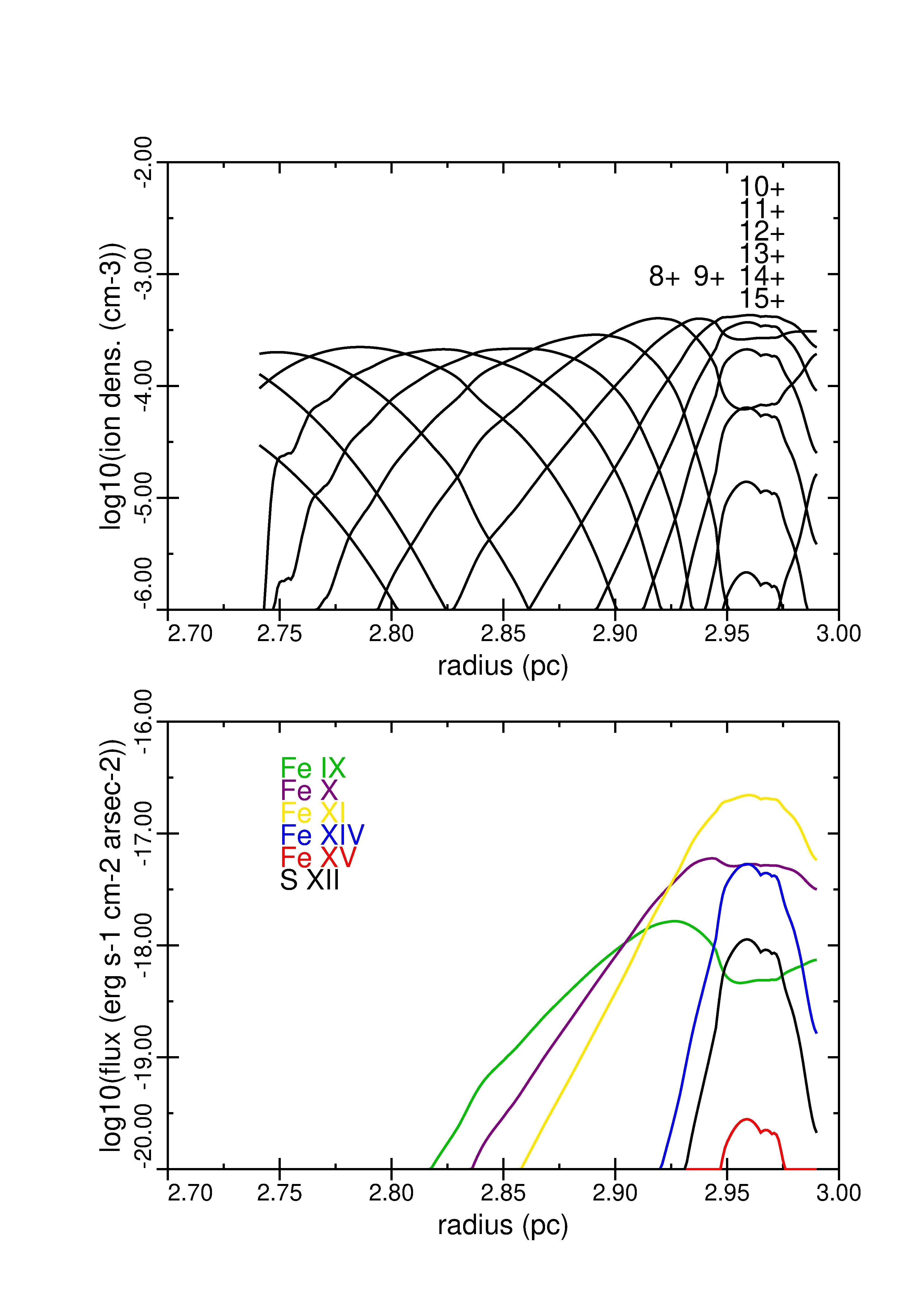
توهج الحديد يختلف من كتلة إلى أخرى: في بعضها ذرات أكثر تأينًا، وفي أخرى أقل. هذا سمح بتتبع كيفية فقدان ذرات الحديد للإلكترونات واحدًا تلو الآخر عندما تلحق بها موجة الصدمة. اتضح أن الكتل كانت أكثر كثافة من الغاز المحيط بها حتى قبل الانفجار — وإلا لما استطاعت التوهج بهذا السطوع في خط الحديد-14. النموذج الحاسوبي لانفجار قزم أبيض مزدوج أظهر أن الدور الرئيسي في تكوين الكتل لعبه عدم استقرار رايلي-تايلور: ينشأ عندما تندفع مادة أكثر كثافة عبر مادة أقل كثافة، وتصبح الحدود بينهما متموجة.
الملخص الأصلي
كما كتبه المؤلفون، بالإنجليزية arXiv:2608.17465v1
We report the discovery of a spatially resolved clumpy ejecta structure in the reverse-shocked ejecta of SNR 0509-67.5, revealed through multiple faint and broad forbidden coronal emission lines in deep MUSE observations. We also identify two new broad coronal emission lines not reported before in this remnant, [Fe xi] 7894 A and [Fe x] 6374.5 A , which extend the set of previously reported [Fe xv] 7059.59 A, [Fe xiv] 5302.86 A , [Fe ix] 8236.55 A , [Ca xv] 5695 A, and [S xii] 7611.0 A. Near-continuous ionisation states of Fe allow us to follow the ionisation progression behind the reverse shock. We use a 1D analytical model to evolve Fe charge states following reverse shock interaction to compare with observations, indicating the need for preshock clumping or over-density in order to reproduce the observed surface brightness of the [Fe xiv] line. Additionally, we report the spatially resolved distribution of ejecta clumps and show that reverse-shock interaction drives their compression and fragmentation. We also find a clear trend of decreasing velocity width with increasing Fe ionisation state, from the broadest [Fe ix] emission to the narrowest [Fe xv], with intermediate-ionisation species ([Fe x], [Fe xi], [Fe xiv]) showing intermediate widths. Finally, we compare our observations to a dynamically driven double-degenerate double detonation (D6) 3D remnant model at similar Fe and S ionisation states and conclude that the observed clumps are predominantly due to Rayleigh-Taylor instabilities.
خط الحديد-14 الذي كُشفت به الكتل يتوهج باللون الأخضر — وهو نفس الدرجة التي تُرى في الشفق القطبي على الأرض، لكن هناك تنتجه ذرات الأكسجين.