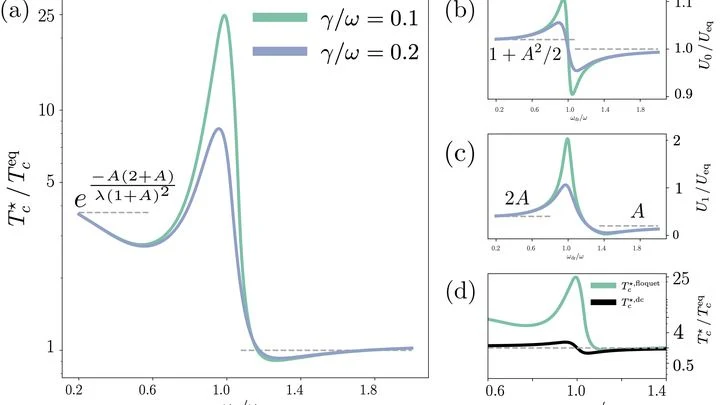
Light-induced superconductivity is a phenomenon where exposing certain materials to intense, brief pulses of light can temporarily make them superconduct — conduct electricity with zero resistance — at temperatures far above their normal transition point. This is not the same as conventional superconductivity, which requires cooling materials to extremely low temperatures; here, light energy briefly reorganizes the material's electrons into a paired state that flows without loss. The effect is particularly striking in materials like fullerenes (carbon spheres) and cuprates, where light can trigger superconductivity at or near room temperature, albeit only for picoseconds.
التاريخ
The concept gained prominence in the 2010s, with experiments by Andrea Cavalleri's group at the Max Planck Institute for the Structure and Dynamics of Matter demonstrating light-induced superconductivity in cuprates and fullerenes. The specific mechanism for fullerenes was proposed and tested around 2023–2024.
كيف يعمل
In a superconductor, electrons form Cooper pairs that move coherently without scattering. Normally, this pairing is mediated by lattice vibrations (phonons) and only occurs at low temperatures. Light pulses can transiently excite the material's lattice or electronic structure, creating a new configuration where pairing is much stronger. For example, in fullerenes, mid-infrared light pulses can distort the molecular lattice, enhancing the coupling between electrons and phonons enough to allow pairing at higher temperatures. The effect is fleeting — the superconducting state decays within a few picoseconds — but it reveals pathways to room-temperature superconductivity that are inaccessible through static conditions.
في التطبيق
While the effect is too short-lived for direct technological use, it informs the search for materials that could sustain superconductivity at room temperature, potentially revolutionizing power transmission and magnetic levitation.
حقيقة طريفة
In some experiments, light pulses have induced superconductivity in fullerenes at temperatures as high as 100 K, which is about 40 K above their normal superconducting transition temperature.
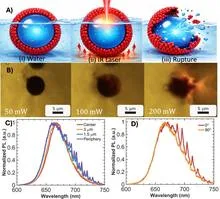
كبسولة صغيرة جدًا تشبه فقاعة الصابون، لكن جدارها مصنوع من بلورات متوهجة، تتصرف مثل الليزر. ما دام جدارها سليمًا، ينتقل الضوء في مسار دائري، ويتضخم، ثم ينطلق كشعاع ضيق ساطع. وما إن يتشقق الجدار حتى يتحول الشعاع إلى بقعة باهتة. هذه الكبسولة هي جسيم غرواني (colloidosome)، وهي قادرة على تغيير توهجها عند الطلب.
الضوء الصادر عن العديد من الباعثات الصغيرة — ذرات أو «نقاط كمومية» اصطناعية — عادةً ما يتشتت في اتجاهات مختلفة، مثل حشد يصرخ فيه كل فرد بصوت منفصل. لكن إذا جعلناهم «يغنون في جوقة»، يصبح الوميض أكثر سطوعًا عدة مرات. هذا الإشعاع المتناسق يُسمى الإشعاع الفائق، وحتى الآن كان يتطلب أن تكون الباعثات متقاربة جدًا — على مسافات أقل من الطول الموجي للضوء.
الموصل الفائق العادي يعمل فقط في "مجمد الطبيعة"، أي عند درجات حرارة أقل من مئة درجة تحت الصفر. مادة كرات الكربون K₃C₆₀ ليست استثناءً: بدون البرد، تقاوم التيار مثل حشد في ممر ضيق. لكن الفيزيائيين لاحظوا شيئًا غريبًا: إذا سلطوا ليزرًا عليها، فإنها تبدأ في توصيل التيار دون فقدان حتى في الدفء. صحيح أنهم احتاجوا سابقًا إلى شعاع قوي كاد أن يذيب العينة.