Heat in Nanofilms: Why Thinner Doesn't Mean Faster ⚡ экспресс
Original: "Experimental observation of ballistic to diffusive transition in AlN thin films"
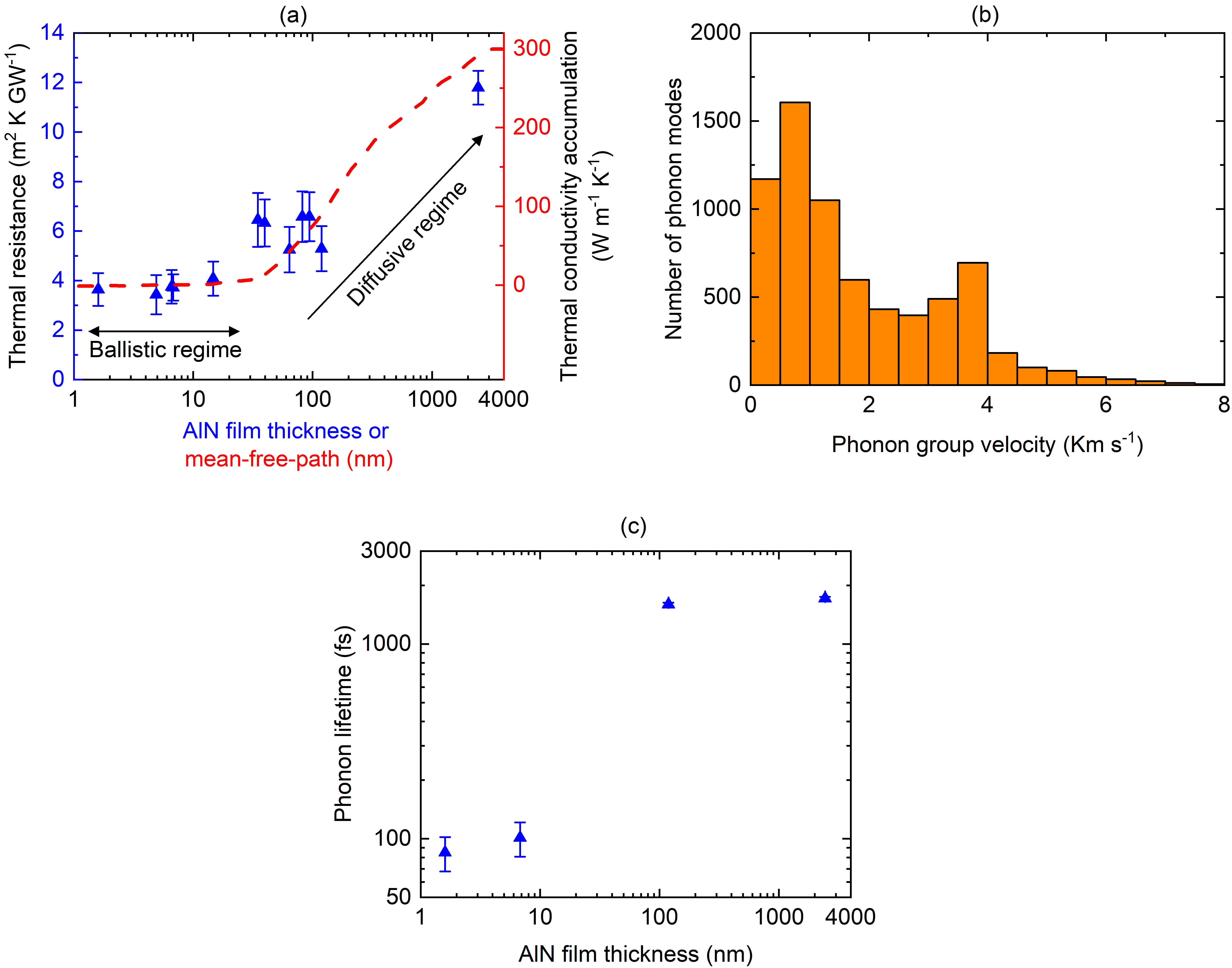
In atom-thick films of aluminum nitride, heat doesn't take a straight path—it trips over every bump.
Links in the knowledge graph 1
In a film just a few atoms thick, heat doesn’t flow smoothly but fumbles, like in a cramped room. Scientists caught the moment when disorder gives way to order. This will change microchip cooling.
🎯 Diamond is one of the best heat conductors, but in nanofilms, the same trouble arises: boundary scattering drops its thermal conductivity by hundreds of times.
🎬 Stephen Baxter in 'The Time Ships' describes materials that arbitrarily change their thermal conductivity—almost like in these experiments.
k = \frac{1}{3} C v l
k — ability to conduct heat, C — how much heat the material stores, v — speed of heat waves, l — average distance between collisions