Applications of physics to new technology: electronic devices, optics, photonics, microwaves, spintronics, advanced materials, metamaterials, nanotechnology, energy sciences.
A material with an internal structure of nested patterns of different sizes suppresses several frequencies at once—like a stack of sieves with different mesh sizes. The computer finds the right shapes on its own, and the large details don’t interfere with the small ones. This paves the way for ultra
As the film thickens from 1.6 to 2440 nanometers, heat transfer shifts from free flight to a crowded jostle. At small thicknesses, resistance is constant—limited by defects and edges, while at larger thicknesses, heat packets live longer but collide more often. This discovery is crucial for microchi
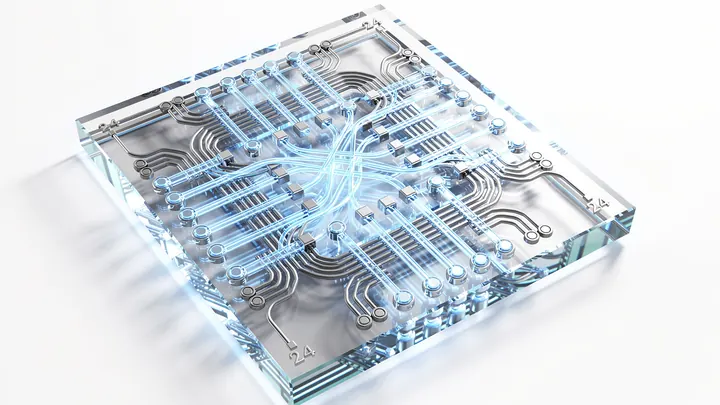
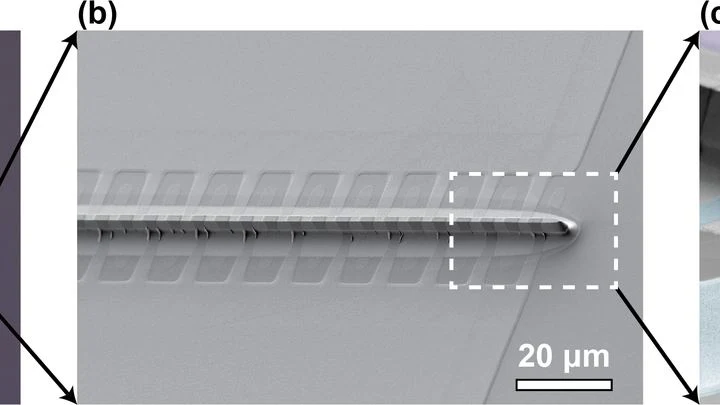
Researchers from Ephos and the Polytechnic University of Milan inscribed a 24-mode universal photonic processor into glass, using femtosecond lasers like a sewing machine needle. Operating at 925 nm—ideal for quantum-dot single-photon sources—the device is controlled by microheaters and uses less po
Physicists built a computer out of tunnel diodes that directly converts pictures into voltage patterns. No need to program each 'neuron' — physics does all the work. The chip already reads handwritten digits and tells fruits apart in photos, rivaling graphics cards.
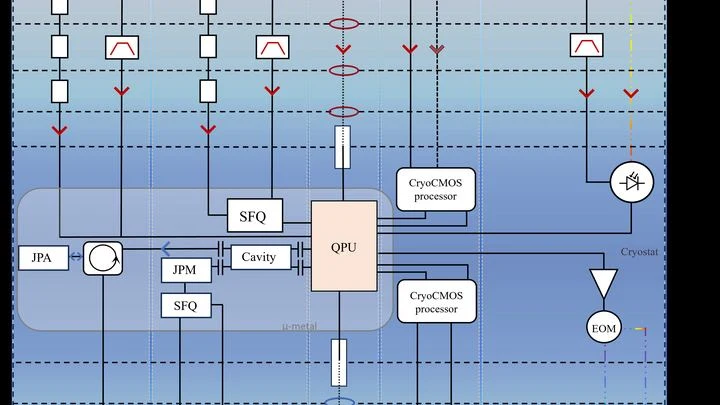
Quantum processors are isolated in ultra-cold chambers. Their microwave signals were converted into light, which ran through an optical fiber, and back in another chamber—without losing the quantum essence. The first step toward a quantum internet.
Cheap fullerenes added to plastic emit light strictly in single-photon packets — fast and fail-proof. This simple material opens the door to affordable quantum devices for secure communication and computing.
Scientists have learned to create spy defects in diamond: swapping a carbon atom for nitrogen yields a sensor that responds to magnetic fields. For the first time, they've observed titanium under nearly two million atmospheres expel magnetic fields—a sure sign of superconductivity. This technology p
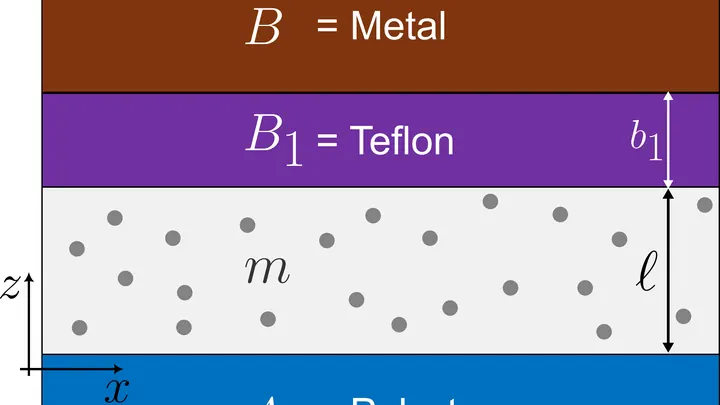
The Casimir effect makes surfaces stick together like quantum glue. But scientists have turned it into a force that holds a plate in the air without support. By placing an object over Teflon and adding a magnetic fluid, they learned to control the quantum field. This discovery eliminates friction an
Superconductivity arises when the electron 'sheet' in a metal is so soft that it ripples and nudges electrons along. All metals fall into three classes based on the stiffness of this sheet. For the first time, this new approach explains why gold and copper don't superconduct, and it promises a targe
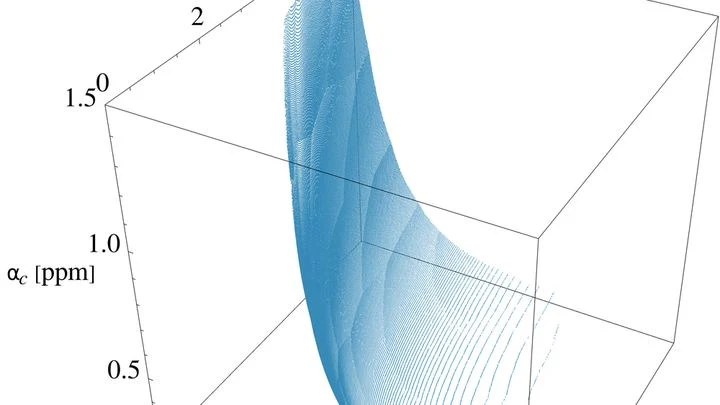
Gold and silver don't superconduct—until you make them thousands of times thinner than a human hair. Quantum effects in a two-dimensional layer change electron behavior: calculations show that at a thickness of about half a nanometer, resistance vanishes. This could enable electronics that don't hea
Twin light beams bypass pricey hardware: one probes the sample with invisible light, the other delivers the results in the visible spectrum. The device tells plastic types apart in a split second and fits in the palm of your hand.
Scientists built a compact setup that locates magnetic defects in diamond with record precision. These defects are built-in compasses, crucial for quantum computers and sensors. By analyzing the response to magnetic pulses, the authors pinpointed one compass with an error of just 0.28 nanometers. Su
The idea that all objects fall equally underpins Einstein's theory. On the Chinese space station, physicists compared the fall of two types of rubidium atoms. The result matched the prediction with an error of a few ten-millionths.
Quantum states are easily destroyed by magnetic disturbances. Conventional frequency tuning methods are powerless here, but researchers have taken a different approach: ultra-compact magnetic patterns placed right next to artificial atoms in diamond (NV centers) absorb low-frequency noise. Experimen
They broke the old trade-off between size and sensitivity. The new 6mm probe picks up magnetic fields millions of times weaker than Earth's. Tests on a lithium-ion battery let them 'see' the currents inside without opening the case. This opens doors to non-destructive testing in tech and medicine.
After earthquakes or explosions, every hour counts. New research proposes using drones with incredibly sensitive quantum magnetometers to peer beneath rubble. Scientists simulated the collapse of a concrete parking structure and showed that weak magnetic fields from steel rebar can reveal where void
The method allows particles to float in a magnetic field and behave like a dancer who is in two places at once. These experiments will help us understand the boundary between the quantum and classical worlds, and possibly detect dark matter.