Black Hole as a Gravitational Atom: Gravitational Echo ⚡ экспресс
Original: "Gravitational superfluorescence from superradiant axion clouds"
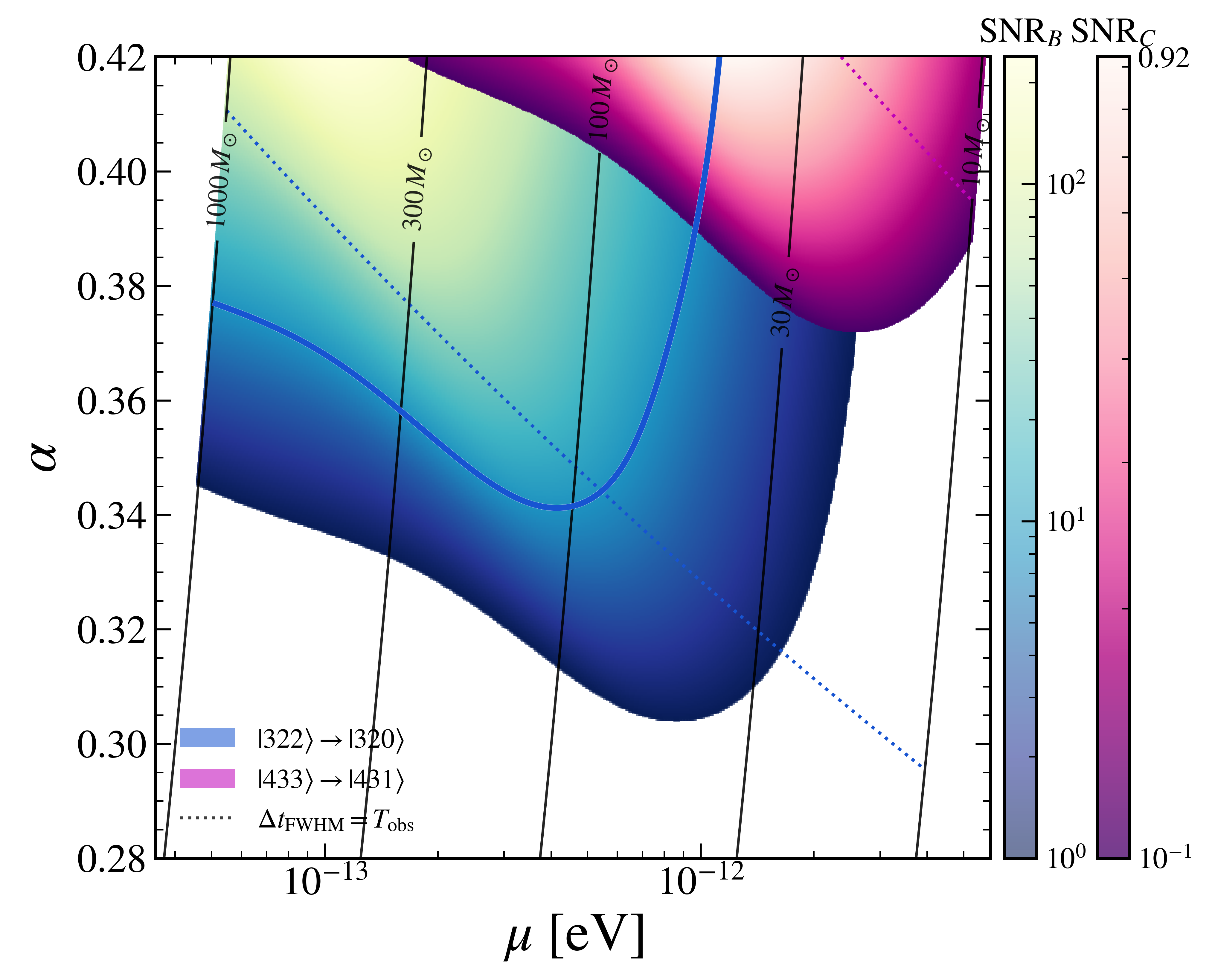
Spinning rapidly, a black hole gathers a cloud of ultralight particles—and turns into a giant atom. A passing ripple of spacetime triggers a cascade that produces a powerful delayed signal.
Links in the knowledge graph 1
Clouds of ultralight particles may gather around spinning black holes—like a fluffy cocoon. A faint gravitational wave passing through such a cloud can trigger an avalanche: the particles collectively "shoot out" a powerful gravitational pulse. It's like an echo from the black hole, which could reveal the presence of invisible dark matter. Future detectors will offer the first chance to catch such a signal.
🎯 Around a black hole with the Sun's mass, such a cloud would grow to hundreds of kilometers across—a true invisible cocoon the size of a planet.