The Collapsar's Gravitational Boomerang: Cracking the GW190814 Anomaly ✦
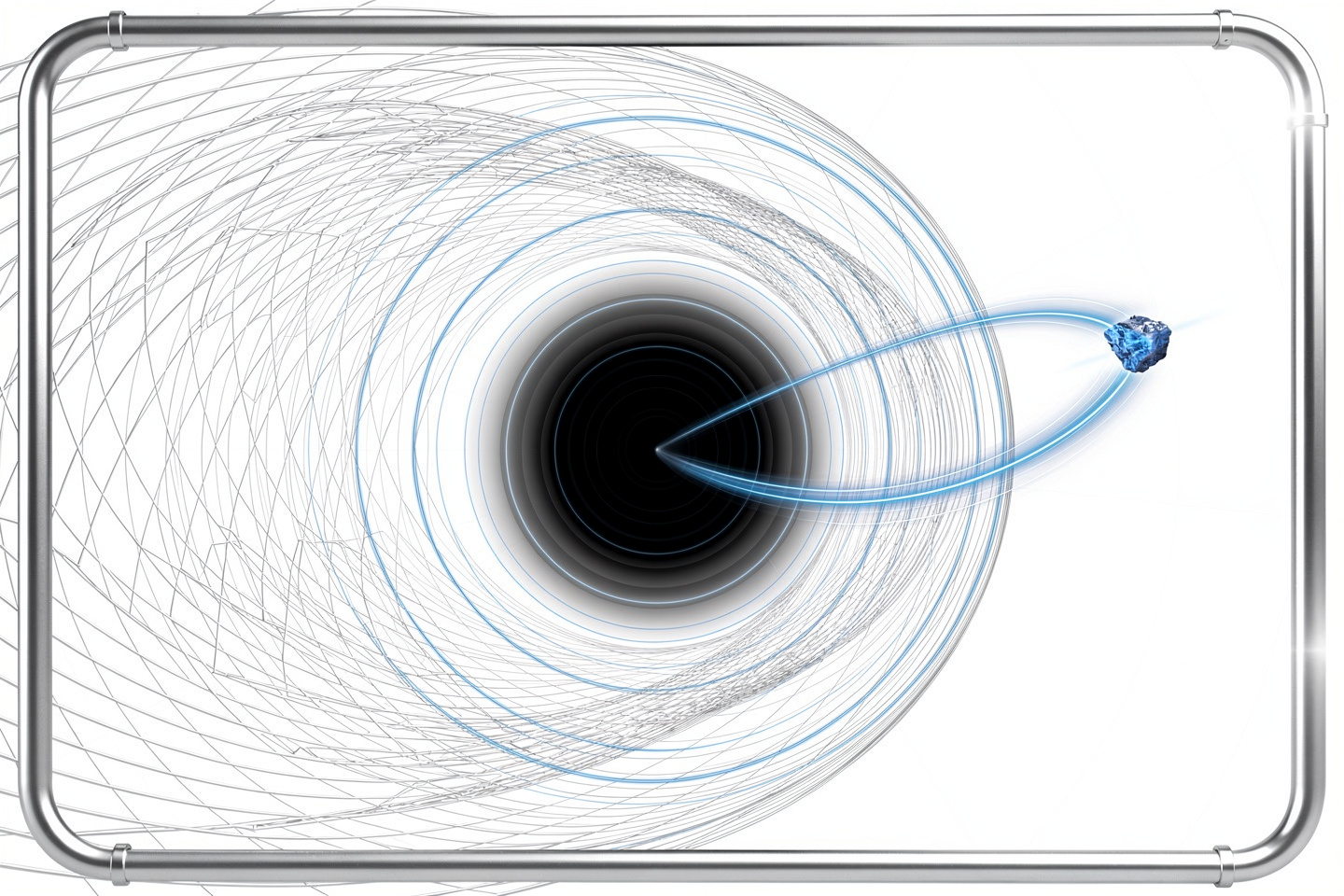
At the epicenter of a star's collapse, the accretion disk breaks into fragments. One piece, like a gravitational boomerang, is flung out only to return 60 days later and merge with the central black hole, producing the GW190814 signal. This deadly dance not only explains the anomalous merger but also provides a new method to measure the universe's expansion. Soon, perhaps, telescopes will spot 'embedded kilonovae'—flashes wrapped in the supernova shell, like light in the darkness.
🎯 Just 1.3–1.5% (around 2.2σ)—that's the probability of a chance coincidence of supernova SN2019npv with GW190814 in time and position. This shaky chance already prompts astrophysicists to consider it a likely precursor and a potential key to measuring the Hubble constant.