How Black Holes Actually Glow: A Simple Discovery ⚡ экспресс
Original: "Backreaction of stimulated Hawking radiation in an optical analogue"
Physicists found that black holes lose energy not through a cascade of particles, but through a simple ejection — like spray from a roaring current.
Links in the knowledge graph 1
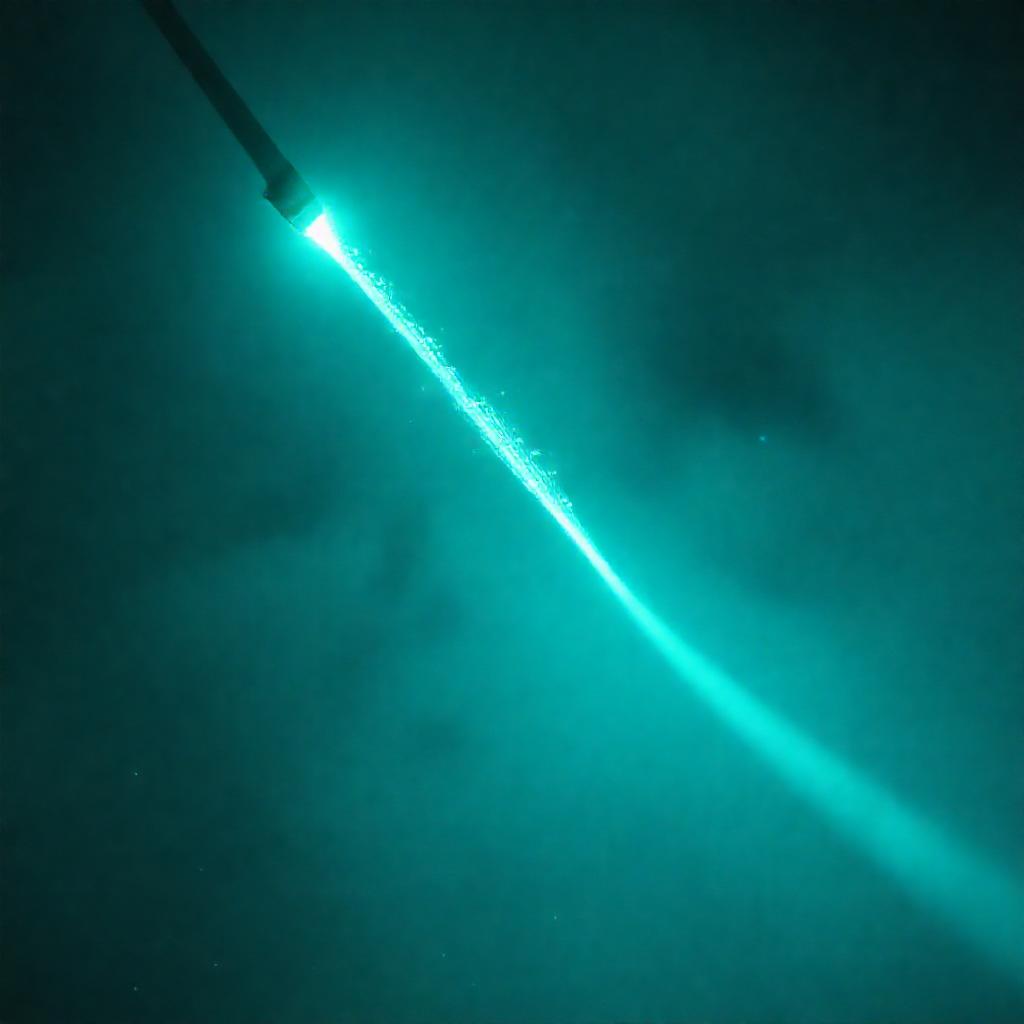
Black holes not only devour — they also glow. Physicists captured this process in an optical fiber and found an unexpectedly simple mechanism: quantum droplets tear off from the turbulent flow, like spray from a river rapid. Perhaps this is how a real hole radiates as well.
🎯 If a black hole had the mass of the Sun, it would take it billions of billions of times longer than the age of the Universe to completely evaporate.