How a quantum computer built space out of entanglement
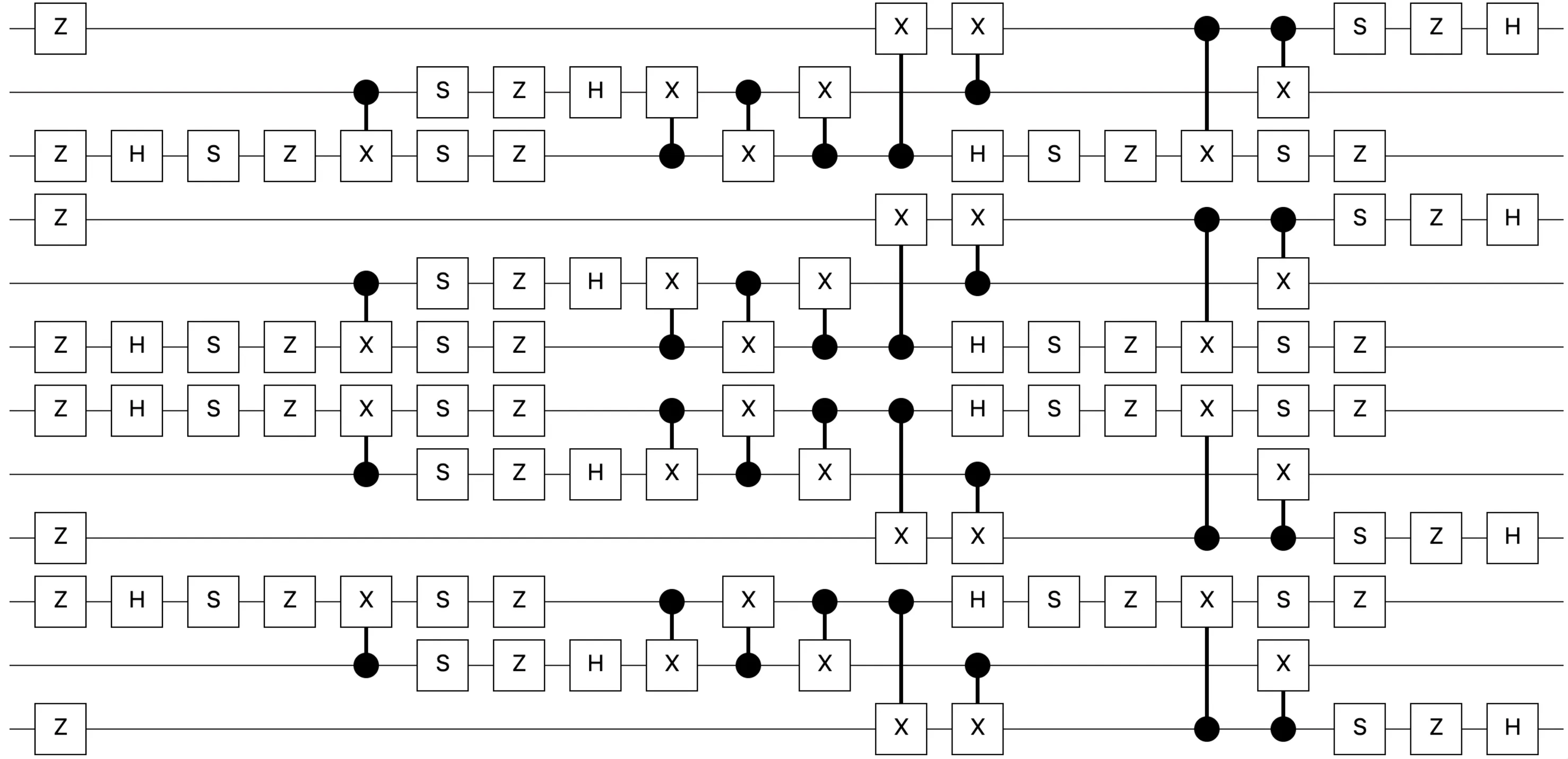
A quantum computer with 36 ions reproduced a tiny model of space. The ions are held in a trap, and lasers link them so that the result is a framework resembling the beams of a building. Each beam is entanglement between two particles: touch one and the other responds instantly.
At first the framework was rigid: no matter how the internal links were changed, the measured "area" stayed the same. This confirmed a theoretical formula that no one had previously tested on a real device. Then magic was added to the scheme. In the quantum world magic is not a trick but a special resource that cannot be obtained from ordinary operations. With magic the framework became mobile: the "area" began to grow when entanglement increased inside. The more magic, the more noticeable the growth.
In the second experiment, two such frameworks were joined, like two buildings with a shared corridor. When the link between them grew stronger, the "area" shrank, as if the corridor were getting shorter. This resembles how, in theory, a bridge between distant points of space shortens under strong entanglement. The quantum computer showed this behavior in the laboratory for the first time.
The experiment used up to 56 two-qubit ZZ gates in a single circuit, and tomography of a three-qubit state required measuring 27 different Pauli bases, each with 2100 shots. In total, more than 10^6 measurements were performed.
The idea that spacetime may be "woven" from quantum entanglement echoes Greg Egan's novel Schild's Ladder, in which physicists discover that the vacuum has a hidden structure, as well as John Wheeler's "It from Qubit" concept, popularized in science fiction.