Where Did the Asteroid Fountain's Splashes Land? ✛
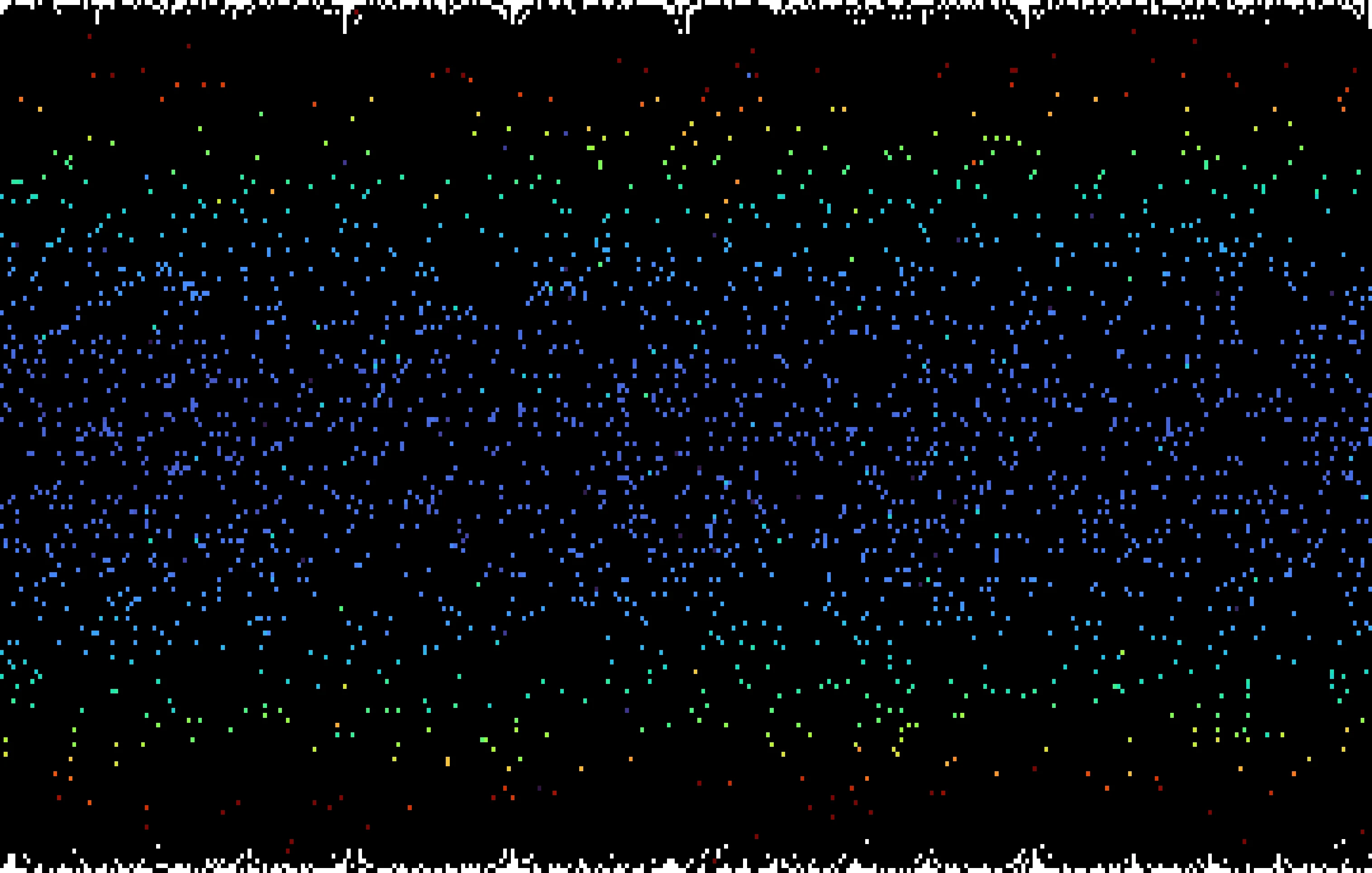
When NASA's DART spacecraft slammed into Dimorphos, the asteroid's moon, the impact sent a plume of debris into space. Scientists tracked the fate of 20 million particles using computer simulations.
Most of the splashes never came back. Some 93,5% of particles were swept away by solar radiation — light pushes on dust grains like wind on a sail. But a fraction fell back. On Dimorphos, dust settled in a layer about 1,5 mm thick. On the larger asteroid Didymos, a dense patch formed, reaching 3 to 11,5 mm in thickness.
Why does this matter? In 2026, the Hera mission will arrive. It will photograph the dust trails and verify the calculations. It will also avoid dangerous zones with leftover debris. The fountain has nearly dried up. Its pattern on the rocks remains. It will tell us about the force of the impact.
If Dimorphos were the size of a football field, the dust layer that settled would be thinner than a human hair.
Kinetic impact is a favorite trope in Hollywood blockbusters from 'Armageddon' to 'Don't Look Up', but DART was the first real test without nuclear bombs.