Electricity Changes How the Foot Feels express
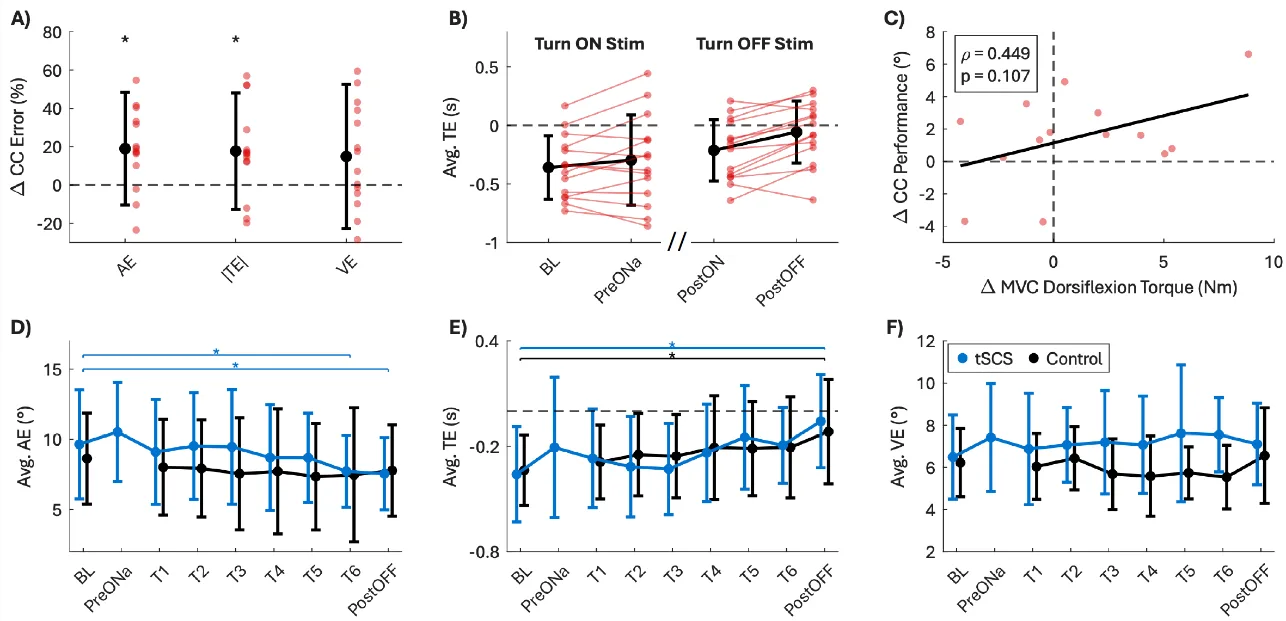
Give your back a mild electric zap, and your leg starts to live its own life. That's exactly what researchers discovered when they tested how transcutaneous spinal cord stimulation affects healthy people. Fourteen volunteers tried to move their ankles precisely while a robotic trainer measured errors. It turned out that after brief stimulation, the sense of foot position worsens — errors increase. Muscles, meanwhile, work as usual; strength doesn't change.
Gait transforms too. People began walking more cautiously: steps became narrower, and the body swayed less from side to side. The brain, it seems, plays it safe when receiving unusual signals from the legs. But the most interesting part came after several training sessions. Those who trained under current became better at sensing their ankles, and this improvement persisted even when stimulation was turned off. The control group without current didn't gain such memory.
Gait, however, changed differently depending on direction. Forward-backward movements returned to normal or even improved, while sideways sway remained stiff. The nervous system seems to have chosen a safer, narrower corridor for walking, sacrificing left-right freedom. So, simple stimulation of the skin over the spine opened a window into our body's remarkable ability to relearn under a new stream of sensations.
The error in ankle sensation after stimulation was statistically highly significant (p < 0.001), meaning the effect is almost certainly not random, the current truly confuses the foot's "sensors."