Autism spectrum disorder (ASD) is a neurodevelopmental condition that shapes how a person perceives, communicates, and interacts with the world. It is not a single disease but a spectrum, encompassing a wide range of traits and challenges, from difficulties with social cues and nonverbal communication to intense focused interests and sensory sensitivities. The condition is rooted in brain development, with genetic and environmental factors both playing significant roles, and it typically appears in early childhood, though it is a lifelong trait rather than an illness to be cured.
History
The term 'autism' was coined by Swiss psychiatrist Eugen Bleuler in 1911, but it was Leo Kanner and Hans Asperger, working independently in the 1940s, who first described it as a distinct childhood condition. The modern understanding of autism as a spectrum with a stronggenetic basis emerged in the late 20th century.
How it works
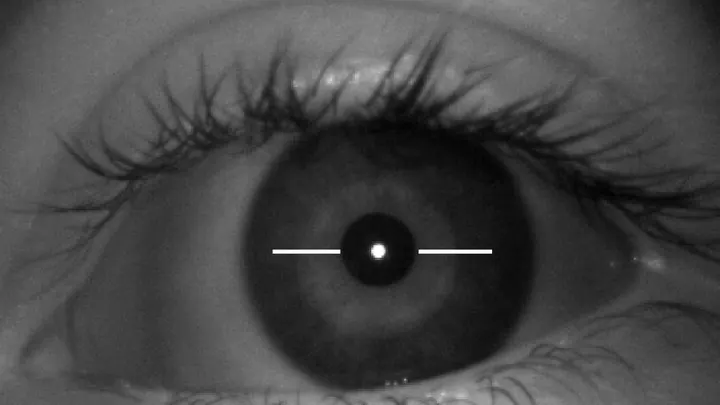
The exact mechanisms are complex and not fully understood, but research points to differences in brain connectivity and synaptic function. Studies using eye-tracking and neuroimaging show that autistic individuals often process social information, like faces and gaze, differently from neurotypical people. This can manifest as atypical eye movement patterns, which some research suggests may be a reliable early marker in a subset of cases. The interplay of hundreds of genes, combined with prenatal and early-life environmental influences, shapes these neural pathways, leading to the diverse behavioral profile seen across the spectrum.
In practice
Understanding autism informs early intervention programs, educational strategies, and support services that help autistic individuals thrive. It also drives the development of diagnostic tools, such as eye-tracking-based screening, and personalized therapies.
Fun fact
Studies suggest that autistic individuals are more likely to have atypical pupil responses to light, a physiological marker that can be detected with simple eye-tracking technology.
Stated relations:follows from →gene · follows from →mutation
In a psychologist's quiet office, a fourteen-year-old fills out a questionnaire about childhood. The scores climb, and on the MRI scans the amygdala climbs with them: a small node deep in the brain that teaches us to fear and to remember danger. In a rat held in a narrow tube for three hours a day, the same structure grows faster than in its calm counterparts.
When you're standing on a bus and the driver suddenly brakes, your brain manages to tense your muscles in a fraction of a second so you don't fall. This automatic response is born deep in the cortex, in an area that plans complex movements, the supplementary motor cortex.
Skin remembers touch the way an old map remembers roads: the lines we trace with a finger again and again grow deeper over time, while the ones we rarely follow fade away. In a new study, scientists asked 43 women of two age groups to apply cream to a cheek or forearm and describe their sensations using forty words.
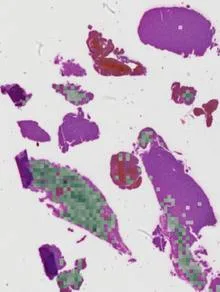
Imagine trying to figure out what happened in a room from the sound that lingers after a gunshot. The shot is gone, but the echo still bounces off the walls. That's roughly how a neuropathologist views a brain tissue section where the tumor itself is absent: the biopsy only captured healthy tissue that reacted to the disease.
In the 1980s, the DARPA speech recognition challenge settled the debate between statistical methods and hand-written rules, setting a common standard for the entire field.
In the dark room of the scanner, a person watches for rare flashes on a screen. An infrared camera records their pupil a thousand times per second, while an MRI scanner simultaneously logs which brain areas light up. In this way, 89 volunteers aged 19 to 78 helped scientists see how the pupil becomes a display on which the brain outputs two different signals.
The brain as a house built too spacious: lovely to live in, but expensive to maintain. Parkinson's disease is usually pictured as the destruction of that house, with neurons dying and structures shrinking.
At a crowded reception, an older person asks their conversation partner to repeat themselves again and again: the words drown in the hum of voices. This is what the bridge looks like, the one that carries sound from the ear to meaning. While that bridge holds, noise merely gets in the way, but it doesn't cut the conversation short.
Getting lost in a hall of mirrors is easy: every wall reflects another, and you feel like you've been here before. The brain gets similarly confused when surrounded by many similar places. Neurons responsible for the spatial map can fire the same signal for two different corners of a room. This is called spatial ambiguity.
Every winter, hospitals fill up, and by summer they seem to empty. Epidemics breathe like the tide. But why do waves of disease keep rolling in, even without new mutations? Mathematicians found an answer in a tug-of-war between two strains.
Within a single epidemic, two virus variants often coexist.
A flashlight shines through frosted glass: the rays bend, lose brightness, and take different paths. That's roughly how high-intensity ultrasound passes through the skull to the brain. For years, calculating this path required bulky computer models that 'chew' on data for hours.
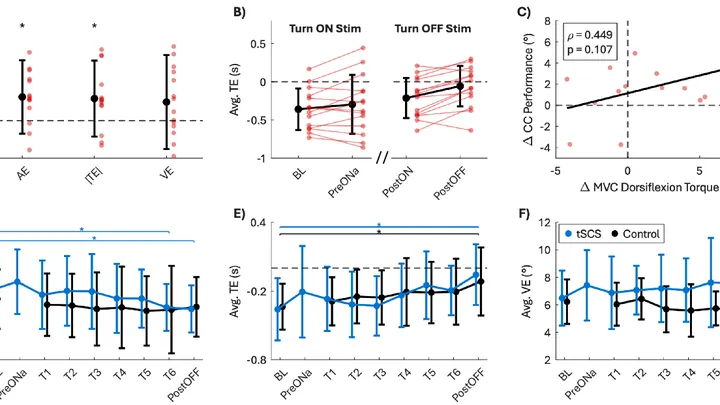
Give your back a mild electric zap, and your leg starts to live its own life. That's exactly what researchers discovered when they tested how transcutaneous spinal cord stimulation affects healthy people. Fourteen volunteers tried to move their ankles precisely while a robotic trainer measured errors. It turned out that after brief stimulation, the sense of foot position worsens — errors increase.
A stadium packed with fans hears the announcer’s voice for the first time, and instantly the whole place erupts. The message sounds again and again. Only a handful of people in nearby rows respond. That’s roughly how neural networks behave in brain organoids — tiny lab-grown replicas of the brain.
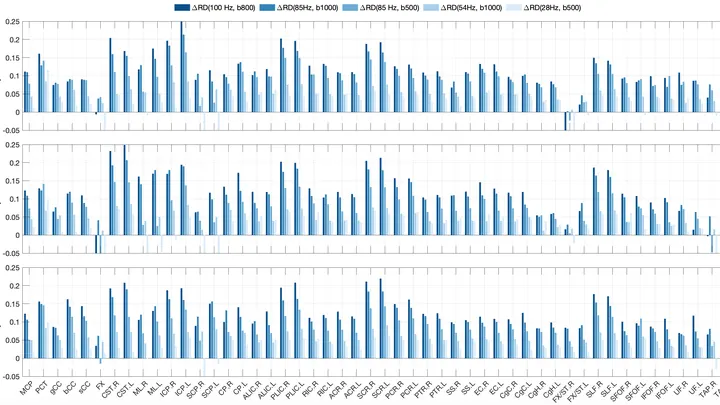
Water inside nerve fibers doesn't move like it does in a glass: it constantly bumps into the walls of axons (the long projections of nerve cells). If you make the pause between MRI radio pulses very short, water doesn't have time to travel far, and its movement reflects the tightness of the surrounding space.
The human mind is like a construction set that builds itself. New ideas don't die with their creators: they are passed on, mixed, and selected. This process is called cultural evolution: useful inventions stick, useless ones are forgotten. That's how a ratchet works — a mechanism that only turns forward.
But what exactly happens in the head when one thought displaces another?
A solid under a microscope is not a monolith at all. In glass, polymer, or solidified resin, atoms are arranged randomly, and as a result, the material's properties vary from point to point. On large scales, we are used to describing them with smooth fields, like temperature or pressure in a room. But when you zoom down to a few atomic layers, that smoothness disappears.
Cleaning speech from noise is like tuning an old TV: twist the contrast knob too far, and faces become unnatural. Researchers separately adjusted the 'volume' and 'time shift' for each frequency of sound, as if splitting it into a rainbow — a method known as spectroscopy. It turned out the key knob is volume, not phase synchronization.
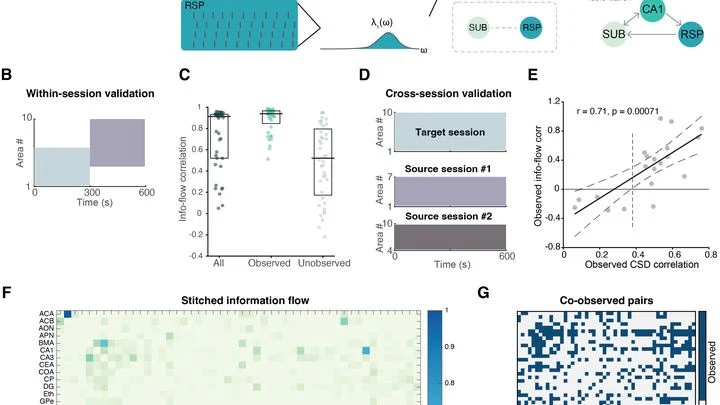
A patchwork quilt where each patch is a recording of activity from a small brain region. One patch was stitched on Monday in London, another on Tuesday in New York, and a third a month ago in Tokyo. This mosaic covers the brain only partially, and there is no common seam to join them.
When the conductor leaves the orchestra, the musicians keep playing from memory for a while. But without a unified rhythm, each one starts to speed up or slow down on their own, and the harmonious symphony turns into disjointed noise. According to new research, the brain and heart behave much the same way in the last hours of a person's life.
A person looks at a door lock and sees a keyhole. They know that a key is inserted and turned. But if instead of a keyhole there's a touch panel, the familiar frame breaks. The person doesn't just make a mistake: they realize that the usual approach won't work and can say, "There's no place for a key here; a different approach is needed."
Such an honest stop with an explanation is rare for machines.
On one side of the scale are the genes you inherited from your parents. On the other is how many hours you actually sleep. For a long time, it seemed genetics pulled harder. But a new study covering more than 200,000 people shows that real sleep can tip the balance, especially when it comes to excess weight and diabetes.
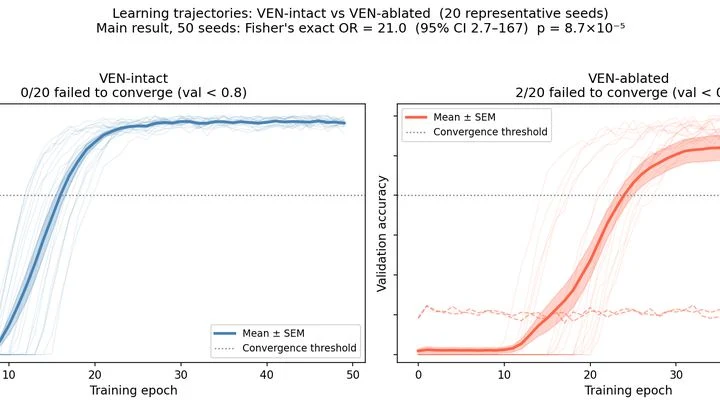
An orchestra at its first rehearsal without a conductor. Violins come in at the wrong time, brass is late, and instead of a symphony, you get cacophony. That's roughly how a computer model of the brain behaves when you remove special cells — von Economo neurons.
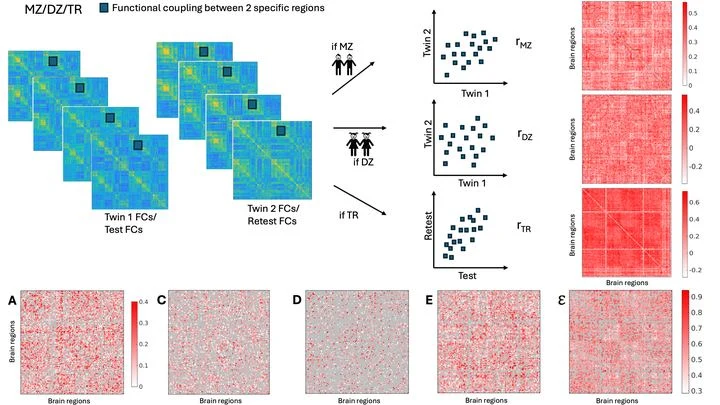
An orchestra plays without a conductor. Each musician has a score: that's the genes. But the volume and tempo depend on the acoustics of the hall, the mood, and the neighbors on stage. That's roughly how heredity and daily life together shape a teenager's behavior.
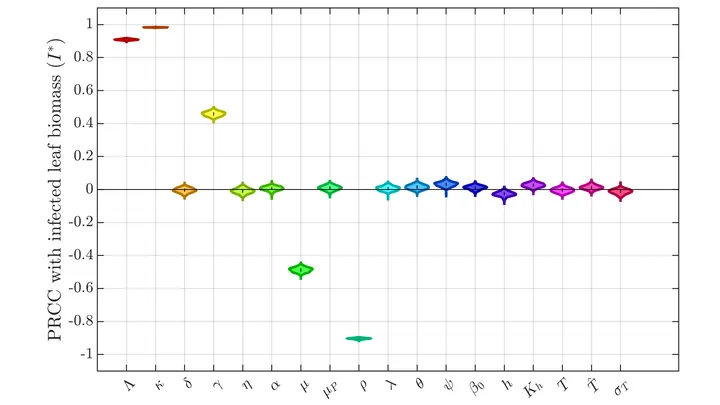
A banana plantation is covered in rusty streaks. This is black sigatoka — a fungus whose spores travel through the air like invisible pollen. It strikes the leaves, sapping the plant's strength. The farmer reduces the infection, but the disease suddenly returns, like a weed that was playing dead.
The fungus has two ways to reproduce.
The brain is like a city: regions are neighborhoods, and nerve pathways are roads, each with its own traffic intensity. Each person's transportation network is as unique as a fingerprint. What builds these routes — blueprints laid down at birth, or daily commutes that wear new paths?
Show the same photo of a cat to two different neural networks, and they often reach a similar conclusion: "cat." But ask them for more detail, and their answers may diverge. One model focuses on the whiskers, another on the coat color, a third on the pose. So even within the "visual" world of neural networks, there's no complete unity.
A flashlight shines into the eye, and the retina responds with electrical impulses, like an echo, but not of sound, of light. This echo can be recorded, and it reveals not only how the eye is working but also how the brain is. After all, the retina is a piece of the brain that has been pushed out to the periphery.
Eyes follow a dot that smoothly traces a complex curve on the screen. For most people, the gaze stays close to it, but for some, it seems to slip or lag behind. Previously, such peculiarities drowned in average numbers: if you add everyone up and divide, the difference almost disappears.
Instead of looking at averages, the scientists decided to examine each person individually.
A resting brain is not silent: its regions talk to each other, and these conversations can be eavesdropped on with a scanner. Usually, scientists track signal strength — how loudly each area 'sounds.' But a conversation also has rhythm: some areas light up simultaneously, others with a delay.
A doctor stares at a gray-white smudge on the screen. It's the face of an unborn child. One shadow in the right place, and you can plan surgery in time. But not everyone sees that shadow: cleft lip or palate is rare, and a young specialist might go years without ever spotting one.
An electrocardiogram is like a recording of an engine's hum: an experienced mechanic can hear when something's off. A heart ultrasound shows the engine itself from the inside, but the machine is pricey and specialists are scarce.
Alzheimer's disease is like a tangled ball of yarn: thousands of genes are intertwined, and it's hard to tell which ones snap first. Previously, scientists looked for important genes by simply counting how many connections each node in the network had. But that approach is like judging a person by the number of acquaintances they have — the most sociable isn't always the most influential.
Inside a cell, work is in full swing: thousands of genes switch on and off like lights on a huge display. Neural networks trained to read this display have learned to guess what will happen if you 'turn off' one gene or add a drug. But how exactly they do it is a mystery.
Every human brain is covered with folds, much like a fingerprint: each with its own unique pattern. In dementia, this pattern changes, but for two similar diseases, Alzheimer's and dementia with Lewy bodies, the changes are nearly indistinguishable to the eye. Doctors need a reliable way to separate them, because the treatments differ.
Our body's tissue is like a city: different neighborhoods are home to different cells, each with its own job. To understand how this city is organized, biologists take images showing which genes are active at each spot. But sharp images are expensive, and cheap ones come out blurry, like a photo of a city from high above, where individual buildings are hard to make out.
A glass of solidified glass may seem motionless, but inside, the atoms are frozen in random positions, never having found perfect order. A similar situation occurs in spin glasses: the magnetic moments of atoms freeze, pointing in different directions, and the material loses the ability to be simply magnetized.
A detective is looking for a criminal in a file of mugshots, but the portraits are mixed up. Usually, they expect a man with a gray beard, but the culprit is young and clean-shaven. Similarly, doctors often fail to recognize Alzheimer's disease in those who show unusual symptoms — not memory loss, but problems with vision or speech.
Cosmic dust isn't dirt: it's tiny grains, like soot from a campfire, scattered between the stars. Some of them spin at breakneck speeds, millions of times per second, emitting faint radio waves. Astronomers call this anomalous microwave emission: it interferes with studies of the early universe, but it's also a mystery in its own right.
Quantum particles in a strongly disordered environment behave like dancers executing steps in sync: each knows its own move and never collides with others. This kind of coordinated, frictionless flow, superfluidity, unexpectedly emerged in an experiment on a superconducting quantum chip.