Robotics cs.RO

18 articles

Robotics.

articles

Machine Learning2026-02-201 minarXiv:2602.17997express
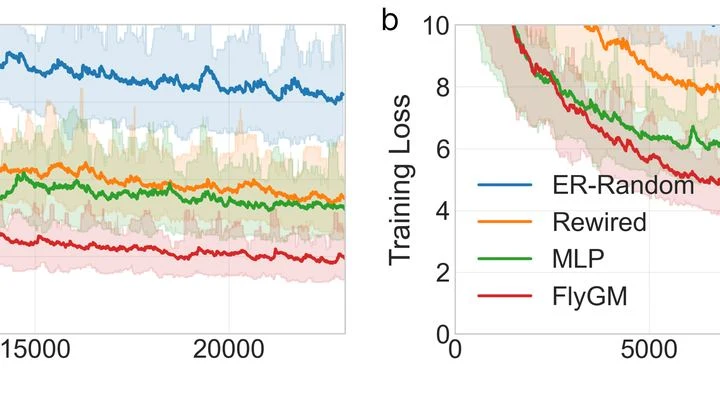
A Fly's Brain Teaches a Robot to Walk
The fruit fly Drosophila is a tiny creature with a brain the size of a poppy seed. It contains about one hundred thousand nerve cells, and scientists have already mapped all their connections, like a city subway map where stations are neurons and lines are the links between them. This map is called a connectome.
Medical Physics2026-05-231 minarXiv:2605.26151express
Muscle Fatigue Visible Without a Touch
Your arm lifts a cup from the shelf — a familiar motion you don't notice until muscles tire. Then the trajectory changes: the elbow shifts slightly, the hand trembles. A doctor usually catches these changes by hand, feeling the patient's muscles.
Robotics2026-06-241 minarXiv:2606.25957express
Quantum Drones Scan Ruins with Magnetic Vision
When a building collapses, steel rebar turns into a chaotic magnetic compass. Entropy, a measure of disorder, increases, but it's this very disorder that points to voids where people might be.
cs.OH2026-07-013 minarXiv:2607.19912
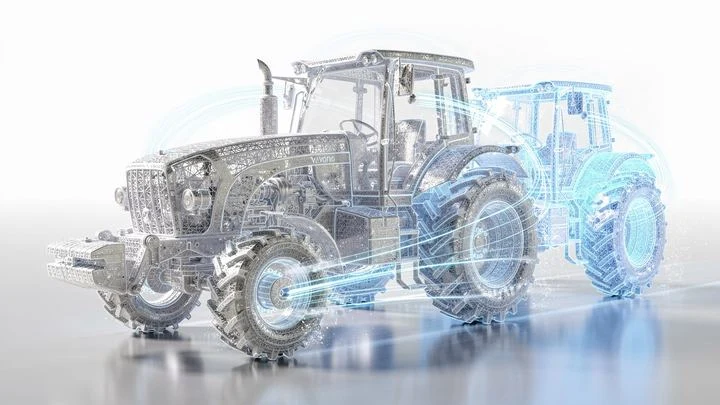
A Tractor’s Digital Shadow: An Exact Copy in Motion
The tractor traces a perfect circle on the stubble. At that same moment, its digital shadow, an exact virtual copy, repeats the maneuver on a computer screen, diverging from the original by only a few percent.
Robotics2026-07-141 minarXiv:2607.12265express
Radar Sculptor: How Robots Perceive a Seamless World
A regular radar works like an amateur photographer: it takes a series of blurry snapshots and tries to stitch them into a panorama. Details are smeared, and in a long corridor or crowd, the robot easily gets lost. The principle is simple: like a bat, the radar emits a wave and catches the echo.
Image Processing2026-07-141 minarXiv:2607.12593express
Tiny Probe: The Drone That Flies Like a Spacecraft
A bee-sized quadcopter autonomously charts its route indoors, like a space probe through an asteroid field. Its camera works as a photometry instrument, capturing reflected light, while the processor decides where to turn at the speed of light.
Robotics2026-07-141 minarXiv:2607.12801express
A Single Drone Control System: From Search to Target Capture
To make the drone act like a predator, engineers wove three hunting phases into one: search, track, and strike. No more task-switching: its unified logic runs seamlessly. At its heart is a mathematical filter designed for guiding Apollo spacecraft.
Robotics2026-07-141 minarXiv:2607.12861express
Invisible Map of a Robot Swarm
A robot swarm is like a cloud of fireflies: each moves on instinct to wherever is freer, and chaos turns into order. For a long time, it was a mystery how coherence emerges without communication or commands. The answer came with the creation of the Response Map — a tool that, like an X-ray, illuminates the hidden logic of the machine brain.
Robotics2026-07-151 minarXiv:2607.13444express
Space modules heal wounds without commands
Modular satellites are built from cube-shaped blocks, like a construction toy. When struck by space debris, some blocks are destroyed, leaving a puncture. Engineers took inspiration from the way living tissue heals wounds. Surviving blocks detect disorder and trigger an alarm signal that travels at the speed of light through the entire structure.
Robotics2026-07-151 minarXiv:2607.13553express
How a Robot Learns to Swim in Turbulent Flows
In calm water, the route is clear. But in turbulent flows, a robot needs a different strategy. Typical approaches demand an accurate map of currents, but in reality, you can't get one. Nature does it differently: fish feel pressure and vortices right against their bodies.
eess.SY2026-07-151 minarXiv:2607.13626express
How to Teach Cars to Negotiate at Unsignalized Intersections
At intersections without traffic lights, people negotiate with glances. A self-driving car can't do that: it has to simultaneously decide whether to go or yield and plan its trajectory. Previously, these tasks were separated, making maneuvers jerky and dangerous. Scientists have combined them using virtual force fields enveloping each car.
eess.SY2026-07-151 minarXiv:2607.14245express
How Entropy Helps Robots Find Paths Faster
A search party combs a foggy field. At first, people spread out wide: a high 'temperature' of search means a great variety of attempts. Upon finding a trace, they close in. But the speed of convergence is critical — narrow the circle too early, and the best find stays aside. The coordinator assesses the spread of searchers and commands when to speed up or slow down.
Robotics2026-07-161 minarXiv:2607.14468express
Robot Tour Guides: Why a Pair Is Better Than One
A tour with a single robot is a tedious monologue with no one to exchange glances with. Researchers turned that one-man show into a lively stage: they added a hologram sidekick to a real robot guide. This tandem chats, argues, jokes, drawing visitors into conversation instead of just spouting facts.
Robotics2026-07-161 minarXiv:2607.14853express
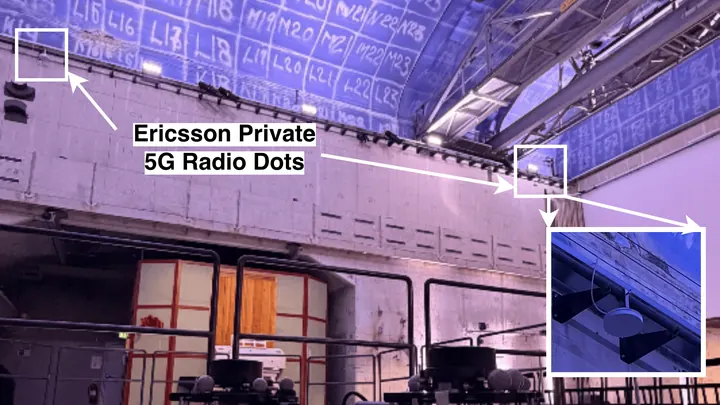
How Robots Negotiate the Noisy Airwaves
Wireless communication for robots is like a conversation in a noisy workshop, where every word can get lost in the din or arrive too late. In this mess, entropy of the channel, robots fail to yield in time, and coordination breaks down.
Robotics2026-07-161 minarXiv:2607.14943express
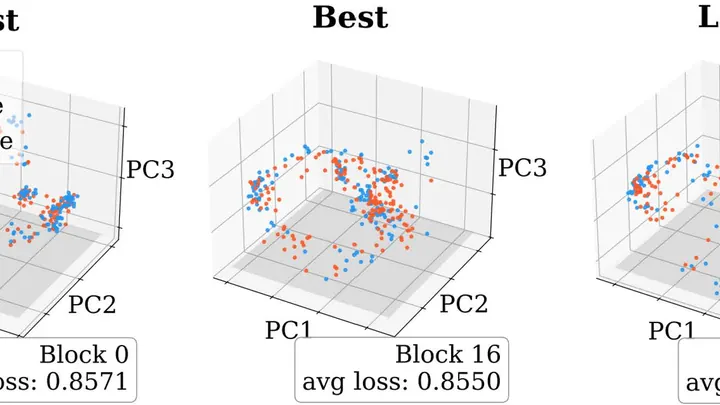
How Robots Chart a Course Through a Galaxy of Errors
A twitch of the robot's camera and it drops the part: its neural network is thrown off. But if you peek at its signals, they resemble constellations in a galaxy: when things go smoothly, they cluster in one sector, and just before an error, they abruptly shift to another. The boundary between them is as clear as a safe channel through reefs.
Robotics2026-07-161 minarXiv:2607.15129express
Robot Juggler: Synchronized Play with a Human
The robot juggler catches and throws balls in precise rhythm with a human, like two пульсара sending pulses in unison. Juggling three balls is a classic cascade, governed by a steady beat, like the uniform rotation of a cosmic lighthouse. Break the rhythm and the pattern crumbles.
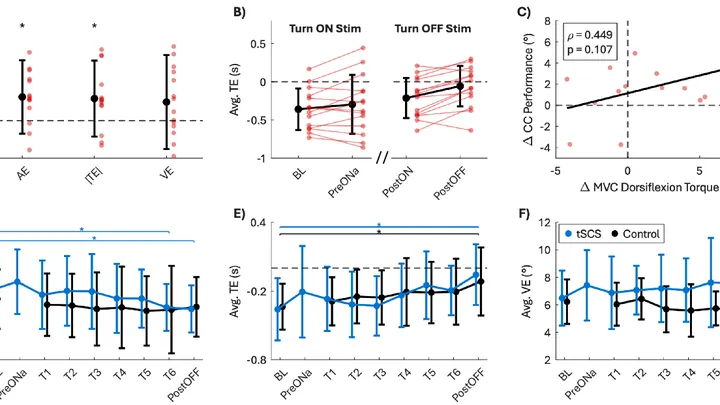
Electricity Changes How the Foot Feels
Give your back a mild electric zap, and your leg starts to live its own life. That's exactly what researchers discovered when they tested how transcutaneous spinal cord stimulation affects healthy people. Fourteen volunteers tried to move their ankles precisely while a robotic trainer measured errors. It turned out that after brief stimulation, the sense of foot position worsens — errors increase.
Neural Computing2026-08-191 minarXiv:2608.18569express
Brain vs. the Mirror Maze
Getting lost in a hall of mirrors is easy: every wall reflects another, and you feel like you've been here before. The brain gets similarly confused when surrounded by many similar places. Neurons responsible for the spatial map can fire the same signal for two different corners of a room. This is called spatial ambiguity.