Scientist

Andrey Markov

1856–1922 · mathematics, probability theory, mathematical analysis
Andrey Andreyevich Markov is a Russian mathematician whose name became a symbol of stochastic dependence. Markov chains — his most famous creation — underlie the theory of random processes and are now used everywhere: from computer algorithms to modeling financial markets.

Biography

Born in Ryazan, he graduated from St. Petersburg University, where he worked all his life. A student of Pafnuty Chebyshev, Markov became one of the leaders of the St. Petersburg mathematical school. He was an academician of the St. Petersburg Academy of Sciences. He was a principled man: in protest against the excommunication of Leo Tolstoy from the church, he publicly refused all state awards.

Key discoveries

💡 Markov was an avid walker and once walked from St. Petersburg to Moscow. He first applied his famous chains to a statistical analysis of the alternation of vowels and consonants in the novel 'Eugene Onegin', proving that it is not random.
"He regarded probability as the measure of our ignorance."
Concepts
bioinformaticsMachine LearningMarkov chainStochastic modeling

Related articles

Hurricane Energy Follows a Power Law
A forest fire has no "typical" size: a small grass burn and a firestorm covering thousands of hectares are part of the same phenomenon. The same goes for tropical cyclones: the energy they release over their lifetime does not cluster around some average value. Instead, it follows a power law, and this rule holds across all of Earth's oceans.
Noise as Glue for a Broken Climate Vase
For thirty years, climatologists have been gathering the shards of a broken vase. Each climate model is its own shard, and they all promise different warming by 2100, from 1.5 to nearly 6 degrees. The spread does not shrink no matter how much the models are improved.
Wind Without a Mean: Why Correlations in the McMurdo Dry Valleys Fail
In a room with a hundred people, you can measure each person's height and compute the average. But if someone infinitely tall walks in, the average height ceases to exist: no matter how many more people you add, the sum grows without bound.
How Measurement Gives Rise to Quantum Noise
In 1946, Felix Bloch predicted that even without an external magnetic field, a fluctuating magnetic moment exists in an ensemble of spins. It grows as the square root of the number of particles, and in small samples this noise can exceed thermal polarization.
The Po Valley Air Orchestra: How Global Rhythms Conduct Temperatures Up to 20 Kilometers
Twice a day, at eleven in the morning and eleven at night, a white balloon with an instrument rises into the sky from a tiny station in San Pietro Capofiume, just eleven meters above sea level. Over twenty-two years, more than sixteen thousand such launches have recorded how air temperature changes with altitude: from the warm ground to the thin cold at twenty kilometers.
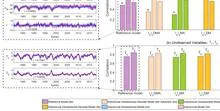
Finding the Puppet Masters: How Causality Saves Predictions from Computational Blow-Up
The puppet master pulls the strings, and the marionette dances. In forecasting the future from time series, the puppet masters are the few variables that truly control the system. The rest merely echo their movements, creating an illusion of complexity. The challenge is to find these puppet masters and watch only their fingers, not the whole stage.
Breathing of Tropical Rains: How El Niño Phases Drive Precipitation Extremes
In 1998, the Pacific Ocean off the coast of Peru suddenly cooled, and tropical rains seemed to take a deep breath. Wet zones, where more than three meters of water falls in a year, crept westward, while dry patches, where less than two hundred millimeters accumulate, expanded off the coasts of Australia and the Americas.
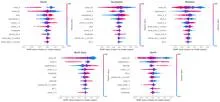
Who Really Warms the Planet: The Information Trail of Climate Drivers
In a climate trial, the judge doesn't listen to who shouts loudest. He watches who whispers to whom. Nine witnesses, from carbon dioxide to cosmic rays, testified from 1984 to 2005. Their statements were recorded every month. The judge doesn't trust mere coincidences, because two witnesses might echo each other without knowing who started first.
Where Does the Boundary Lie: Algorithm Finds Groups by Gaps in Data
Imagine a border river that separates two countries. On one bank live one group of people, on the other, another. The boundary between them is not always obvious: in some places the river is wide and calm, in others narrow and turbulent. But it is exactly where the current changes abruptly that the border becomes most noticeable.
Network Warns of El Niño a Year in Advance
In 2010, the Pacific Ocean was brewing a strong El Niño, but all forecasting models collectively overestimated it. They looked at water temperatures and missed the key point: the ocean had already begun to reorganize, not loudly but quietly, linking distant points in pairs.
Mesoscale2018-08-272 minarXiv:1808.09043express
Quantum Tangles: How to Spot an Invisible Connection
A stone falls into water, and ripples spread outward. In the quantum world, a magnetic impurity (that pebble) in a metal perturbs the surrounding electrons, and they form a special cloud around it. This is called the Kondo cloud. Like ripples on water in the dark, it long remained elusive.
stat.ME2019-04-052 minarXiv:1904.02855
How to Make Your Model Pay for Its Mistakes
A translator who jumps at every rustle in the hall starts mixing up words by the end of the meeting. Their confidence in being right grows, while their accuracy drops. That is roughly how poorly calibrated probabilistic forecasts behave: the model claims a high probability for an event, but reality disagrees.
El Niño: Forecasting from the Ocean's Memory
The ocean remembers its weather. Each month, its surface temperature forms a vast map, and if you find a similar map in the past, you can see what happened next. That is exactly how the new method for forecasting El Niño works: the warm current that, every few years, alters the climate of half the planet.
Complexity as a Precursor: Forecasting El Niño Strength a Year Ahead
Every day, the ocean in the tropical Pacific carries on a quiet conversation with itself: water temperatures are slightly higher in some places, slightly lower in others, and these patches of warmth and cold slowly drift into one another. This chatter seems random, but it hides a signal.
A Probability Map for El Niño
Imagine a map where each patch of ocean is colored with its own shade: in some places the color is saturated, meaning the future of the system is predetermined; in others it is pale, meaning the outcome depends on a random gust of wind.
Tug-of-War in the Tropics: How Seasonal Air Oscillations Drive El Niño
The tropics breathe with an annual rhythm: air temperature rises and falls, and within this breath lie two main pulses. The first pulse peaks in February and weakens in August; the second is shifted by half a year. These two pulses are not just background noise for the famous El Niño; they are its conductors.
A Month Ahead: What Machine Learning Can Do for Weather Forecasts
A farmer in Iowa looks at the calendar: plant now or wait? In a month, a heat wave might strike, or rain might set in. Forecasters throw up their hands: the two-week forecast still holds, the seasonal one is out of reach, and in between lies a gap. The atmosphere changes too quickly to remember yesterday, and the ocean is too slow to come to the rescue.
Graph Neural Networks Predict El Niño More Accurately
The warm El Niño current appears in the tropical Pacific every few years and reshuffles weather across the planet: drying fields in some places, flooding streets in others. Meteorologists have long tried to catch it early, but the ocean is too cunning: the cause hides not in a single spot but in a call-and-response between regions separated by thousands of kilometers.
Two barometers showing different weather
In 2021, two tools designed to forecast weather a year ahead showed different results. One, built on connections between temperatures at different points in the Pacific Ocean, was silent: no El Niño in 2022.
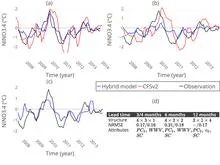
Neural Network Learns from a Draft: How a Crude Model Helps Predict El Niño
An interpreter at an important negotiation keeps a draft of their speech at hand but checks against the live conversation as they go: if what is said diverges from the prepared text, they adjust the translation on the fly.
The World as a Graph: Neural Network Learns to Predict El Niño
The ocean resembles a giant web, where each thread connects distant points of water. When one spot warms, winds and currents change thousands of kilometers away. The neural network in this study wove such a web for the first time on its own to predict El Niño.
stat.ME2021-12-093 minarXiv:2112.04843
The Uneven Pulse of Time: How Irregular Measurement Rhythms Skew Conclusions and What to Do About It
Imagine an interpreter who gets distracted by every rustle in the hall. The more rustles, the more errors in the translation, even though the meaning of the speech hasn't changed. The same happens with data: if measurements are unevenly spaced, standard analytical tools start "hearing" changes that never occurred in the underlying process.
The Ocean as a Patient: Neural Network Diagnoses Two Years Ahead
A doctor who has followed the same patient for years learns to predict flare-ups from subtle signs: a slight pallor, labored breathing, restless sleep. The ocean is just such a complex patient, only instead of a thermometer it has thousands of buoys and satellites, and instead of a medical history, seventy years of daily measurements.
stat.ME2022-05-192 minarXiv:2205.09252
Breaking Point in the Flow of Functions
A seismograph records underground tremors: the smooth line suddenly jerks and changes its character. Similarly, functional data, such as ocean temperature maps or brain signals, may shift their shape at some point. The new algorithm FSBS catches such breakpoints, even when each curve is measured at only one point and noise drowns the signal.
A Reservoir with Memory: Peeking Inside Echo State Networks
Every month, satellites and ships record the surface temperature of the ocean, and these maps build up a history of the climate. In the tropical Pacific, this history is sometimes interrupted by a warm patch, El Niño, which alters weather across the planet.
El Niño type can be predicted a year before the spring barrier
An invisible barometer hangs over the Pacific Ocean. Its needle swings from the western shores to the central waters, and in December it shows what the next storm will be like: not just whether it will come, but where it will hit hardest.
Reservoir with a Correction: How to Predict Noisy Chaos
A translator who learns to correct their own slips works more accurately. In the world of forecasting noisy processes, a new method takes on this role: a reservoir computer that adds a random correction to its prediction at each step.
stat.ME2023-06-082 minarXiv:2306.04966
Hybrid Spectral Analysis: How a Bayesian Method Combines the Precision of Parametrics with the Flexibility of Nonparametrics
A rough sketch of a portrait: a few confident lines define the shape, but the details are not yet refined. That is how a parametric model, such as vector autoregression (VAR), describes a time series: it captures the main structure, but if the real data deviate from its assumptions, the portrait comes out distorted.
Echo of the Invisible Stone
In a chain of eight spins, a defect lurks — a tiny magnetic moment. The Kondo effect, known since the 1930s, makes electrons around it align into a collective screen. The material's resistance abnormally increases. But detecting such an impurity hidden deep in the structure is like finding a stone at the bottom of a dark pond.
econ.GN2023-11-273 minarXiv:2311.16370
Climate, Harvest, and Post-Harvest Conflict
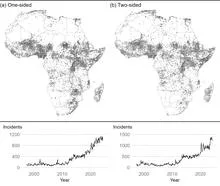
On an African field, maize has just been harvested. The grain sits in sacks, and for armed groups it's a lure: something to take from farmers. But if the harvest fails, the lure disappears, and attacks become fewer. That's exactly what happens when El Niño (the warm current in the Pacific Ocean that alters weather worldwide) brings drought to Africa's farming regions.
A Sieve for El Niño: How an Algorithm Finds the Minimal Model of a Fickle Climate
Every few years, a huge pool of warm water in the western Pacific Ocean shifts eastward, like water in a bathtub when you tilt it sharply to one side. That is El Niño. But each tilt is different: sometimes the water sloshes against the shores of Peru, sometimes it stalls in the middle, sometimes it pours out in a powerful surge, and sometimes it barely creeps.
Climate Network Predicts El Niño a Year Ahead
The Pacific Ocean breathes, and that breath has a pulse. Every few years, its surface warms more than usual, bringing torrential rains to Peru and drought to Australia. This is El Niño, the warm phase of the ocean temperature oscillation.
Trees Predict Chaos Without Tuning
An orchestra without a conductor: the musicians take their seats, tune their instruments, and begin to play in harmony because each one hears the common rhythm. That is how TreeDOX works, a method that predicts chaotic time series without requiring the user to choose parameters or fine-tune anything.
q-bio.PE2024-07-313 minarXiv:2407.21286
Epidemics Under the Microscope: How Brazil Scans Dengue and Chikungunya Outbreaks
A fisherman casts his net into murky water, and an hour later the catch is thrashing on the deck. That's roughly how Episcanner works: it sifts through 14 years of disease records and pulls out every fever outbreak in every one of Brazil's 5,570 municipalities. From 2010 to 2023, the net caught 18,567 dengue epidemics and 2,199 chikungunya epidemics.
A Ceiling of Randomness
Each Atlantic hurricane season is like a game of dice, where the number of spots depends on three major climate forces: El Niño, ocean temperature in the 'hurricane nursery,' and the North Atlantic Oscillation.
The interpreter that learned chaos's dialect
An interpreter at a conference hears the noise of the hall but keeps translating. They don't repeat every word; instead, they find an intermediate language where complex phrases become simple, yet meaning is preserved.
Brake and Gas on One Pedal: How Weak Measurements Protect Quantum Batteries from Discharge
A quantum battery is not a box of electrolyte but a handful of atoms or superconducting loops, with energy stored in excited states. It can be charged in fractions of a second using collective quantum effects.
The Pacific Ocean Sends a Signal: No El Niño in 2025
The Pacific Ocean is a giant network of nerve endings that warns of an impending attack a year in advance. In 2023–2024, El Niño, the warm phase of the Pacific climate oscillation, pushed global temperatures to record highs. Now, two independent methods, like two doctors examining the same symptoms, agree: no new attack in 2025.
Council of Sages: How Entropy Predicts El Niño Two Years Ahead
In the hall, fifty sages confer, each observing the ocean in their own way. One listens to surface temperature, another to the wind, a third to how heat hides in the depths. Their judgments often contradict each other, but there is an elder who knows which of them to trust more.
Neural Network Understands the Ocean Like an Interpreter
An interpreter in a conference room hears not just words but intonations, pauses, and gestures. From these cues, they anticipate where the conversation will turn. The Pacific climate speaks the language of wind, heat, and currents, and PTSTnet listens like an experienced simultaneous interpreter, grasping the grammar of ocean and atmosphere.