Flexible bristles in a flow: how viscosity makes them bend together express
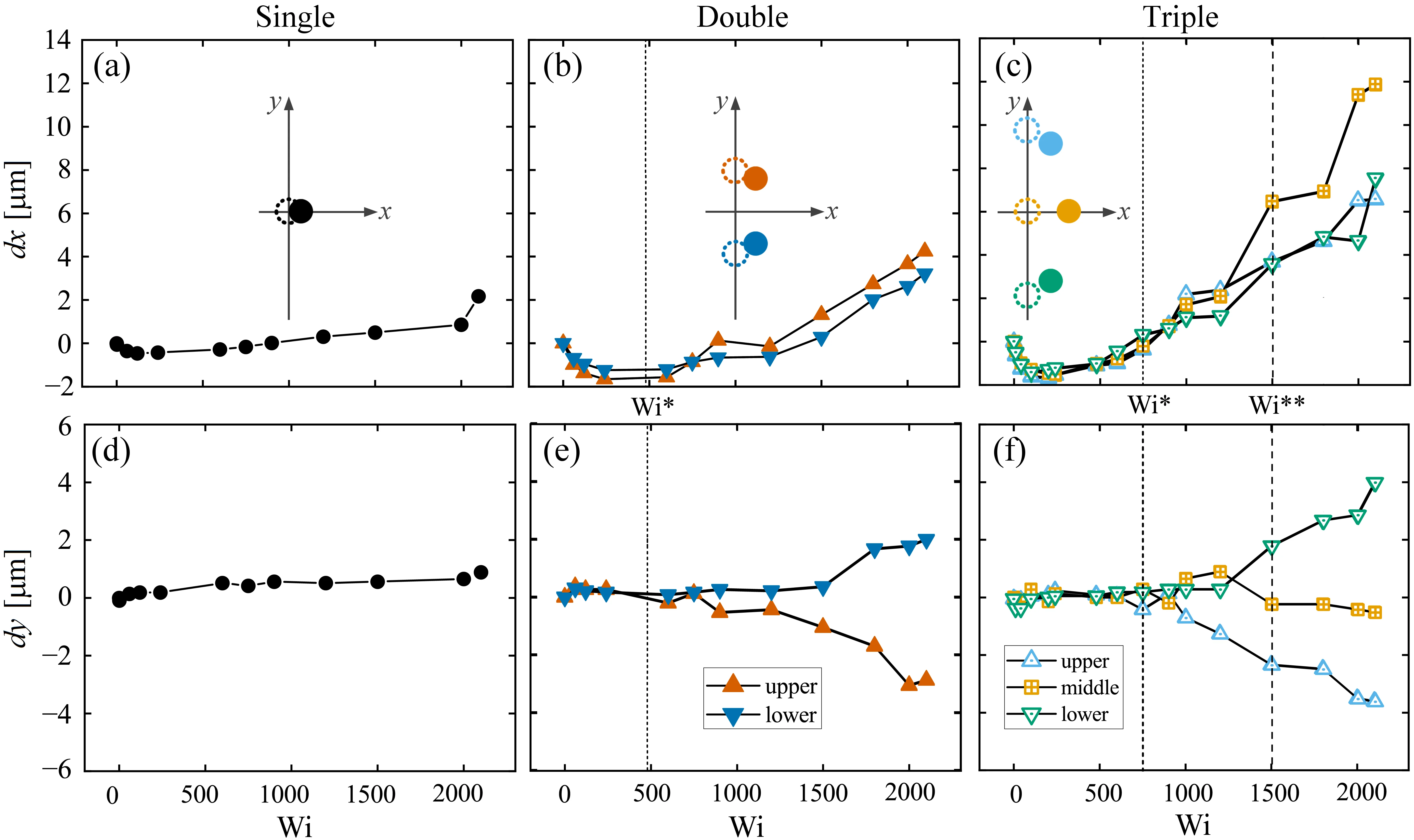
Blades of grass in a stream sway individually, but when several grow side by side, they can bend as one. Something like this happened with flexible plates in a new experiment with a fluid that changes its thickness when flowing.
Scientists submerged rows of flexible plates, from one to three, into the fluid and watched the wake trailing behind them, like a tail. In a fluid that becomes slightly more fluid when moving fast, a single plate left a long tail. But when there were two or three plates, their tails merged into one wide stream, and the plates themselves tilted toward each other. For three plates, the fluid had to be driven faster than for two.
In another fluid, which loses its thickness very abruptly, tails appeared but did not merge, and the plates did not move closer. So the mere appearance of a tail is not enough: both the special fluidity of the fluid and the proximity of the plates are needed.
This discovery will help create tiny devices where flexible parts must move in concert, for example, microscopic pumps without moving parts.
The cilia in our lungs beat in a liquid mucus that also does not behave like water: when moving fast, it becomes more fluid.
In the movie "Fantastic Voyage," scientists shrink a submarine to the size of a cell: there the fluid flow behaves quite differently than in our world.