Soft Condensed Matter cond-mat.soft

170 articles

Membranes, polymers, liquid crystals, glasses, colloids, granular matter.

articles

Balloon Drop: How Elasticity Makes a Liquid Bounce Off Whole
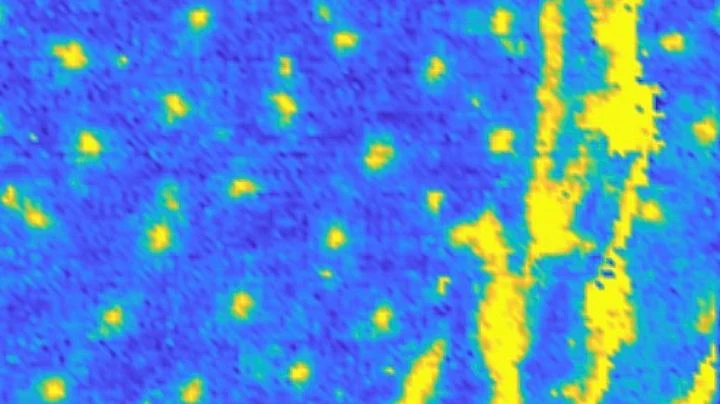
A water droplet falls onto a lotus leaf and bounces off without leaving a trace. Nature has perfected this self-cleaning marvel over millions of years, and engineers have long tried to replicate it. But if the droplet hits too fast, it shatters into splashes, losing mass and leaving wet marks on the surface.
Why a Pile of Odd-Shaped Particles Doesn't Collapse
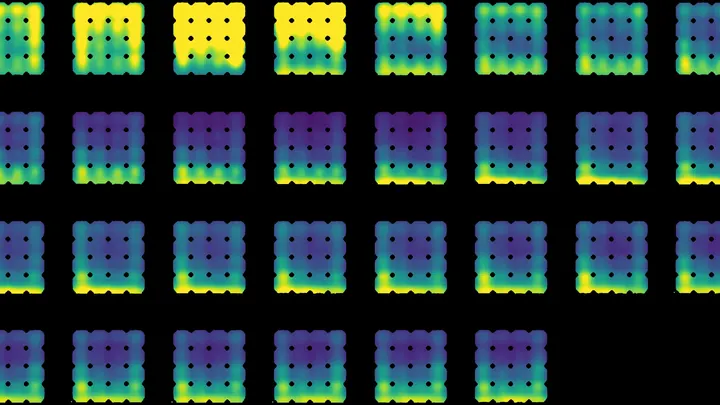
Pour a handful of dry sand: it will spread into a neat cone. Now grab a box of star-shaped pasta: the pile will stand almost vertical. Why? It's all about particle shape. Physicists built cylindrical piles from particles of different geometries — from smooth spheres to 'polypods' with several arms, like a sea star.
How a Sheet of Paper Decides to Wrinkle or Fold
A thin rubber film lies on a table. Someone grabs it by the middle and slowly pulls upward. The film doesn't just rise: it arches into a dome, then wrinkles run along the dome's edge, like pleats on a skirt. Pull higher — the wrinkles gather into large folds that cross the entire film. And if you start lowering it, the folds don't disappear but collapse into new shapes.
Drops That Hang by a Hair
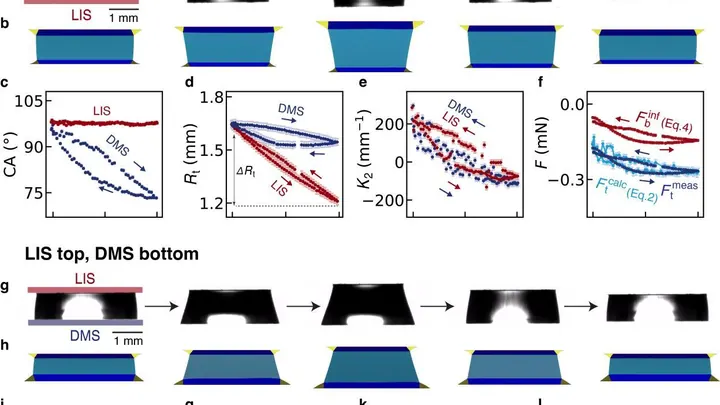
A drop of water squeezed between two close surfaces turns into a tiny bridge. Such bridges are everywhere: they hold sand grains together in wet sand, make hair clump after a shower, and even help insects walk up walls. Scientists took three kinds of surfaces: plain glass, glass with a water-repellent coating, and glass infused with silicone oil.
Micromachines Learn to Navigate Without a Map
A bacterium in a drop of water doesn't just swim: it probes the space around it, decides where to turn, and finds its way out of a tangled maze. Artificial microscopic swimmers haven't been able to do that until now: they had to be led by the hand, with signals sent from outside.
Pressure Instead of a Syringe: A New Way to Shield Cells from the Cold
The usual way to freeze a living cell is like trying to put a spacesuit on it: you first need to get a protective substance inside, but while it's crossing the membrane, the cell can burst from salt imbalances or get poisoned by the chemicals.
Threads in the Flow: How Noise Creates Order and Chaos
A thin thread in a water flow is like a hair in a shower stream. If you jerk the water back and forth, the hair either stretches out with the flow or crumples up. The researchers took real protein threads (actin, which makes up muscles) and placed them in a microscopic channel where the fluid oscillated at different frequencies.
Glue and Springs: How to Assemble the Perfect Pattern
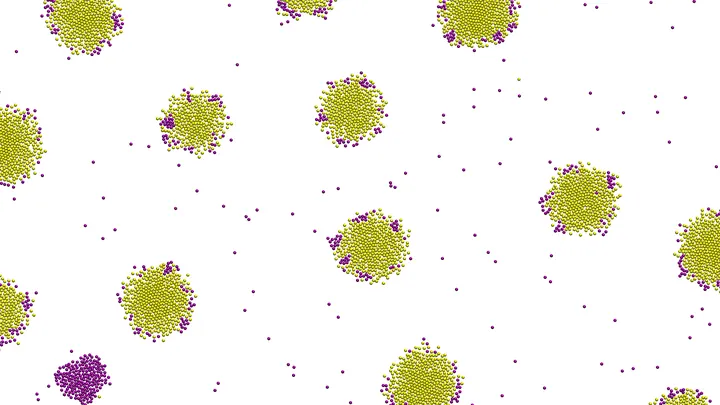
A handful of magnetic beads, when shaken, clump together. But add springs that push the beads apart at a distance, and the clumps break up into neat islands. Roughly this is how the particles in the new study behave: they attract at close range but repel from afar. The authors simulated millions of variants of this 'glue with springs' on a computer.
Drying Beads Unlock the Secret of Tough Gels
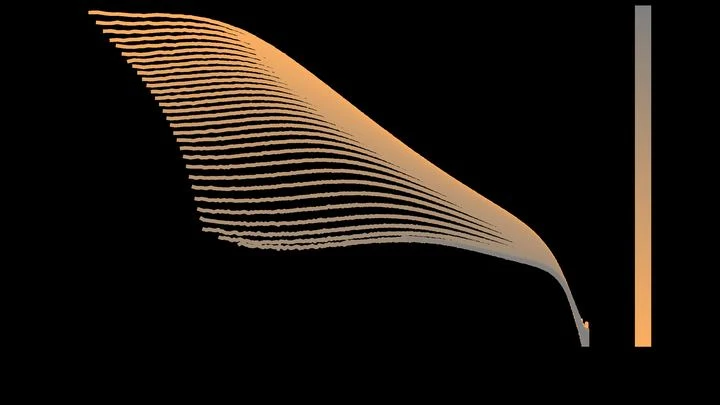
A kitchen sponge squeezed in your fist springs back. But if you squeeze it slowly while letting it dry, it stays flattened. That's roughly what scientists did with tiny gel beads: they let them dry while compressing them, and watched what happened inside. A gel is made of tiny particles that stick together into an open, lacy network, like cereal flakes in a bowl of milk.
Fibers That Soak Up Blood
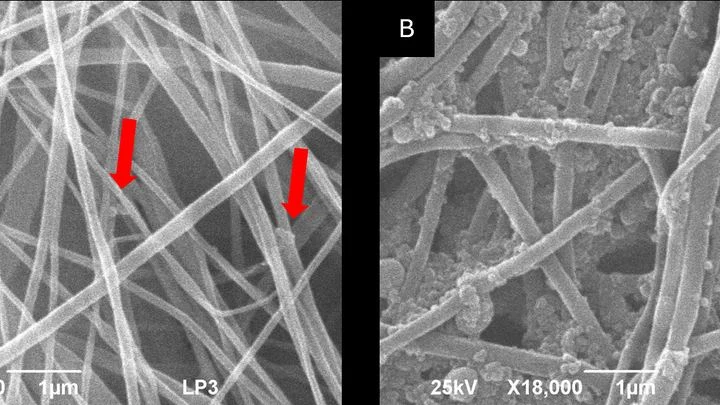
A drop of blood falls onto a bandage made of ultra-thin polymer fibers. Usually, it just sits on the surface like a dewdrop on wax paper. The material repels water, so the blood doesn't soak in — meaning the bandage doesn't adhere to the wound. Scientists modified the fiber surface. They added tiny silicon particles to the polymer — a thousand times thinner than a human hair.
Biological Physics2026-01-091 minarXiv:2601.05907express
Waves That Keep Their Formation
Inside a fertilized frog egg, waves ripple, like ripples on water, but made of proteins that command cell division. These waves travel millimeters, even though the egg itself is less than a millimeter across. Previously, it wasn't understood why they didn't fall out of sync. It turns out the waves clear their own path.
The Snapping Arch: How to Control the Click
Snap the bottom of a soda can: it will dent inward and stay that way. Press again: it pops outward. That's bistability: a system with two stable states, like a light switch. An elastic arch is the simplest example. It can curve upward or downward, and to flip it, you need to apply force.
How Bacteria Stick to Surfaces
A drop of oil in water behaves like a tiny ball: it seeks the spot with the least energy. If a wall is nearby, the drop often sticks to it, just as a raindrop spreads on glass. In a mixture of two immiscible liquids, such as polyethylene glycol and dextran, tiny droplets of one liquid form inside the other.
A Drop Squeezed by Flow Tells Its Story
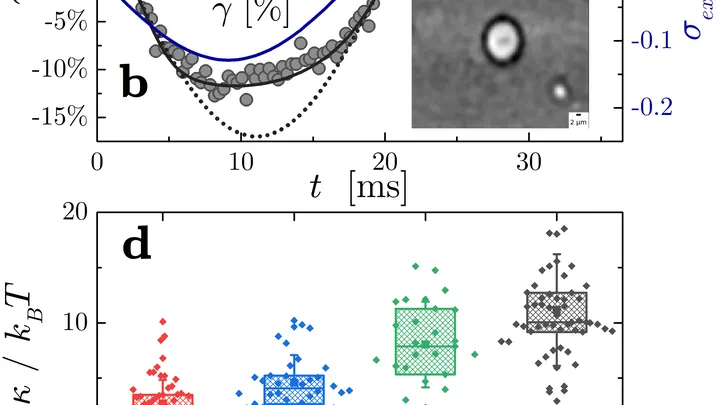
A microscopic gel bead or a tiny oil droplet squeezes through a narrow channel whose walls rhythmically contract and relax. The particle flattens and then recovers its shape, and by how quickly it does so, you can infer its internal elasticity and viscosity.
Quantum Physics2026-01-121 minarXiv:2601.07689express
Quantum Echo: How Memory Changes the Fade
Tiny particles live double lives, like a spinning coin that’s both heads and tails. Contact with the outside world forces them to pick one — a process called decoherence. Picture it as an echo in a room. The old rule assumed the room was bare, so the echo died instantly. Real surroundings have memory, like soft furnishings that hold sound a little longer. This memory changes the fade.
Life from a Test Tube: How a Simple Mixture Assembled Itself into a Cell
Dissolve a few salts and formaldehyde in a glass of water. After a while, the liquid spontaneously separates: droplets with membranes appear, like tiny bubbles. Inside each droplet, chemical transformations occur, and the droplet itself grows, absorbing material from the surrounding solution. These droplets are not just bubbles.
Biological Physics2026-01-162 minarXiv:2601.11275express
Chip Detects Virus at the Atomic Level
A graphene transistor works like a microscopic switch: a molecule lands on its surface, and the current changes. But a bare graphene surface catches nothing. You need a "bait"—antibodies that recognize only viral proteins.
q-bio.BM2026-01-161 minarXiv:2601.11450express
How a client protein reshuffles the contents of cellular droplets
Inside a living cell, there are tiny liquid droplets where proteins gather together, like ingredients in a drop of vinaigrette. Some proteins form the droplet's scaffold, while others, clients, don't create the droplet themselves but happily jump in and change its composition.
Materials2026-01-181 minarXiv:2601.12214express
Crystal Construction Sets: Nanobricks That Assemble and Disassemble Themselves
A handful of lead sulfide nanocrystals coated with charged molecules spontaneously assembles into a perfect crystalline lattice. Each nanocrystal is like a brick just a few nanometers across, while the charged molecules on its surface act as the mortar.
Fluid Dynamics2026-01-181 minarXiv:2601.12528express
Wind Gusts and Water Ripples: What Do They Have in Common?
The wind blows steadily, but suddenly a gust hits, and leaves swirl up in a vortex. Inside such a gust, the air speed changes not smoothly but in jumps — sometimes sharply forward, sometimes sideways. These rare and strong bursts are called intermittency, and they are the main mystery of turbulence.
Fluid Dynamics2026-01-192 minarXiv:2601.12642express
A Drop That Flows First, Then Hardens
A drop of a thick cornstarch-water mixture falls onto a table. Normally, such a mixture solidifies instantly upon a sharp impact: you can even run across a pool filled with it. But in this experiment, things went differently. The high-speed camera captured that in the first instant after contact, the drop spreads out like an ordinary liquid.
Statistical Mech2026-01-192 minarXiv:2601.12935express
Invisible Glue: How Order Attracts Disorder
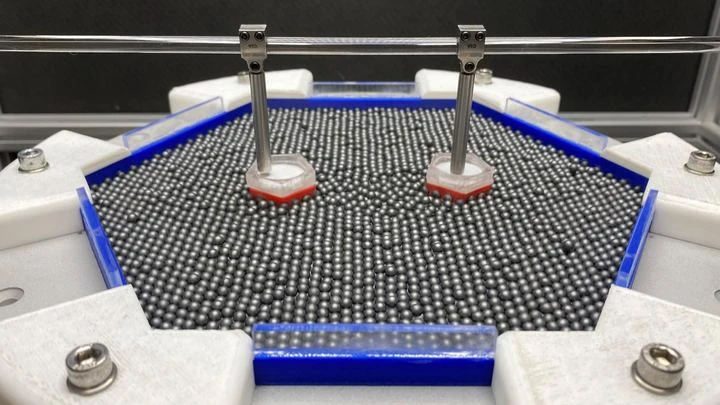
Shake a jar of sand and marbles, and you'll see large objects float or sink depending on their size. But if you shake it cleverly, you can make the marbles gather into pairs and chains, as if glued together. It's this kind of 'invisible glue' that physicists from India and Germany have now caught and measured for the first time.
Bubbles Trapped in Ice
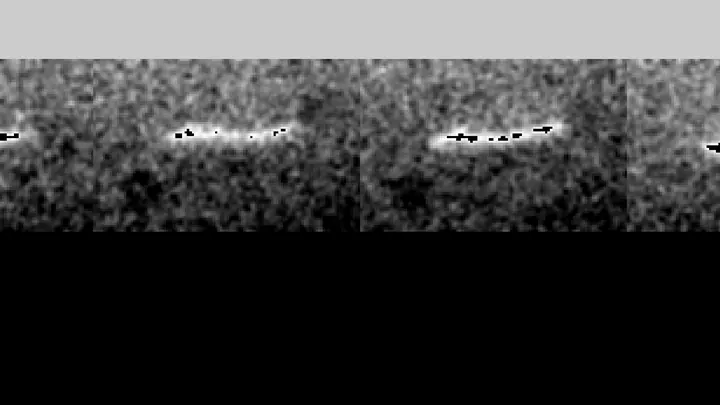
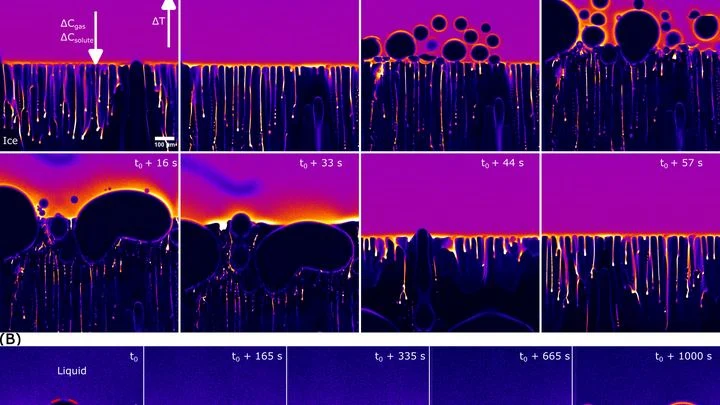
In a glass of soda, bubbles merrily rise to the top. But if you freeze the water, some bubbles end up trapped in the ice. How do they get there? After all, ice grows, pushing gas aside, but it doesn't always manage to.
Biological Physics2026-01-212 minarXiv:2601.15477express
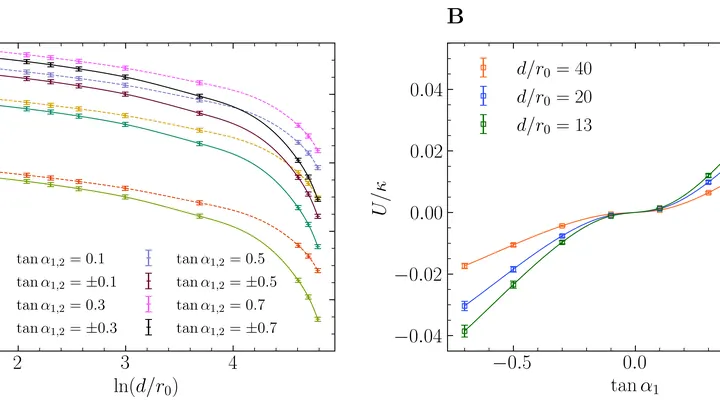
Proteins bend the membrane the way a spoon bends the film on milk
The membrane of a living cell is not a rigid shell but a pliable film with thousands of proteins embedded in it, like raisins in dough.
How Water Flow Changes a Bacterium's Gait
A bacterium swims like a tiny motorboat with a propeller — except its propeller is a long flagellum that rotates and pushes the body forward. But the body doesn't move in a straight line; it sways like a bobber on a wave. This swaying isn't random: it's part of the mechanics of motion. Until now, such swaying was studied in still water.
Salt, Water, and Invisible Pairs
Salt in a glass of water is a crowd of charged particles. When there's plenty of water, each particle floats on its own, wrapped in a thick fur coat of water molecules. But as you keep adding salt, the water runs out for everyone, and the particles start seeking each other out. First, they stick together in pairs, then in larger clumps.
Materials2026-01-241 minarXiv:2601.17487express
How a Film of Molecules Smooths Itself Out
If you dump a handful of coins on a table, the surface becomes bumpy. But add more coins, and they spread out into a flat layer on their own. Something similar happens when you deposit ultra-thin films of individual molecules onto a substrate. At first, islands appear on the surface — molecules cluster together like people in a queue. The film gets rougher and rougher.
How a Drop with Nanoparticles Cracks on Glass
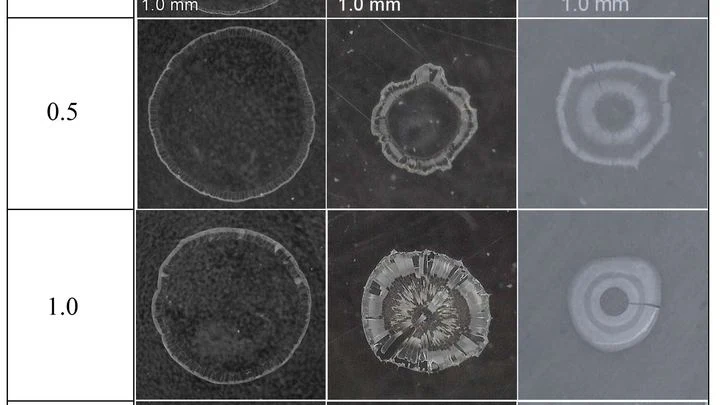
A coffee drop on a table dries and leaves a ring — coffee particles gather at the edge. But if charged nanoparticles float in the drop, the picture becomes richer: the deposit cracks like mud in a dried-up puddle. Physicists studied how the particle charge and the surface on which the drop dries change these cracks.
Fluid Dynamics2026-01-251 minarXiv:2601.17674express
Turbulence That Doesn't Get in the Way of Order
Bacteria in a drop of water jostle and swim: each on its own, but together they create patterns. With weak motion, the fluid churns like soup on a high flame: vortices collide, and the flow direction changes every second. This is called bacterial turbulence.
Superconductivity2026-01-262 minarXiv:2601.18247express
Vortices in a Superconductor: Solid and Liquid
In a superconductor, electric current flows without loss, like water through a perfectly smooth pipe. But if you place such a material in a magnetic field, vortices appear inside — tiny whirlpools where superconductivity is destroyed. As long as these whirlpools stay put, current flows freely.
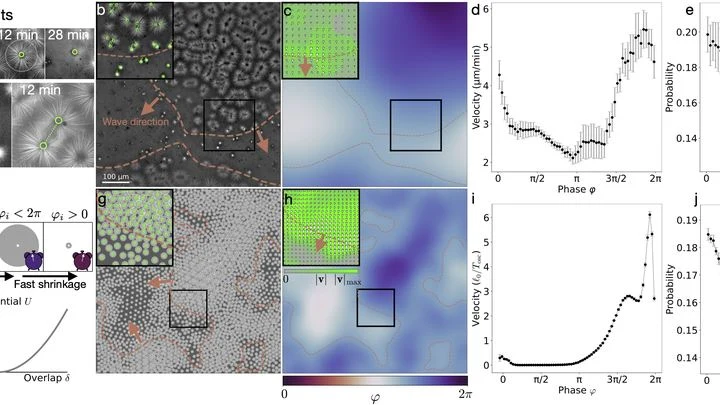
Soft metamaterial dampens vibrations at the touch
An ordinary rubber pad dampens vibration the way a thick blanket muffles sound: the thicker and heavier, the better. Engineers have long dreamed of a material that is light yet "eats" oscillations as well as a massive damper.
How Bacteria Decide Where to Crawl
Bacteria don't just crawl across a surface: they collectively decide what shape their colony will take. Picture a crowd moving across a square: each person steps on their own, but together they form a flow. Bacteria are the same: each moves individually, but together they create patterns of branching trails. Scientists took Enterobacter sp.
How Muscle Turns Fuel into Force
Inside every muscle is a team of rowers: myosin proteins that grab actin filaments, take a stroke, and let go. The fuel for the stroke is the ATP molecule. When the rowers work in sync, the muscle contracts and the body moves. For decades, two models existed: one explained why the boat moves slower with increasing load, the other — how the rowers move their arms.
Why Magnetic Fluid Forms Threads
In a jar of oily liquid float millions of tiny magnetic grains: each about the size of a bacterium. Switch on a magnet, and the grains, like obedient little soldiers, line up into long threads. But why do they form threads rather than clumps? It turns out it's not just about magnetism.
q-bio.TO2026-02-101 minarXiv:2602.09867express
Velcro Cells Build the Body
As an embryo grows, its cells don't just divide: they constantly touch their neighbors, like people in a crowded bus. The strength of these contacts determines where a cell moves and what shape the tissue takes. Scientists studied how cell 'stickiness' changes during the earliest stages of development.
Channel Geometry Creates Density Without a Pump
River water flows smoothly until it hits a narrow spot. There the current speeds up, and around a bend it may swirl into a vortex. Similar funnels, but just molecule-sized, can gather particles in one place all by themselves — no pump or motor needed.
Fidgety Molecules: How Internal Order Changes Behavior
A drop of ink in a glass of water spreads out on its own. But if the ink were made of tiny motors, they wouldn't just spread: they'd crawl, jostle, and cluster into swarms. Such self-propelled particles are called active. You can assemble them into molecules like beads on a bracelet. And here's the surprise: the order of beads on the bracelet changes everything.
How crosslinking proteins keep cells in shape
Inside every cell, there is a scaffold of filaments, like construction scaffolding that gives the cell its shape and allows it to move. These filaments are connected by crosslinking proteins: some simply hold them together like ropes, while others act as tiny motors that crawl along the filaments and pull them toward each other.
How to Teach a Soft Material to Flow on Command
Thick honey spreads slowly across a plate. In such a world, where friction suppresses inertia, motion is governed not by force but by viscosity. This is how many soft materials behave: polymer gels, colloidal suspensions, the contents of living cells.
Why Amorphous Bodies Bend Differently
When you press your finger on a piece of soft putty, it obediently dents and then slowly returns to its original shape. But if you press on a window pane, it either holds or cracks — no smooth deformation. Both materials are amorphous: their atoms are not arranged in a strict crystal lattice like in metal. Yet they behave completely differently.