Impacto contra su satélite ralentiza al asteroide principal exprés
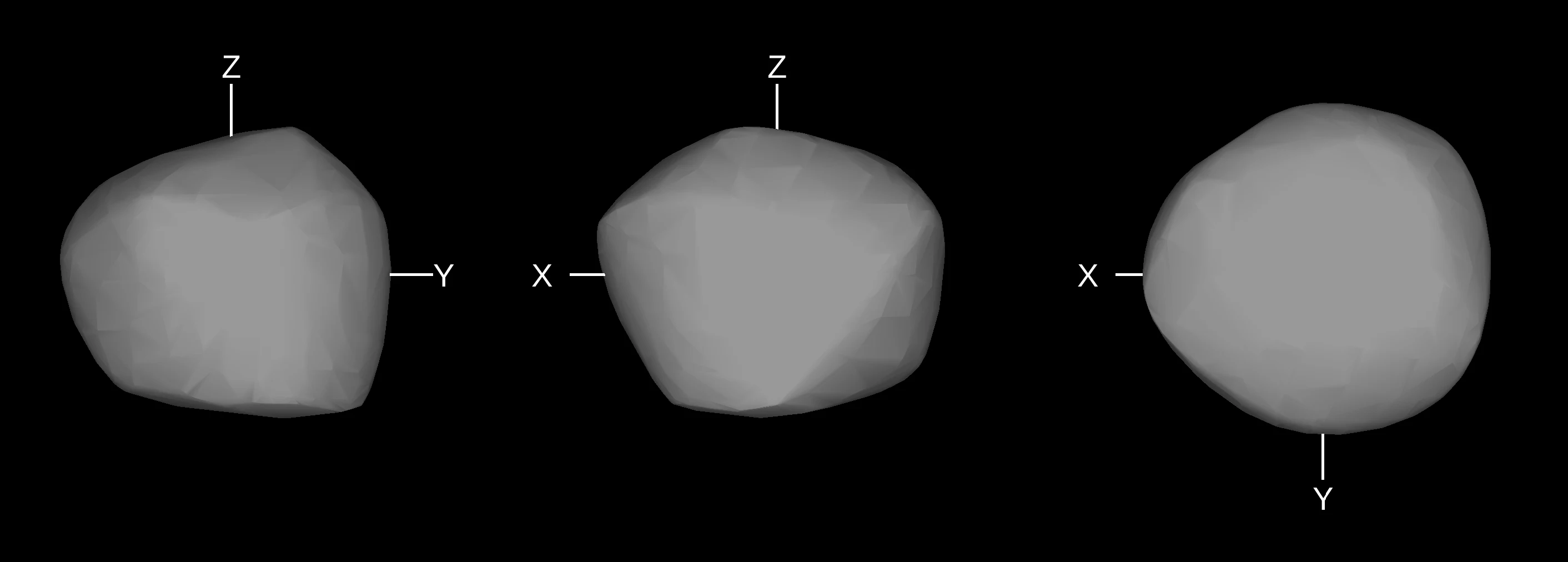
El asteroide Didymos redujo su rotación después de que la sonda DART chocara contra su luna Dimorphos. La razón: el impacto aplanó a Didymos y lo ensanchó en su ecuador, como un patinador que extiende los brazos. Esa 'extensión' sumó 0,18 segundos a cada giro, menos de un instante, pero los astrónomos lo detectaron gracias a 20 años de observaciones. Rastrearon cómo cambia el brillo del sistema cuando un asteroide eclipsa al otro — tránsitos — y captaron el minúsculo alargamiento del día mediante mediciones de brillo. Es la primera prueba de que un ariete cinético no solo puede desviar un asteroide, sino también cambiar su forma y rotación a largo plazo. Y lo más sorprendente: el propio Dimorphos, tras el impacto, empezó a orbitar Didymos 37 minutos más rápido. Vayas donde vayas, todo son sorpresas.
Resumen original
tal como lo escribieron los autores, en inglés arXiv:2601.04793v1
On 26 September 2022, the NASA Double Asteroid Redirection Test (DART) spacecraft impacted Dimorphos, the secondary component of the binary asteroid (65803)~Didymos. This experiment tested the Kinetic Impactor technology for diverting dangerous asteroids. Due to the impact, the binary system's angular momentum has changed, resulting in a significant change in the orbital period of Dimorphos. Precise values of the pre- and post-impact orbital periods were derived from a large set of photometric light curves measured for the Didymos-Dimorphos system during six apparitions from 2003 to 2023. We used these data to detect a possible change in the rotation period of the primary as a consequence of the impact. We analyzed the binary system's light curves using the binary asteroid light curve decomposition method. We selected parts of the light curves covering orbital phases outside mutual events, which represent the primary rotational light curves. We applied the light curve inversion method to construct a convex shape model of Didymos and determine its rotation period before and after the impact. These two periods were treated as independent free parameters of the modeling. We found a value of 2.2603891 +/- 0.0000002 h for the pre-impact period and 2.260440 +/- 0.000008 h for the post-impact period. Their difference 0.18 +/- 0.03 s is small yet significant, indicating that the rotation of Didymos became slower after the DART impact. The most plausible physical explanation is Didymos's post-impact reshaping, making its shape more oblate.
La órbita de Dimorphos alrededor de Didymos se redujo en 37 minutos: de 11,9 a 11,23 horas.
Si en 'Armageddon' el asteroide se destruye con una bomba atómica, DART simplemente embistió su objetivo, y eso bastó para cambiar no solo la órbita, sino también la rotación.