Calibración del detector de neutrinos: precisión del 4% exprés
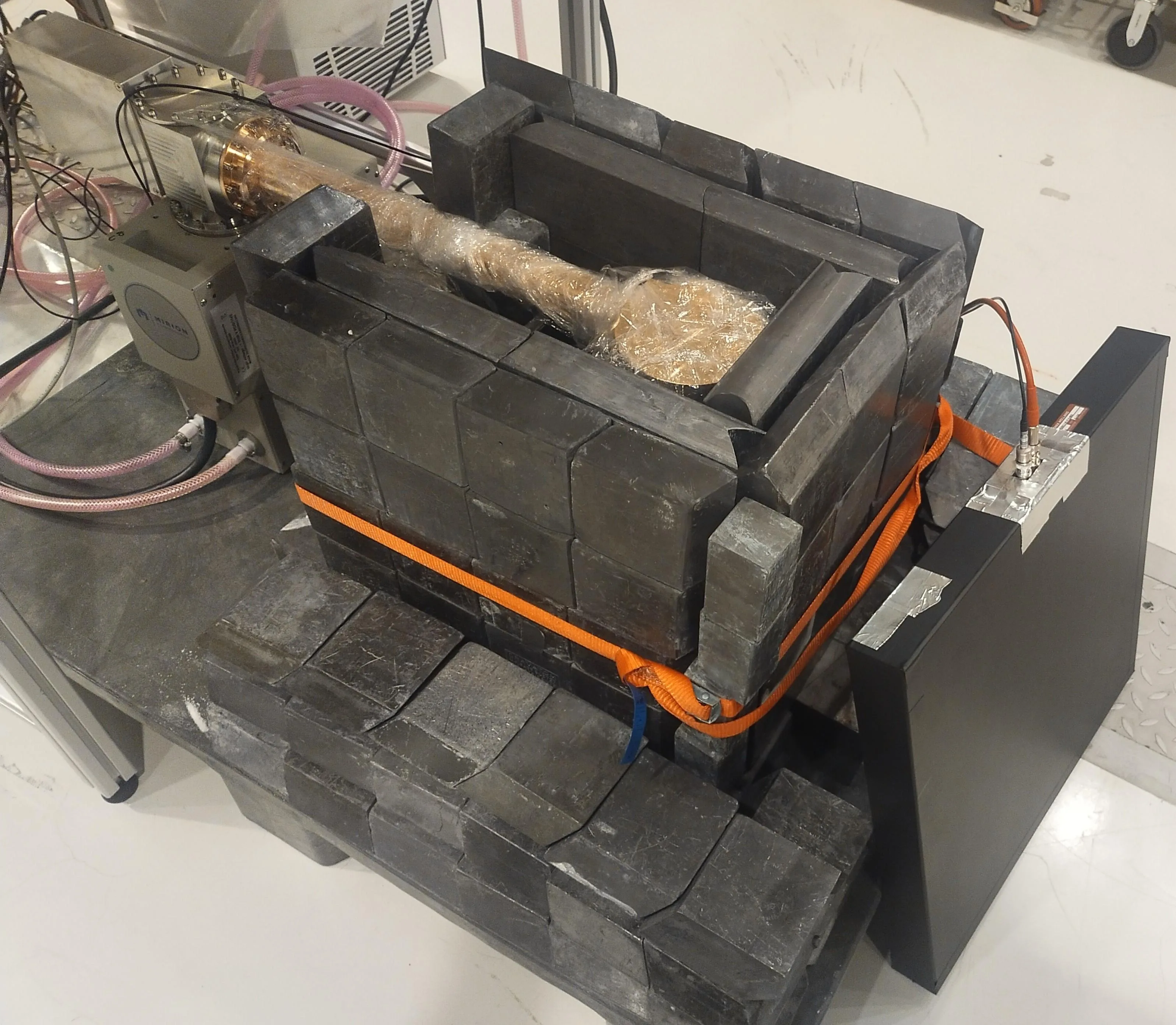
Dentro del detector, similar a un gran termo con germanio, se generan débiles destellos. Los neutrinos, partículas diminutas que casi no interactúan con la materia, ocasionalmente golpean los núcleos de germanio. El núcleo vibra y el detector registra ese empujón. Pero para distinguir una señal real del ruido, el instrumento debe calibrarse con precisión.
Los científicos del experimento CONUS+ irradiaron el detector con neutrones de una fuente de americio-berilio. Los neutrones, al igual que los neutrinos, pueden empujar los núcleos, pero su flujo se puede controlar. Comparando la energía conocida de los neutrones con las lecturas del detector, los físicos ajustaron la escala de energía. Ahora el error de medición es inferior al 4%, antes era del 14%.
Esta precisión permitirá al detector capturar neutrinos del reactor de la central nuclear de Leibstadt y buscar rastros de nueva física más allá del modelo estándar. Quizás aquí se descubran partículas de materia oscura u otros fenómenos exóticos.
Resumen original
tal como lo escribieron los autores, en inglés arXiv:2604.25748
The CONUS+ experiment has recently reported the first detection of coherent elastic neutrino-nucleus scattering (CEvNS) of reactor antineutrinos on germanium nuclei and is now entering a precision phase. The dominant uncertainty in the first measurement was the energy scale, which contributed 14% to the uncertainty of the prediction of the combined signal. We present a dedicated neutron activation campaign in which one of the new 2.4 kg CONUS+ germanium detectors was irradiated with a strong 241AmBe source, demonstrating that a contribution below 4% to the uncertainty of signal prediction is achievable. For the first time, the 71Ge M-shell X-ray line was clearly resolved at (158.7+-1.4) eVee, validating the CONUS+ energy reconstruction down to the detection threshold. This validation includes the understanding of the energy scale, the energy resolution, the trigger efficiency, and the correct separation of physical from noise events. These results establish the foundation for a future activation campaign at the Kernkraftwerk Leibstadt reactor site, strengthening the CONUS+ energy calibration and extending its sensitivity to precision CEvNS and beyond Standard Model physics measurements.
Los neutrinos son tan omnipresentes que cada segundo atraviesan la uña de tu dedo billones de estas partículas, pero no lo notas.