Литий и стеклянная соль: спокойный союз экспресс
Литиевая батарея похожа на бутерброд: два куска хлеба — электроды, а между ними начинка — электролит, через который ионы лития бегают туда-сюда. В обычных батареях начинка жидкая, как соус, и может протечь или загореться. В твёрдотельных батареях начинка — как ломтик сыра: он не течёт, но важно, чтобы он не крошился и не вступал в реакцию с хлебом.
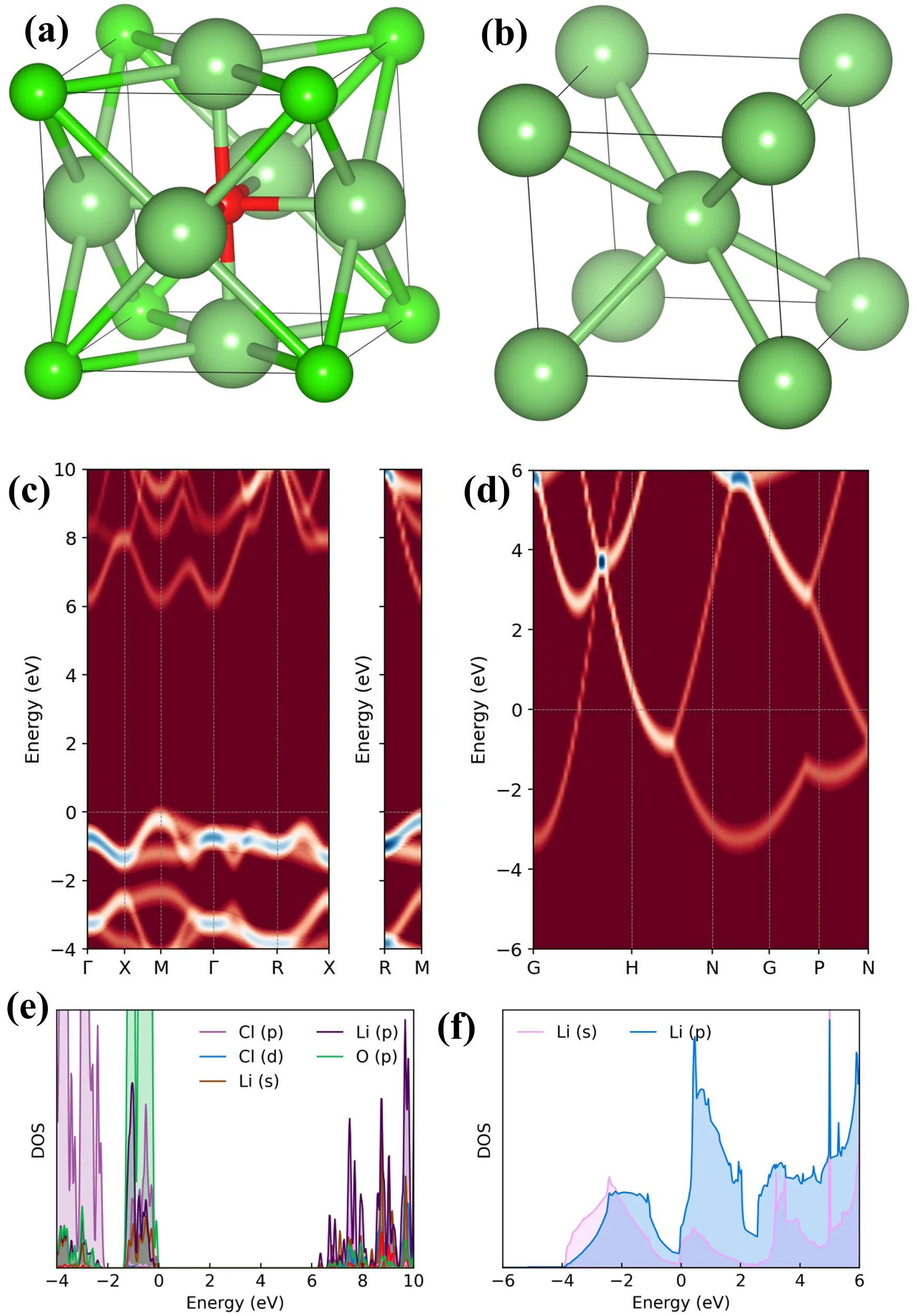
Исследователи изучили границу между литиевым анодом (хлебом) и твёрдым электролитом Li3OCl (сыром) с помощью компьютерного моделирования на уровне атомов. Они проверили несколько вариантов стыковки и нашли самый энергетически выгодный. Оказалось, что на границе всё спокойно: структура не разрушается, а электрический заряд лишь слегка перераспределяется в тонком слое у поверхности.
Это значит, что батарея не будет быстро портиться от повторных зарядок: лишний литий не накапливается внутри электролита, а остаётся в аноде. Такая стабильность — ключ к долгой жизни твёрдотельных аккумуляторов.
Кольцо замыкается: бутерброд с сыром не разваливается, даже если его много раз кусать. Так и батарея с Li3OCl обещает держаться долго и безопасно.
Оригинальная аннотация
как её написали авторы, на английском arXiv:2604.10630
Solid-state lithium batteries have attracted considerable attention due to their potential to provide improved safety and higher energy density compared with conventional liquid electrolyte batteries. However, the stability of the interface between Li metal anodes and solid electrolytes remains a critical issue that strongly influences battery performance. In this work, first-principles density functional theory calculations are performed to investigate the interfacial properties of a solid-state battery system composed of Li metal anode and Li3OCl solid electrolyte. The structural stability, electronic structure, and electrochemical behavior of the Li|Li3OCl interface are systematically analyzed. Several interface orientations are constructed and compared in order to identify the most energetically favorable configuration. The electronic properties and interfacial charge redistribution are further examined to understand the nature of the interaction between Li metal and the Li3OCl electrolyte. Our results indicate that the Li|Li3OCl interface exhibits stable structural and electronic characteristics, with localized charge redistribution occurring near the interface region. The electrochemical stability against the insertion of an additional Li atom is also evaluated, showing that Li incorporation is energetically unfavorable in most layers of the electrolyte. These results suggest that the Li3OCl electrolyte maintains good electrochemical stability in contact with Li metal. The present study provides atomic-scale insight into the interfacial behavior of Li|Li3OCl and highlights the potential of Li3OCl as a promising solid electrolyte for solid-state lithium batteries.
Li3OCl — это твёрдое вещество, которое проводит ионы лития почти как жидкость, но не течёт и не воспламеняется.