Cosmic Tuning Fork: Earth and Moon Resonate with Gravitational Waves ✦
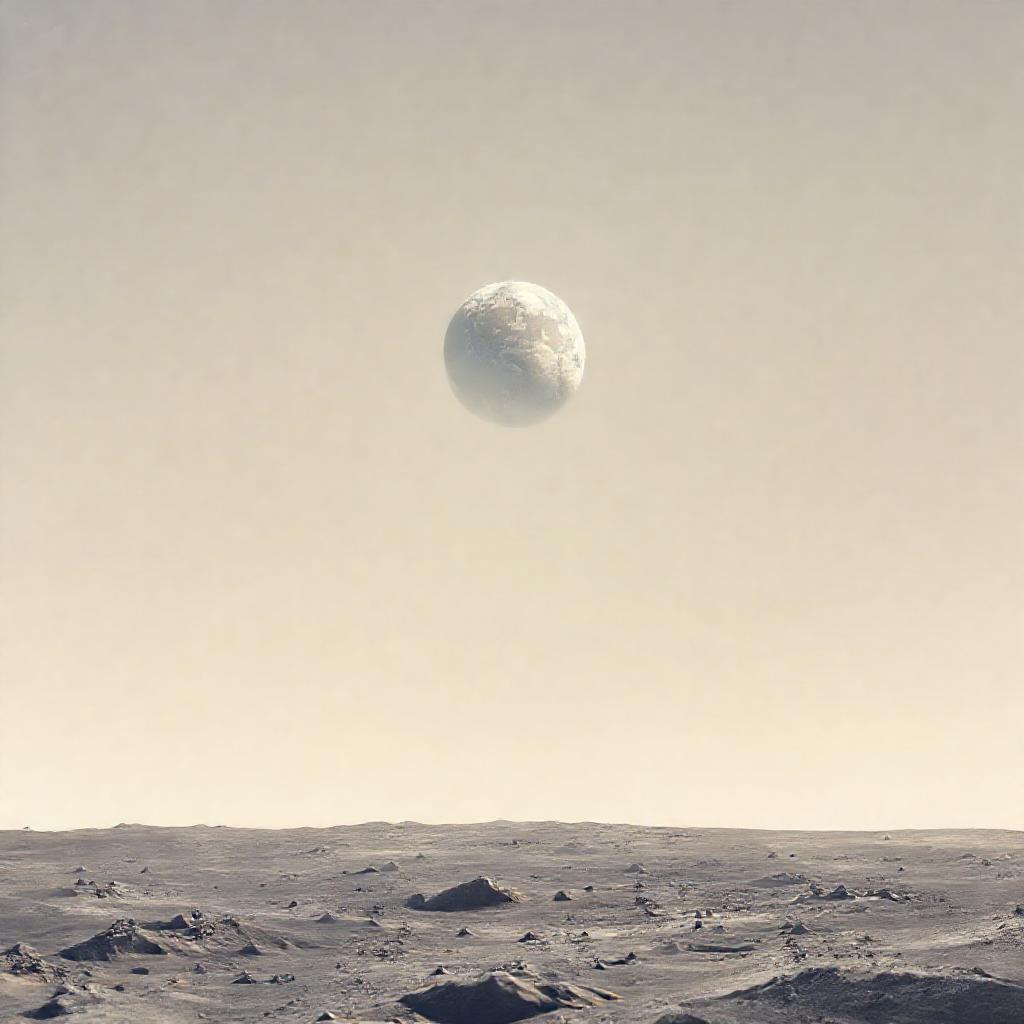
The Earth and Moon aren’t merely celestial neighbors; they are a coupled resonator, tuned to 0.847 microhertz. Gravitational waves make this system breathe, and a laser beam—racing to lunar reflectors and back in 2.5 seconds—reads that breath to within microns. In this way, the quiet hum of the Big Bang can become audible. One day, a map of the gravitational background will unveil the face of the newborn Universe.
🎯 Laser ranging already reveals the Moon receding 3.8 cm annually. The new method hunts for oscillations hundreds of times smaller—thin as a human hair—and would notice any gravitational-wave whisper that shifts the Earth–Moon distance by mere microns.
🎬 This resonates with Carl Sagan’s 'Contact', where a vast radio array catches an alien signal. Here, the gravitational bond between Earth and Moon itself becomes the antenna, picking up not a message from the stars but the rumble of spacetime’s birth—the Universe’s primordial murmur.