Комета, которая хотела зажечь Солнце экспресс
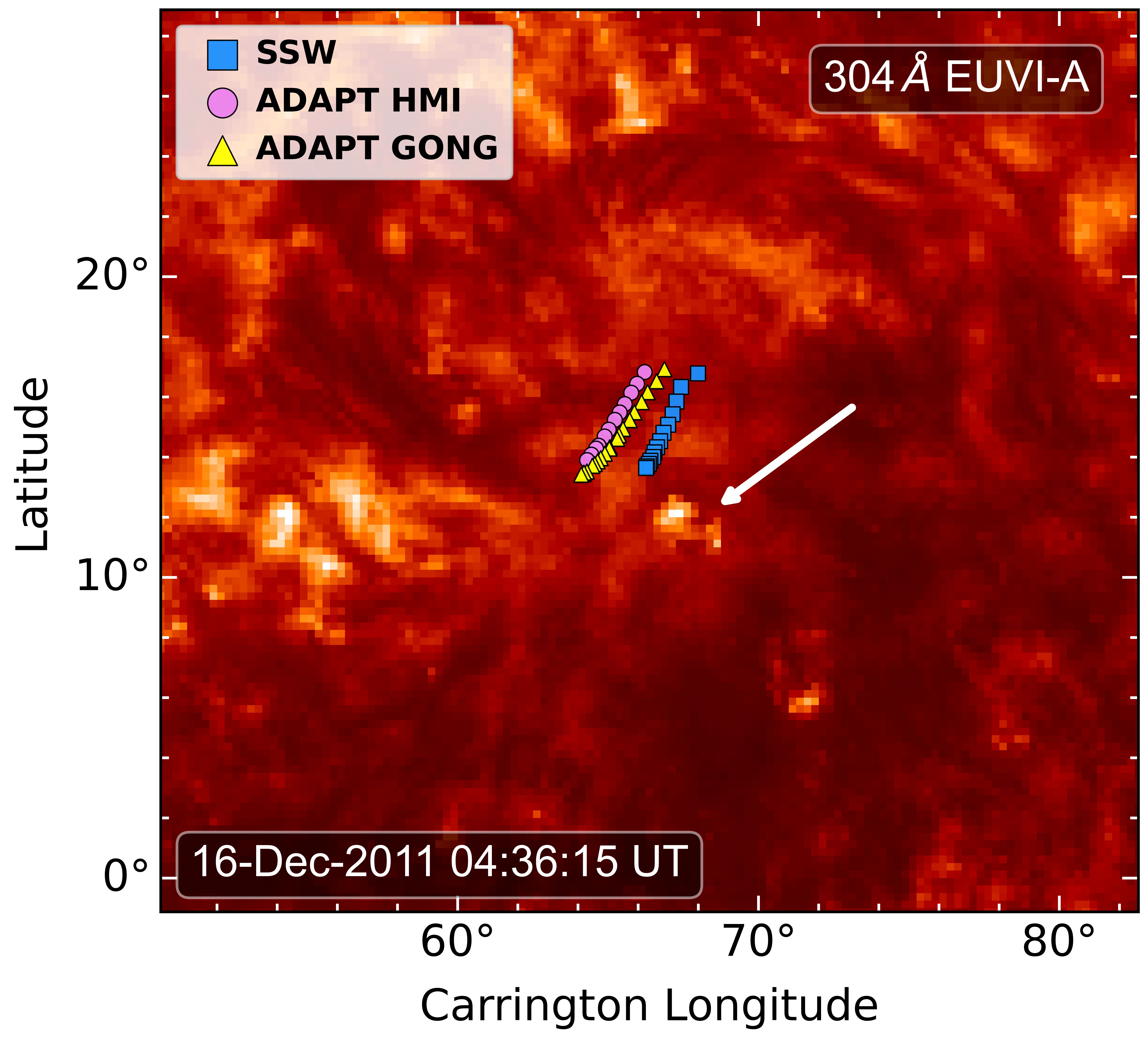
В декабре 2011 года комета Лавджоя смело пронеслась сквозь раскалённую корону Солнца. Сразу после — вспышка. Учёные проверили, могла ли комета её вызвать. Атмосфера Солнца пронизана тугими магнитными петлями — словно натянутая тетива лука. Пролетая, комета слегка задевает эту тетиву, и та выпускает стрелу — мощный выброс энергии. Но расчёты удивили: энергии грязного снежка (как называл кометные ядра Фред Уиппл) хватило бы лишь на игрушечный лук. Настоящая же вспышка, зафиксированная ультрафиолетовыми камерами, требовала в 10–1000 раз больше. Значит, комета не была причиной, а лишь сорвала тетиву уже готового к выстрелу «лука». Понимание таких касаний поможет разгадать бури и на других звёздах с их планетами. Парадокс: нырнув в солнечное пекло, комета не сгинула, а разгорелась для земных наблюдателей ярчайшим светом. Это не она зажгла Солнце — Солнце зажгло её.
Оригинальная аннотация
как её написали авторы, на английском arXiv:2605.18280
Star-planet magnetic interactions (SPMIs) can transfer energy from an exoplanet to its host star via Alfv\'en waves when the planet orbits within a sub-Alfv\'enic stellar wind. Similar conditions were encountered by the sungrazing comet Lovejoy as it passed through the solar corona in December 2011. The possibility that comets could trigger solar activity via magnetic interactions has never been investigated. The aim of this paper is to quantify the energetics of such interaction and to assess if enough energy could be deposited to either form a hotspot or trigger eruptions on the Sun. We used the magnetohydrodynamic WindPredict-AW model to reconstruct the coronal magnetic field and solar wind conditions along the comet's orbit, and determined the magnetic footpoints that connected the comet to the solar surface. By estimating the travel time of hypothetical Alfv\'en waves, we identified a brightening event observed by EUVI aboard STEREO-A that is spatially and temporally consistent with comet Lovejoy's passage. We then computed the SPMI power for all magnetic field lines anchored within 5 degrees of the brightening using SPMI power scaling laws. The resulting power distribution spans approximately 10$$^{14}$$-10$$^{16}$$ W. In comparison, the estimated radiative power of the brightening event in the STEREO-A/EUVI 195$$\r{A}$$ channel is approximately 10$$^{17}$$ W. We find that comet Lovejoy does not generate sufficient SPMI power to be the energy source of the observed brightening intensity. However, it may still act as a perturbation to existing magnetic structures, and lead to the triggering of solar flares. Confirming this hypothesis would require additional observations that do not exist for this event, which make future passages of sungrazing comets valuable opportunities to study SPMI processes within our solar system.
Ядро кометы Лавджоя после прохождения через корону уменьшилось в размере, но комета выжила и стала одной из самых ярких комет десятилетия.