ويب يرصد طقسًا كيميائيًا على الأقزام البنية سريع
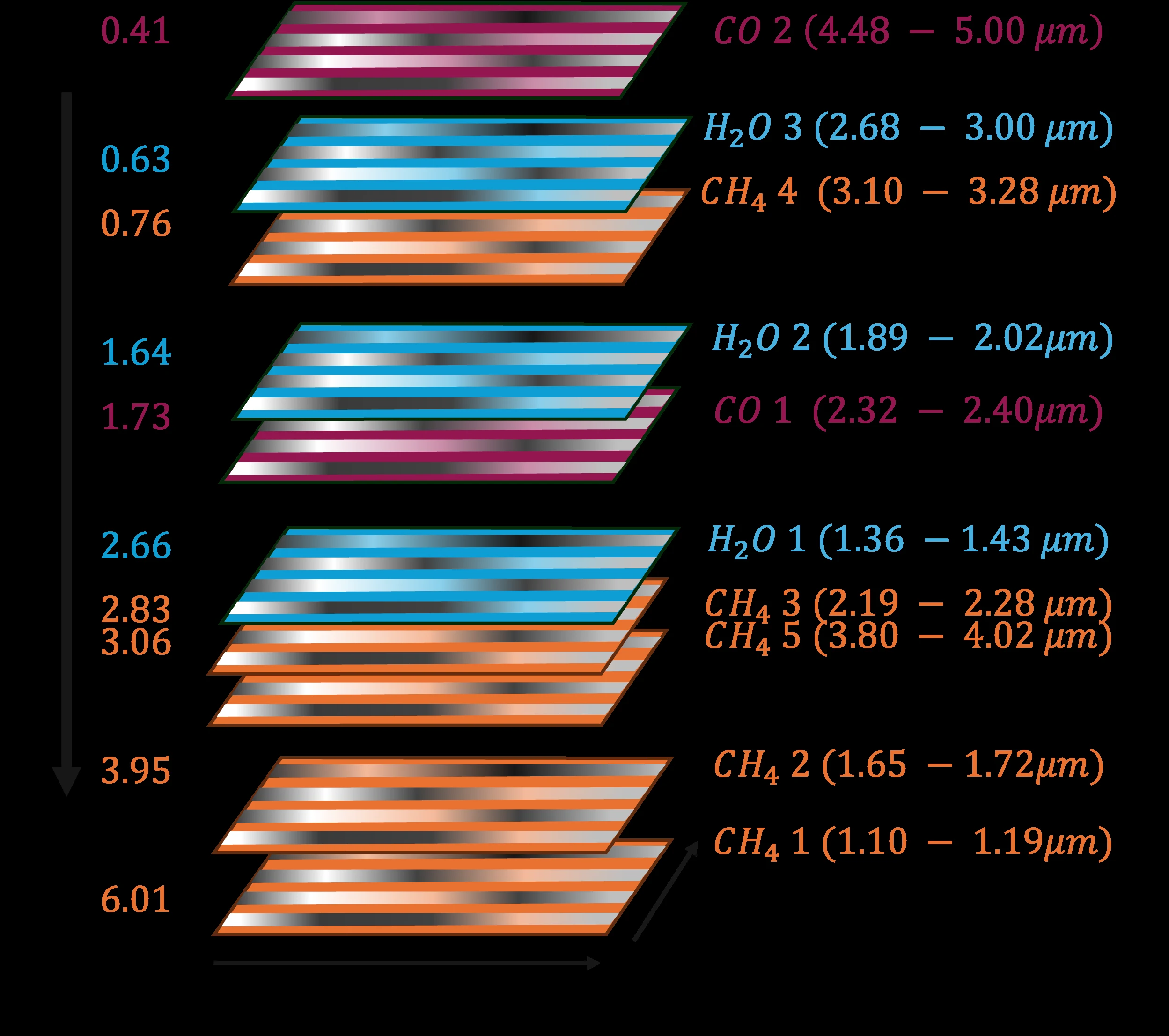
الأقزام البنية – أثقل من الكواكب لكنها أخف من النجوم. غلافها الجوي يشبه قدرًا يغلي: سحب من الرمل الساخن وقطرات الحديد ترتفع وتنخفض. تلسكوب ويب تابع زوج WISE 1049AB لفترة طويلة، وبعد تحليل ضوئهما إلى ألوان، لاحظ لغزًا: في القزم الأدفأ، كان ضوء الميثان وأول أكسيد الكربون ينبض بقوة أكبر بكثير من ضوء الماء، رغم أن الثلاثة تنبعث من العمق نفسه. ليس للسحب علاقة – ففي الأعماق تحدث تفاعلات كيميائية هائجة. كما في القدر حيث تطفو بعض البهارات أسرع من غيرها عند التسخين، كانت هذه التفاعلات تتسارع تارة وتتوقف تارة، مسببة تموجات في التوهج.
بالإضافة إلى ذلك، تجري عبر الغلاف الجوي أمواج عملاقة – تمامًا كتلك التي تصنع الطقس على الأرض، لكن بدون محيطات ويابسة. هذه الرقصة الكيميائية قد تصبح مفتاحًا للتنبؤ بمناخ الكواكب البعيدة.
الملخص الأصلي
كما كتبه المؤلفون، بالإنجليزية arXiv:2511.15667
We present a new analysis of the spectroscopic variability of WISE~J104915.57$$-$$531906.1AB (WISE~1049AB, L7.5+T0.5), observed using the NIRSpec instrument onboard the James Webb Space Telescope (GO 2965 - PI: Biller). We explored the variability of the dominant molecular bands present in their 0.6--5.3~$$\mu$$m spectra (H$$_2$$O, CH$$_4$$, CO), finding that the B component exhibits a higher maximum deviation than the A component in all the wavelength ranges tested. The light curves reveal wavelength-(atmospheric depth) and possibly chemistry-dependent variability. In particular, for the A component, the variability in the light curves at the wavelengths traced by the CH$$_4$$ and CO molecular absorption features is higher than that of H$$_2$$O, even when both trace similar pressure levels. We concluded that clouds alone are unlikely to explain the increased variability of CO and CH$$_4$$ with respect to H$$_2$$O, suggesting that an additional physical mechanism is needed to explain the observed variability. This mechanism is probably due to thermochemical instabilities. Finally, we provide a visual representation of the 3D atmospheric map reconstructed for both components using the molecular band contributions at different pressure levels and the fit of planetary-scale waves.
على الأرجح، تهتاج موجات كيميائية مماثلة في غلاف المشتري أيضًا – ولكننا لا نستطيع رؤيتها مباشرة.