منكب الجوزاء ليس وحيدًا: العثور على رفيق نجمي سريع
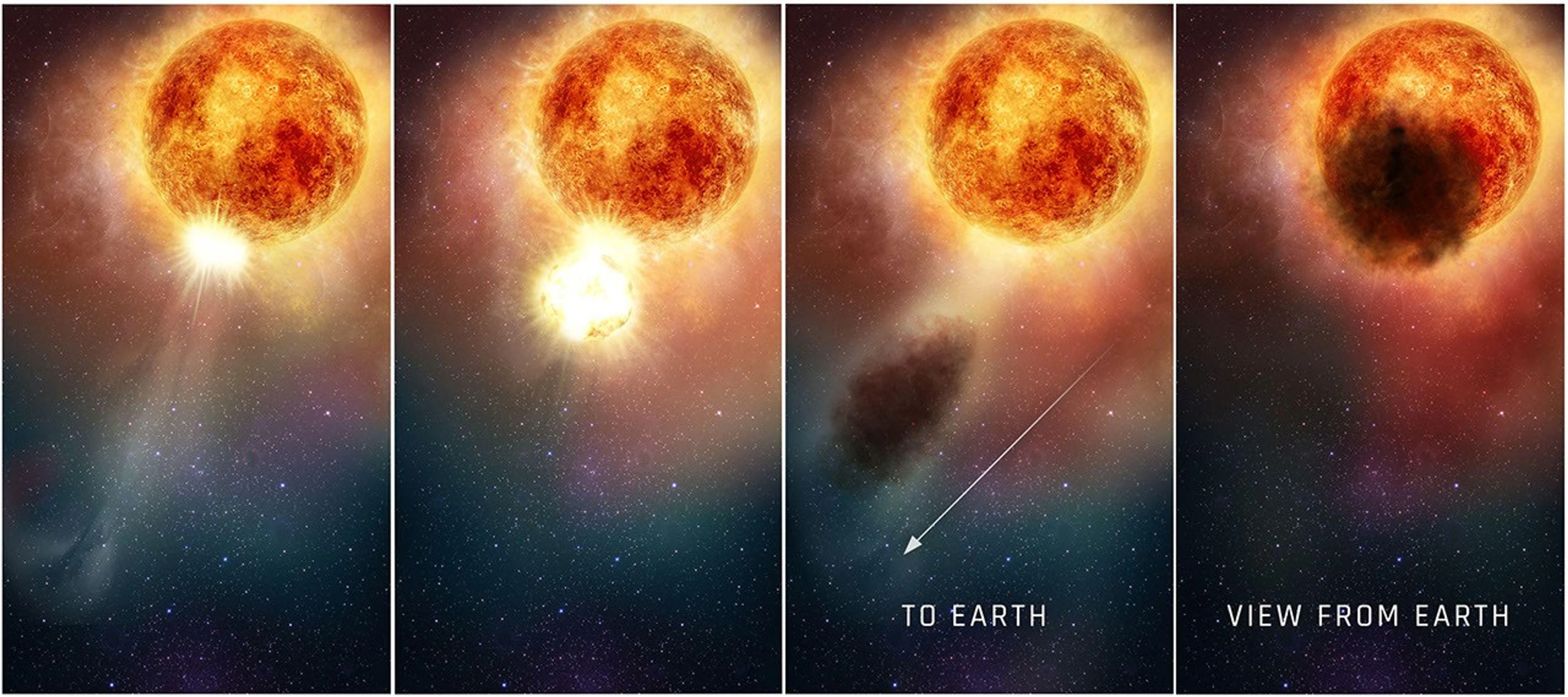
في عام 2019، خفت منكب الجوزاء فجأة، مما أثار شائعات عن انفجار وشيك. لكن السبب كان سحبًا من الغبار الكوني. والآن، تمكّن تلسكوب جيميني نورث من رصد نجم رفيق صغير في وهجه الساطع، كان قد تنبأت به الحسابات.
يشبه منكب الجوزاء كشافًا في استاد رياضي، بينما رفيقه مثل يراعة تومض في شعاعه. إنه أخفت بـ 250 مرة، لكن الفلكيين تمكنوا من قياس موقعه وفرق السطوع. وكان توافقه مع النظرية مذهلاً.
يفسر هذا الجوار الغرائب القديمة للعملاق. والأهم أن الرفيق يدور حول منكب الجوزاء في بضع سنوات فقط. هذه الرقصة السريعة لا تؤجل فحسب انفجار المستعر الأعظم المحتمل، بل تمنح أيضًا فرصة لمراقبة الثنائي مستقبلاً. المشاهدات القادمة ستكون في نوفمبر 2027.
الملخص الأصلي
كما كتبه المؤلفون، بالإنجليزية arXiv:2601.02012v2
In the past six years, Betelgeuse has been in the news and drawn significant public interest. Starting in October 2019, Betelgeuse underwent a striking dimming event, fading from magnitude 0.5 to 1.7 by mid February 2020 a threefold decrease in brightness This gave rise to a number of speculative debates that the star was on the verge of a supernova, a moment of eerie quiet before the cosmic outburst. In a previous article, the author discussed the most accepted explanation to the dimming caused by episodic mass loss that released large dust grains, which obscured Betelgeuse's light and made it appear fainter. This interpretation suggested that the dimming was not a precursor to a supernova, as Betelgeuse is likely still far from reaching that stage. On 21 July 2025, the existence of the companion star was confirmed with direct imaging, for the first time, by the alopeke instrument on the 8.1 m Gemini North telescope. The companion is 6 magnitudes fainter than Betelgeuse and orbits close to Betelgeuse itself, within the supergiant star's extended outer atmosphere. The stellar companion was detected at an angular separation of 52 mas and a position angle of 115 deg east of north. These measurements, along with its brightness, being roughly 6 magnitudes fainter than Betelgeuse at 466 nm, are in excellent agreement with dynamical predictions. Although this was only a 1.5 sigma detection, the agreement in the companion's appearance, separation, position angle, magnitude difference, and estimated mass is reasonable, making the result tentatively acceptable. The next optimum period for observations is November 2027, when we hope to get better observations. This article describes the interesting twists and turns of this study and what lies in the future for Betelgeuse and its companion, Betelbuddy or Siwarha.
الأسماء غير الرسمية للرفيق هي "بيتلبادي" (Betelbuddy) أو "سيوارها" (Siwarha). يستغرق دورانه الكامل حول منكب الجوزاء بضع سنوات فقط — وهذه رقصة سريعة جدًا بمقاييس الكون.