ليزر بحجم العضية سريع
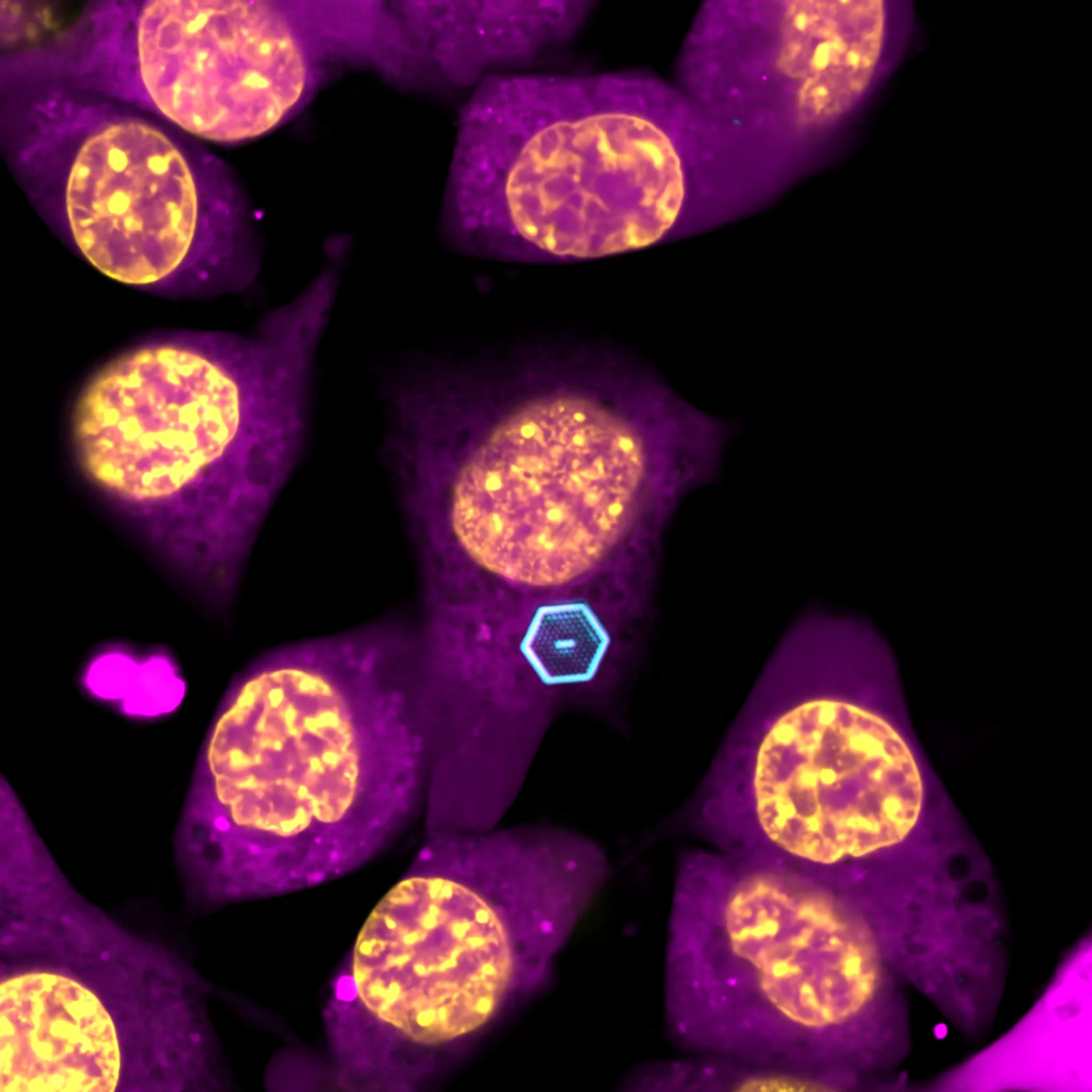
يمكن حبس الضوء في مصيدة أصغر من ذرة غبار. البلورات الضوئية (photonic crystals) هي شبكات تمنع الضوء من التشتت وتجبره على الدوران في حلقة. سابقًا، كانت هذه البنى تُزرع على ركيزة ضخمة، وكانت ضخمة جدًا بحيث لا تصلح للخلايا الحية. الآن وجد الباحثون الحد الأدنى: عدد صفوف الشبكة اللازمة ليعمل الليزر، وصنعوا جسيمات تنفصل عن الركيزة وتطفو بحرية.
كل جسيم هو شكل سداسي طول ضلعه أقل من سمك شعرة الإنسان. المنطقة النشطة تبلغ 30 ميكرومترًا مربعًا فقط، أي ما يعادل مربعًا طول ضلعه 5.5 ميكرون. للمقارنة: قطر كرية الدم الحمراء البشرية حوالي 7 ميكرونات. تُنتج الجسيمات بالآلاف دفعة واحدة، ثم تُفصل بعناية وتُحقن في الخلايا الحية. داخل الخلية، يستمر الليزر في الإضاءة.
ضبط العلماء الليزر ليبعث في نطاق الأشعة تحت الحمراء القريبة، وهو ضوء يمر عبر الأنسجة البيولوجية دون خسائر تذكر. ضغط الضوء في الجسيم أقوى بعشر مرات من الأجهزة المماثلة التي تستخدم تأثير المعرض الهامس (whispering gallery)، حيث ينتقل الضوء على طول الجدار الداخلي للكرة كما ينتقل الصوت عبر قبة الكاتدرائية. هذا الحجم الصغير يقارب حجم الميتوكوندريا أو الليزوزوم داخل الخلية.
في المستقبل، يمكن طلاء سطح الليزر بمستشعرات كيميائية أو بلازمونية. عندها يصبح الجسيم حساسًا يخبرنا بما يحدث داخل الخلية الحية، دون صبغات أو تعديلات جينية. هذه المنصة المصغرة مفيدة أيضًا للقياسات البصرية والكمومية في علم الأحياء والكيمياء.
الملخص الأصلي
كما كتبه المؤلفون، بالإنجليزية arXiv:2601.12561
Photonic crystals allow unprecedented control over how light is confined, propagates, and interacts with matter. Their development has had a transformative impact on optics and physics, and they remain the central platform for both fundamental discoveries and practical photonic technologies. However, the relatively large footprint and substrate-bound nature of photonic crystal structures have so far strongly limited their use as miniature optical devices or biointegrated sensors. Here, we overcome these limitations by identifying the minimal size of a 2D photonic crystal array needed to achieve lasing and describe the fabrication of substrate-less hexagonal laser particles with an active area as small as 30 {\mu}m2. Massively parallel fabrication, robust detachment, and integration of the nanolaser particles into live cells is demonstrated. Crucially, by engineering spatial and spectral mode characteristics, we designed NIR-II probes with mode volumes on the order of tens of attolitres, an order of magnitude smaller than whispering gallery probes of similar dimensions. Such high light localization is comparable in scale to different organelles of eucaryotic cells. In the future, we expect that chemical or plasmonic functionalization of the device will enable label-free sensing of nanoscale intracellular processes, and that it shall serve as a miniature platform to exploit developments in optical and quantum sensing for chemical and biological applications.
حجم الضوء في هذا الليزر يساوي تقريبًا حجم ميتوكوندريا واحدة، وهي العضية التي تزود الخلية بالطاقة.
في رواية مايكل كرايتون «سلالة أندروميدا»، تنقل أجهزة استشعار داخل الجسم معلومات عن حالة الكائن الحي، وهذه الجسيمات الليزرية قد تكون نموذجًا حقيقيًا لذلك.