كيف تتشقق قطرة تحتوي على جسيمات نانوية على الزجاج سريع
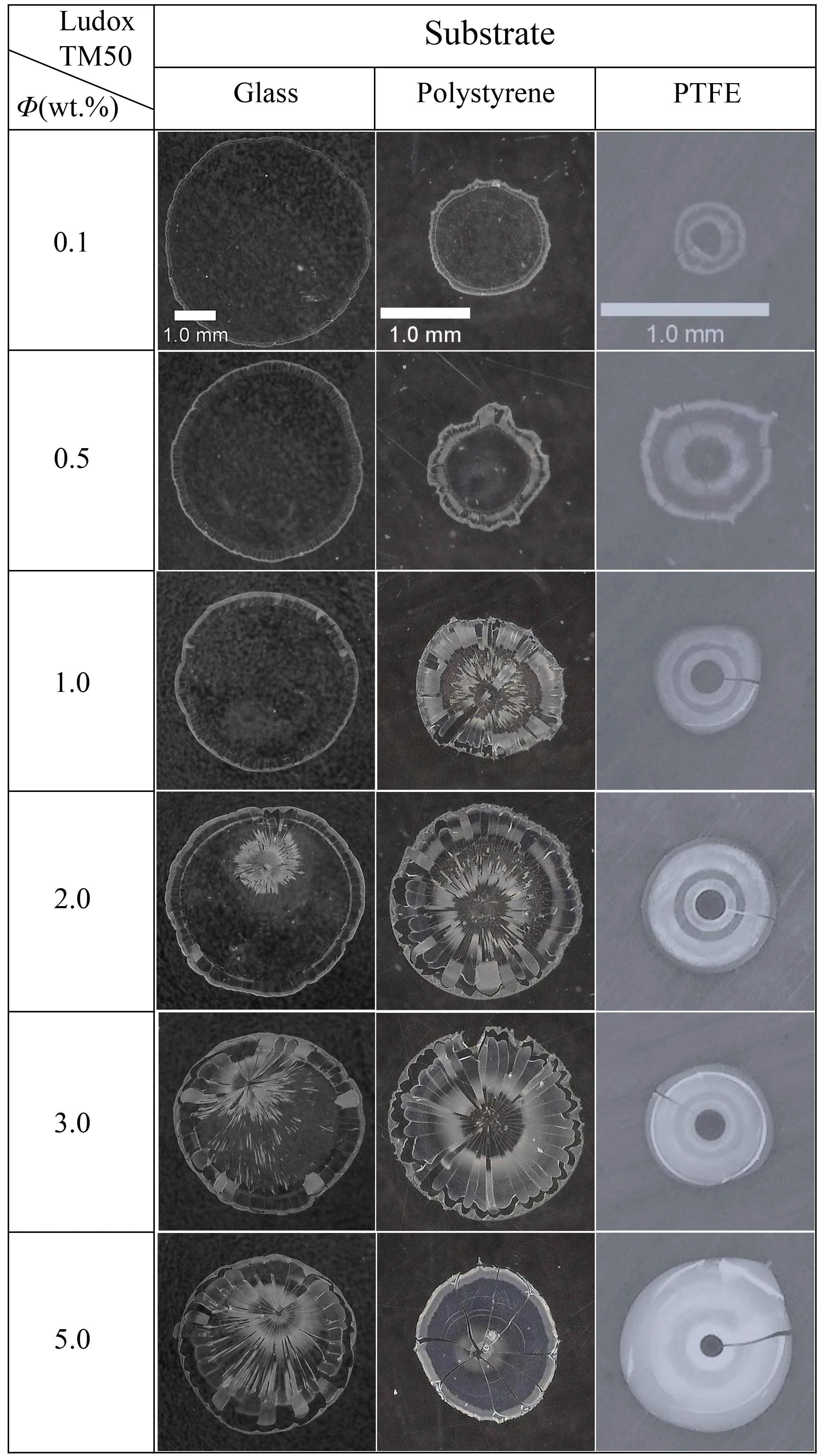
قطرة قهوة على الطاولة تجف وتترك حلقة — جزيئات القهوة تتجمع عند الحافة. أما إذا كانت الجسيمات النانوية المشحونة تسبح في القطرة، تصبح الصورة أغنى: الرواسب تتشقق مثل الطين في بركة جفت. درس الفيزيائيون كيف تغير شحنة الجسيمات والسطح الذي تجف عليه القطرة هذه التشققات.
في التجارب، استخدموا نوعين من جسيمات السيليكا النانوية: أحدهما سالب الشحنة والآخر موجب الشحنة. جففوا القطرات التي تحتوي عليها على الزجاج والبوليسترين والتيفلون — أسطح ذات قابلية تبليل مختلفة. الجسيمات سالبة الشحنة أعطت دائمًا تشققات شعاعية تنتشر من المركز مثل أسلاك العجلة. أما الجسيمات موجبة الشحنة فأعطت خطوطًا متكسرة وعشوائية. عند التركيز العالي للجسيمات، أصبحت الرواسب سميكة وتقشرت من السطح، خاصة على الزجاج الذي يبتل جيدًا.
أظهرت القياسات أن المسافة بين التشققات وطولها تتغير مع تركيز الجسيمات وفق قانون قوة — مثلما تنمو مساحة المربع مع طول ضلعه. هذا يعني أنه يمكن التنبؤ بالنمط مسبقًا. هذه المعرفة مفيدة في إنتاج الطلاءات وطباعة الإلكترونيات، حيث يكون من المهم كيف تجف قطرة الحبر التي تحتوي على جسيمات نانوية.
الملخص الأصلي
كما كتبه المؤلفون، بالإنجليزية arXiv:2601.17655
The drying of colloidal suspensions leads to complex deposition patterns, accompanied by instabilities such as cracking and delamination. In this study, we experimentally investigate the coupled influence of particle surface charge and substrate wettability on the evaporation dynamics, final deposition morphology, and crack patterns of sessile droplets containing silica nanoparticles. We examine the dynamics of two types of colloids, namely the negatively charged colloidal silica nanoparticles (Ludox TM50) and the positively charged silica nanoparticle (Ludox CL30), at concentrations ranging from 0.1 to 5.0 weight percentages, deposited on glass, polystyrene, and polytetrafluoroethylene (PTFE) substrates with distinct wettability. Side and top-view imaging techniques are employed to capture the evaporation process and analyze the resulting cracks. Our results reveal that the nature of the particle charge and substrate wettability significantly affect the evaporation mode, with transitions observed between constant contact radius (CCR), constant contact angle (CCA), and mixed modes. TM50-laden droplets consistently exhibit radial cracks, whereas CL30 droplets display more randomly oriented and irregular cracks. At higher particle concentrations, TM50 suspensions form thicker deposits that undergo delamination, particularly on highly wettable substrates like glass. Quantitative analysis reveals that crack spacing and length follow power-law relationships with particle concentration. Additionally, the delamination behavior is strongly influenced by both the particle concentration and the type of substrate. We propose a mechanistic framework to explain the role of particle-substrate interactions in governing the observed cracking and delamination behaviors.
إذا جففت قطرة تحتوي على جسيمات سالبة الشحنة على التيفلون، تكون التشققات منتظمة بشكل خاص — التيفلون لا يبتل تقريبًا، والقطرة تنكمش بشكل متساوٍ.