غبار الثريا: كيف ترسم النجوم أنماطًا في الفضاء سريع
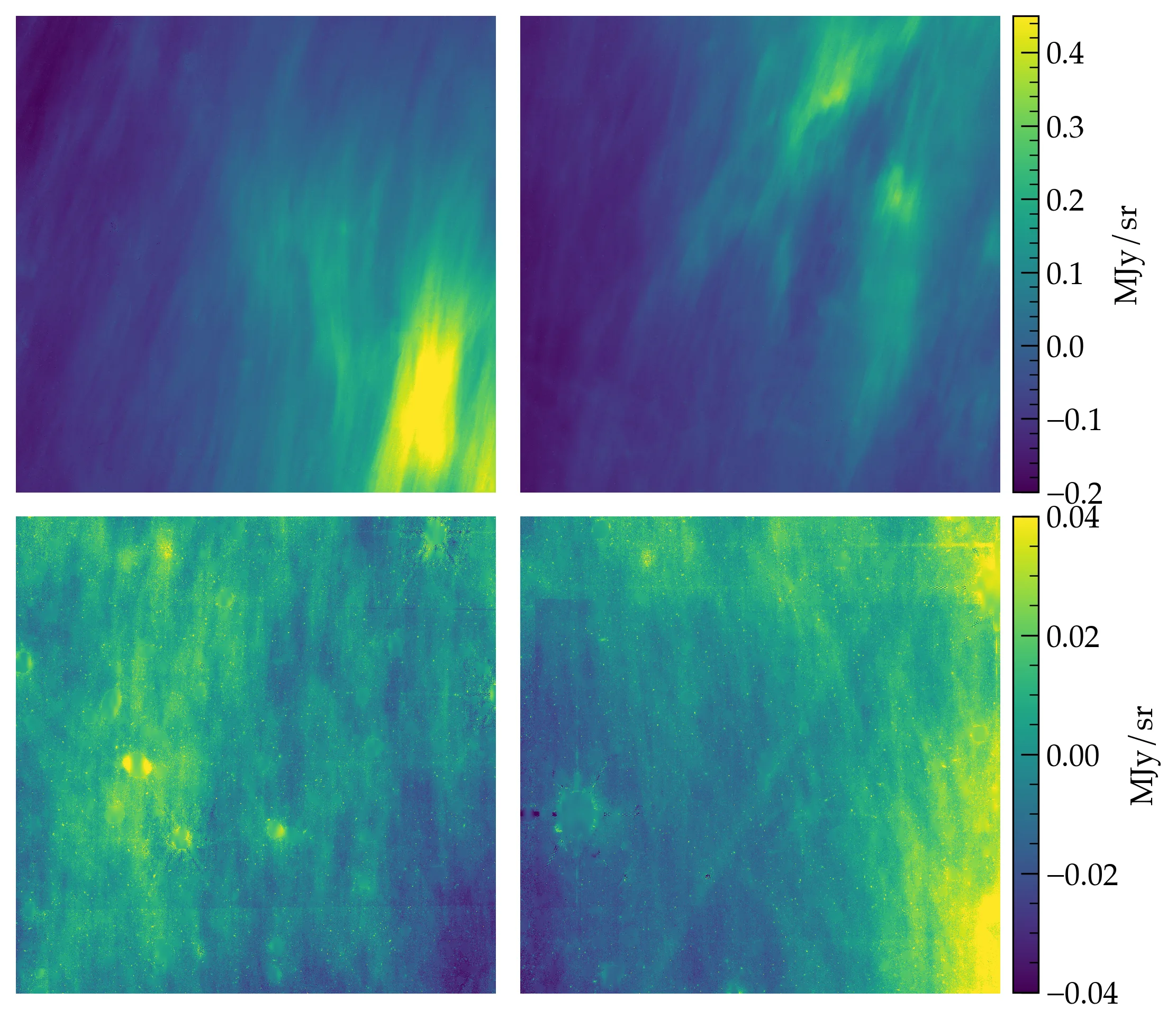
تُظهر صور سديم الثريا التي التقطها تلسكوب جيمس ويب مشهدًا مذهلًا: سحب الغبار بين النجمي تتوهج بشكل غير منتظم، وكأن شخصًا ما مدّها في اتجاه واحد. حلل العلماء هذه الصور واكتشفوا أن توهج الغبار ممتد على طول خطوط المجال المغناطيسي الذي يخترق السديم. الأمر كما لو أن خيوطًا غير مرئية توجّه حركة الغاز والغبار.
لتمييز بنية الغبار، أزال الفلكيون النجوم والمجرات من الصور، تاركين فقط التوهج الخافت لحبيبات الغبار. ثم درسوا كيف يتغير هذا التوهج على مقاييس مختلفة — من تفاصيل صغيرة بحجم النظام الشمسي إلى مناطق كبيرة. اتضح أن نمط الغبار ليس له حجم مميز: فهو يبدو متشابهًا سواء نظرنا إليه عن قرب أو من بعيد. هذا يشبه الخط الساحلي الذي يبدو متعرجًا على الخريطة وعند النظر إليه من الطائرة.
بالقرب من النجم ميروب، يكون الغبار ممتدًا أكثر مما هو بعيدًا عنه. ربما يعمل إشعاع ورياح النجم الساطع على تحفيز الاضطراب في الغاز، مما يجعل الغبار يصطف على طول المجالات المغناطيسية. تساعد هذه الملاحظات في فهم كيف يؤثر الاضطراب في الغاز البينجمي البارد على ولادة نجوم جديدة. ففي هذه السحب تحديدًا، حيث يتحرك الغاز ببطء ويتكثف، تُشعل شموس المستقبل.
الملخص الأصلي
كما كتبه المؤلفون، بالإنجليزية arXiv:2602.03672
Interstellar medium studies rely on magnetohydrodynamic (MHD) turbulence as a framework for interpretation. In this context, the statistical characterization of interstellar observations is of prime importance. We open a new perspective on diffuse interstellar matter by analyzing James Webb Space Telescope (JWST) observations of the Pleiades nebula with NIRCam. These observations are remarkable in that they provide a microscope view at the cold neutral medium (CNM) with a spatial resolution of 0.2 mpc (40 au). A two-dimensional Fourier analysis is used to characterize the structure of PAH emission in regions near and far from the Pleiades star Merope. To produce maps of the interstellar emission, stars and galaxies are filtered out. The final step in the data cleaning involves subtracting a component, in Fourier space, which we infer to be a residual of the near-infrared cosmic background. The PAH emission power spectra are highly anisotropic. They are well fitted with a break-free power-law, suggesting that we do not observe a specific scale for energy dissipation. Power-law indices are -3.5 near Merope and -3 in the more distant field. The magnetic field orientation, as derived from the Planck dust polarization data, aligns with the PAH anisotropy. The power anisotropy is constant across scales. These findings are discussed in relation to interstellar turbulence that may be driven by the Pleiades stars. The JWST observations of the Pleiades offer a new viewpoint for comparing observations and theoretical models, as they examine physical scales at which turbulence in the CNM is subsonic and decoupled from the thermal instability. The observations may indicate that the turbulent energy cascade in the CNM is anisotropic.
الثريا هي واحدة من أبرز التجمعات النجمية في السماء. في ليلة صافية، يمكن رؤية ست أو سبع نجوم بالعين المجردة، رغم أن العدد الحقيقي يصل إلى المئات. اعتبر الإغريق القدماء الثريا سبع أخوات، بنات العملاق أطلس.